

Polarized Sunglasses Cost: What You'll Actually Pay in 2026
Polarized sunglasses typically run $15 to $60 at the entry level, $60 to $150 for mid-range pairs, and $150-plus for premium frames with upgraded lenses and coatings. Polarization is worth the extra cost for driving, fishing, boating, or snow sports, where glare off flat surfaces isn’t just annoying, it’s a real hazard. If you need prescription lenses, budget for a meaningful add-on cost on top of the frame price. Chap’el Eyewear sells polarized collections across all three tiers, so you don’t have to choose between protection and price.
- Entry: $15 to $60
- Mid-range: $60 to $150
- Premium: $150 and up
- Prescription add-on: often a significant chunk of the total, depending on lens type
Key Takeaways
Polarized sunglasses cost between $15 and $200-plus depending on frame material, lens technology, and prescription complexity, but UV400 protection should never be sacrificed for price.
| Point | Details |
|---|---|
| Know your price band | Expect $15 to $60 entry, $60 to $150 mid-range, and $150-plus premium, based on materials and coatings. |
| Budget for prescription add-ons | Prescription complexity, not polarization itself, drives most of the added cost for corrective lenses. |
| Never skip UV400 | Choose UV400 protection over brand name, since eyelid and eye-area UV exposure carries real long-term risk. |
| Match lens type to activity | Fishing, driving, and sport use benefit from specialized tints and impact-rated builds worth the mid-to-premium price. |
| Chap’el covers every tier | Chap’el Eyewear’s Classic, Sport, and Designer Polarized collections build in real UV400 and polarization at every budget level. |
Table of Contents
- How Much Do Polarized Sunglasses Cost by Tier?
- How Much More Do Prescription Polarized Sunglasses Cost?
- What Features Actually Change the Price?
- Where You Buy Changes What You Pay
- How to Get Polarized Protection Without Overpaying
- How Long Do Polarized Sunglasses Last, and What Does the Warranty Cover?
- Prescription vs. Non-Prescription: What’s the Real Price Gap?
- Does Lens Technology or Brand Name Drive the Price More?
- Do Sports and Fishing Sunglasses Cost More Than Everyday Polarized Pairs?
- How Do Shipping and Returns Affect What You Actually Pay?
- The Real Price Question Isn’t “Cheap or Expensive”
- Chap’el’s Polarized Collections Match Every Budget
- Frequently Asked Questions
- Sources
How Much Do Polarized Sunglasses Cost by Tier?
Price indicates much about frame contents, but not always what you’d expect. Lower-cost pairs and higher-cost pairs can both block glare effectively. What changes is durability, optical clarity, and how the lens holds up after a year of sweat, saltwater, and getting tossed in a bag.
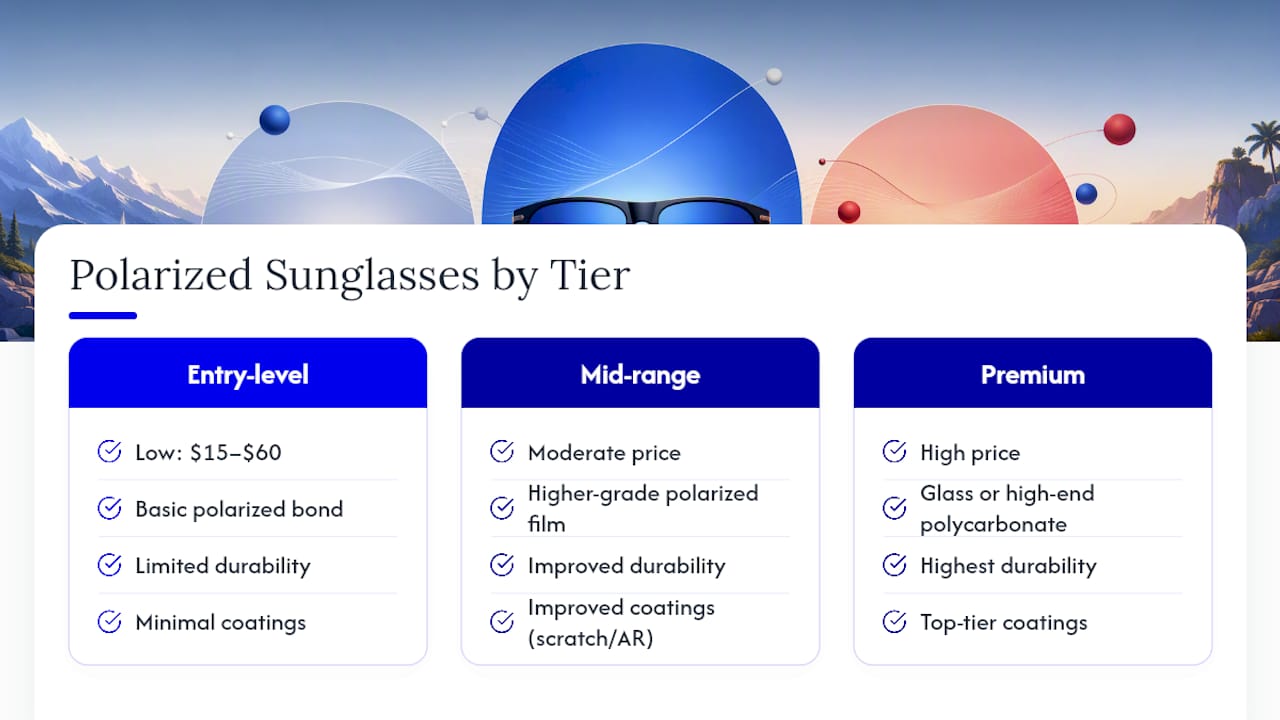
Entry-level ($15 to $60) gets you basic polarization bonded to polycarbonate lenses, usually with a limited or no warranty. These work fine for casual use. Some retailers and sale channels list polarized sunglasses at rock-bottom prices, but the polarization quality and UV protection at that end vary a lot, so check labeling before you buy rather than assuming every cheap pair meets the same standard.
Mid-range is where build quality starts to show. Expect better frame materials, higher-grade polarized film, improved anti-scratch or anti-reflective coatings, and an actual return policy backing the purchase. This tier is the sweet spot for most everyday buyers who want lenses that stay clear and frames that survive being sat on.
Premium buys you designer frames, glass or high-end polycarbonate lenses, and coatings that resist fingerprints, water, and scratches better than anything in the lower tiers. You’re also usually paying for brand reputation and stronger customer service.
Here’s the one rule that applies no matter your budget: never skip UV400 protection or impact resistance to save money. An affordable pair with true UV400 protects your eyes better than a more expensive pair without it. Polarization cuts glare, but UV blocking is the feature actually guarding your long-term eye health.
How Much More Do Prescription Polarized Sunglasses Cost?
Adding a prescription to polarized sunglasses raises the total price, and the increase depends on how your lenses are made, not just on the polarized coating itself. Most retailers handle this one of two ways.
- Flat polarization upgrade fee added to the base prescription lens price, common at online opticals that let you select polarization as a checkbox during lens configuration.
- Per-lens pricing where polarization is bundled into a lens package alongside index, coating, and tint choices, which is more typical at local optical shops.
What actually drives your total up is prescription complexity. A simple single-vision lens costs far less to polarize than a high prescription requiring high-index material, or a progressive lens correcting for both distance and reading. Astigmatism corrections add another layer of customization, and each one stacks onto the base price.
Pro Tip: If your prescription is straightforward, order single-vision polarized lenses online and save the trip to a local lab. If you have a complex prescription, bring your own frames to a local optician for the lens work, and always ask whether your vision insurance or FSA/HSA can offset the lens cost before you pay out of pocket.
What Features Actually Change the Price?
Not every dollar you spend goes toward the same thing. Some price increases buy real performance. Others buy a logo.
- Frame material: Economy plastics keep costs low but crack or warp faster. Acetate frames feel and look better and last longer. Metal and titanium frames cost more upfront but resist bending and corrosion, which matters if you’re wearing them daily or near saltwater.
- Lens material: CR-39 is affordable and optically clear but heavier and less impact-resistant. Polycarbonate is lighter and tougher, the standard choice for sport and active use. Glass offers the sharpest optical clarity but adds weight and cost, and it’s more prone to shattering on impact.
- Coatings: Anti-reflective, scratch-resistant, and hydrophobic coatings show up more consistently as you move up in price. At the entry level, don’t expect much beyond the base polarized film.
- Brand and warranty: A chunk of premium pricing has nothing to do with the lens in front of your eyes. It reflects marketing, retail markup, and the promise of better customer service if something goes wrong.
Prioritizing UV400 protection over brand name is the smarter play for most buyers, since UV exposure around the eyes carries real long-term risk regardless of how much the frame cost.
Where You Buy Changes What You Pay
The same lens technology can cost dramatically different amounts depending on the channel, and each route trades price against convenience differently.
- Direct-to-consumer brands usually carry lower markups and publish clear specs upfront, which makes comparison shopping easier. The tradeoff is you’re fitting frames without trying them on first, though most DTC sellers offset that with generous return windows.
- Optical chains and local opticians charge more, but you get in-person fitting, adjustments, and staff who can walk you through insurance paperwork on the spot. That service has real value if your prescription is complicated or your face shape is tricky to fit.
- Big-box and discount retailers offer the lowest sticker prices but rarely support prescription customization or brand-name polarized options. Fine for casual, non-prescription buyers. Not ideal if you need anything specialized.
- Vision insurance and benefits can shift your out-of-pocket cost substantially, especially for prescription buyers, though coverage for sunglasses specifically varies a lot by plan. Check your benefits before assuming a higher-priced option is out of reach.
How to Get Polarized Protection Without Overpaying
You don’t need to spend premium money to get real UV400 protection and effective glare reduction. A few tactics consistently save the most.
- Time your purchase around sitewide sales, seasonal promos, or first-order discounts, which many DTC brands offer regularly.
- Choose polycarbonate lenses over glass or premium composites. They still deliver UV400 and strong impact resistance at a fraction of the cost.
- Run prescription costs through your vision insurance or FSA/HSA before paying full price out of pocket.
- Consider buying affordable polarized frames and pairing them with third-party polarized lenses if you already own frames you like.
Pro Tip: Consumers often get better value buying frames from a DTC brand and choosing polarized polycarbonate lenses over paying a designer markup for nearly identical technical specs. The glare reduction and UV protection can be the same. The price tag usually isn’t.
How Long Do Polarized Sunglasses Last, and What Does the Warranty Cover?
A well-made pair of polarized sunglasses should last two to five years with regular use, though how you treat them matters more than the price tag. Polarized film can delaminate over time, especially with heat exposure, like leaving sunglasses on a dashboard, and coatings wear down faster with rough handling or improper cleaning.
Warranty coverage generally tracks price tier. Entry-level pairs often come with a limited warranty, sometimes 30 to 90 days, covering manufacturing defects only. Mid-range pairs typically extend that window and may include a defined return period, giving you time to test the fit and lens performance before committing. Premium pairs frequently carry the longest warranties and sometimes include free adjustments or lens replacement programs, reflecting both higher build quality and the retailer’s confidence in it.
Here’s the practical math: if a $40 pair lasts one season before the polarization degrades, and a $100 pair lasts three seasons with a working warranty behind it, the higher-priced option ends up cheaper per year of use. That doesn’t mean every expensive pair is a better deal. It means warranty terms and expected lifespan deserve as much attention as the sticker price, particularly if you wear sunglasses daily or expose them to sweat, saltwater, or heat regularly. Reading the warranty fine print before checkout takes two minutes and can save you a replacement purchase down the line.
Prescription vs. Non-Prescription: What’s the Real Price Gap?
Non-prescription polarized sunglasses and prescription polarized sunglasses aren’t really the same purchase priced differently. They’re two different products built on different cost structures.
A non-prescription pair’s price covers frame, lens blank, polarized film, and coatings, full stop. A prescription pair adds lens grinding, material upgrades for correction, and often a polarization surcharge layered on top of whatever your prescription already costs to fill. That’s why a frame that looks identical on the shelf can cost two to three times as much once you add prescription lenses, even before polarization enters the equation.
The complexity of your prescription matters more than most buyers expect. A basic single-vision correction with a low prescription strength adds the least to the total. Progressive lenses, which correct for multiple distances in one lens, cost more to manufacture and typically carry a higher polarization surcharge because the polarized layer has to be applied across a more complex optical surface. High-index lens material, chosen for stronger prescriptions to keep the lens thin, adds another cost layer on top of that.
If you’re budgeting, get quotes for the frame and prescription lenses separately before adding polarization, so you can see exactly which line item is driving your total. Many online opticals show pricing at each step of lens selection, which makes it easier to spot where the cost is actually coming from instead of getting a single bundled number at checkout.
Does Lens Technology or Brand Name Drive the Price More?
Brand reputation adds more to the price tag than most people assume, and lens technology adds less than most marketing suggests. That’s not a knock on premium brands. It’s just worth knowing before you pay for a name instead of a feature.
Genuine advances in lens technology, tighter polarized film, better anti-reflective layering, hydrophobic coatings that actually shed water, do cost more to produce and justify some of the price increase between tiers. But once you’re comparing two polycarbonate polarized lenses with similar coatings, the remaining price gap is often brand markup, marketing spend, and retail overhead rather than a meaningful jump in what you’ll notice on your face.
That’s backed by a simple reality of retail economics: material and production costs are typically a small slice of the final price tag, with the rest covering everything from advertising to store overhead to brand premium. A designer name might buy you a nicer case, a more polished unboxing experience, and bragging rights. It doesn’t automatically buy you sharper glare reduction.
The smarter comparison point isn’t the logo. It’s whether the lens is labeled UV400, whether the polarization actually kills glare in real-world conditions like driving near water, and whether the coatings match what you’re paying for. A side-by-side look at polarized versus non-polarized performance makes the technical differences clearer than any brand comparison will.
Do Sports and Fishing Sunglasses Cost More Than Everyday Polarized Pairs?
Specialized polarized lenses for sports, fishing, and driving often cost more than everyday casual pairs, and the premium usually buys something you’ll actually notice in use.
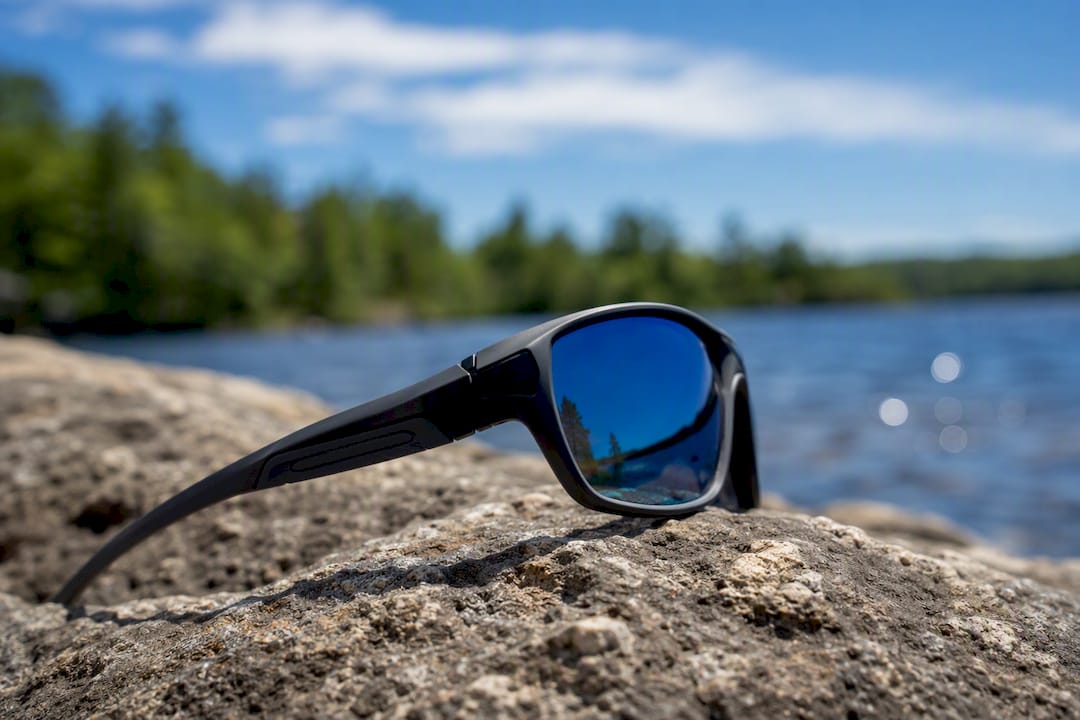
Fishing and water-sport polarized lenses are frequently tuned with specific tint bases, amber or copper for spotting fish beneath the surface, gray for bright open water, because the color of the tint changes how well you can see through glare into the water itself. That kind of tint engineering adds cost over a generic gray lens.
Sport and driving-specific polarized sunglasses often add wraparound frame designs, rubberized grips, and impact-rated lens materials built for higher-speed impact scenarios, whether that’s a bike ride, a boat deck, or highway driving. Those frame features add manufacturing cost beyond what a casual pair needs.
The practical takeaway: if you’re buying polarized sunglasses specifically for fishing, motorcycle riding, or serious outdoor sport, expect to land in the mid-to-premium range rather than the entry tier, because the specialized tint work and impact-rated build genuinely change what you’re getting. Casual everyday wear doesn’t need those upgrades, and paying for them without using them is money spent on a feature you won’t benefit from.
How Do Shipping and Returns Affect What You Actually Pay?
The listed price on a pair of polarized sunglasses isn’t always your final cost. Shipping fees and return policy terms can add to, or protect, your total spend in ways that aren’t obvious at checkout.
Many online retailers advertise free shipping over a minimum order threshold, which can push budget-conscious shoppers to add an accessory, like a protective case, just to clear that line. That’s not a bad move if you needed a case anyway, but it’s worth knowing the threshold exists before you assume the listed sunglasses price is your final number.
Return policies matter even more, particularly for prescription orders where fit and lens accuracy can’t be judged from a product photo. A generous return window protects you if the frame doesn’t fit your face the way you expected, or if a progressive prescription needs adjustment. A restrictive return policy, especially one that excludes prescription lenses once cut, shifts real risk onto you.
Before buying from any retailer, check the return window length, whether return shipping is free or deducted from your refund, and whether prescription lenses are excluded from returns entirely. Shoppers frequently check third-party review sites to gauge how a retailer actually handles returns in practice, since posted policies don’t always match real-world experience.
The Real Price Question Isn’t “Cheap or Expensive”
Most advice on this topic treats price like a straight line: pay more, get better sunglasses. The research doesn’t fully back that up. What actually separates a good $40 pair from a bad $150 pair is whether the seller is straight with you about materials, whether UV400 is genuinely present rather than assumed, and whether the return policy backs up the price tag.
The conventional wisdom that “cheap polarized sunglasses are always inferior” misses the more useful question: inferior at what? A $25 pair with real UV400 and polycarbonate lenses protects your eyes just as well as a $200 pair for everyday driving. Where the extra money earns its keep is durability, coating quality, and specialized tint work for fishing or sport use, not glare reduction itself.
If you’re budgeting for polarized sunglasses, prioritize UV400 verification and return policy first, frame material and coatings second, and brand name last. That order gets you the most protection per dollar. Chap’el’s approach, building real UV400 and polarization into every price tier rather than reserving it for premium collections, reflects that same priority.
Chap’el’s Polarized Collections Match Every Budget
Finding a pair that fits your budget shouldn’t mean guessing whether the polarization is real or the UV protection is actually there. Chap’el Eyewear builds UV400 protection and genuine polarization into every collection, so the difference between tiers comes down to frame material, style, and finish, not whether your eyes are protected.
The Classic Polarized collection covers everyday value shoppers who want reliable polarized protection without paying for extras they don’t need. Step up to Sport Polarized for wraparound builds and impact-resistant lenses suited to riding, fishing, or active outdoor use. If you want designer-grade frames and premium lens finishes, the Designer Polarized collection delivers that without the inflated markup of legacy fashion brands. Every collection ships with a clear return policy, so you can check fit and lens performance before committing. Browse the full lineup at Chap’el Eyewear and find the tier that matches what you actually need this season.
Frequently Asked Questions
How much are polarized sunglasses on average? Most polarized sunglasses fall between $60 and $150 for a mid-range pair with solid frame materials and coatings. Entry-level options start around $15 to $60, while premium designer pairs run $150 and up.
Is it worth paying extra for polarized lenses? Yes, especially for driving, fishing, boating, or snow sports, where glare off flat surfaces like water, roads, or snow creates real visibility hazards. For casual indoor-adjacent use, standard UV protection without polarization may be enough.
How much do polarized sunglasses cost with a prescription? Prescription polarized sunglasses typically cost noticeably more than non-prescription pairs, with the total depending on lens index, coatings, and whether you need single-vision or progressive correction. Get separate quotes for the frame and lens work to see where the cost is coming from.
What’s the best value polarized sunglasses option for most buyers? Mid-range polycarbonate polarized lenses in the $60 to $150 range typically offer the best balance of durability, UV400 protection, and price. Polycarbonate delivers strong impact resistance without the added cost of glass lenses.
Do cheap polarized sunglasses actually work? Many affordable polarized sunglasses do reduce glare effectively, but verify UV400 labeling and check the return policy before buying, since quality control varies more at the lowest price points.
Sources
- Trustpilot — GlassesUSA reviews