

Nylon vs Acetate Frames: Which Material Fits Your Life?
For active, impact-heavy use, choose nylon or TR90. For fashion-forward looks and a custom optician fit, choose acetate. That’s the whole decision in one sentence, and almost everything else in this guide just explains why.
The American Academy of Ophthalmology lists both acetate and blended nylon as standard, safe frame materials, so this isn’t a question of one being inferior. It’s a question of matching the plastic to what you actually do all day.
- Durability vs. aesthetics: Nylon and TR90 flex and spring back under stress; acetate holds richer color and polish but can crack under a sharp direct hit.
- Weight vs. adjustability: Nylon frames stay lightweight and keep their molded shape; acetate can be heat-formed by an optician for a precise, personalized fit.
At Chap’el Eyewear, Brian and the product team see this trade-off play out daily across sport and fashion collections alike, which is why the material question comes before the style question for most buyers.
Key Takeaways
Nylon and TR90 win on weight, flex, and impact resistance, while acetate wins on custom fit, color depth, and finish quality.
| Point | Details |
|---|---|
| Match material to activity | Choose nylon or TR90 for sports, kids, and daily wear and tear; choose acetate for fashion and desk work. |
| Fit adjustability differs sharply | Acetate can be heat-formed by an optician; nylon and TR90 hold their molded shape instead. |
| Price reflects labor, not just material | Acetate costs more due to hand-polishing and sheet-cutting waste, while injection-molded nylon is cheaper per unit. |
| Sensitive skin favors nylon | TR90’s hypoallergenic profile and chemical resistance suit sweat-heavy or reactive skin. |
| Chap’el covers both needs | Chap’el Eyewear offers TR90-style sport frames and acetate-style designer frames to match either priority. |
Table of Contents
- What Is Acetate and Why Do Buyers Pick It?
- What Is Nylon or TR90 and Why Do Buyers Pick It?
- How Do Nylon and Acetate Compare Day to Day?
- How Should You Choose Between Nylon and Acetate?
- How Do You Care for Acetate and Nylon Frames?
- Which Style and Fit Should You Try On?
- Which Chap’el Collections Match Your Needs?
- Does Frame Material Affect Sustainability?
- What Actually Matters Most in This Decision
- Find Your Match in Chap’el’s Collections
- Frequently Asked Questions
- Sources
What Is Acetate and Why Do Buyers Pick It?
Acetate frames start life as cellulose acetate, a plant-based plastic derived largely from cotton fibers and wood pulp, pressed into large sheets before a single frame is cut. Those sheets are often layered in multiple colors, so when light hits the edge of a finished frame you get depth, a marbled swirl, or a subtle color shift you’ll never see in a molded plastic. That layering, combined with a labor-intensive polishing process, is why acetate frames tend to look and feel more expensive.
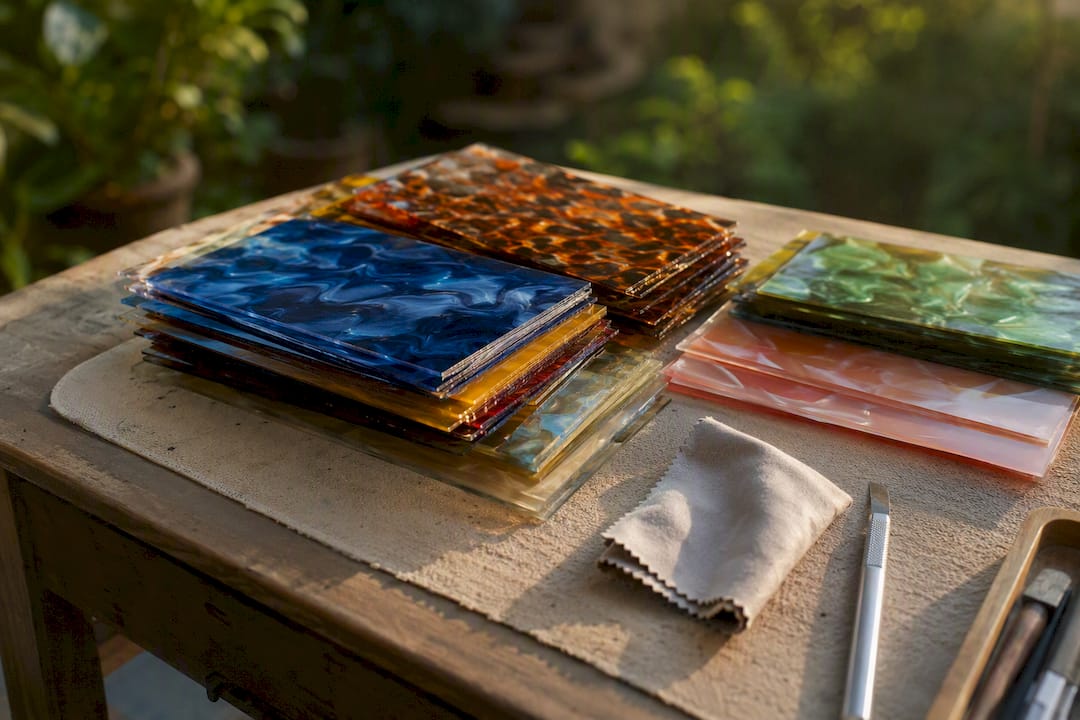
The other reason opticians reach for acetate constantly: it responds to heat. Warm the temples slightly and an optician can reshape the frame around your specific head width or ear height, something Raleigheyecenter points to as the material’s core advantage for custom fitting.
Acetate isn’t without weak points. It’s more brittle than nylon under a sharp, blunt impact (think a dropped frame landing corner-first on tile), and cheaper, lower-grade acetate sheets can yellow over time or turn slightly tacky if the plasticizers used in production break down.
- Best suited to buyers who wear glasses primarily for style, work, or everyday indoor use
- Best for anyone who wants a frame heat-adjusted to a precise, personal fit
- Worth a pass if you play contact sports or work in conditions where frames get knocked around
Pro Tip: Ask whether the acetate is a solid block or a layered laminate sheet. Laminates usually show richer color depth and tend to be the higher-grade option.
What Is Nylon or TR90 and Why Do Buyers Pick It?
Nylon-based frame plastics, most commonly sold under the name TR90 or Grilamid, are thermoplastics that get injection molded rather than cut from a sheet. That manufacturing difference is the source of almost every practical advantage the material has.
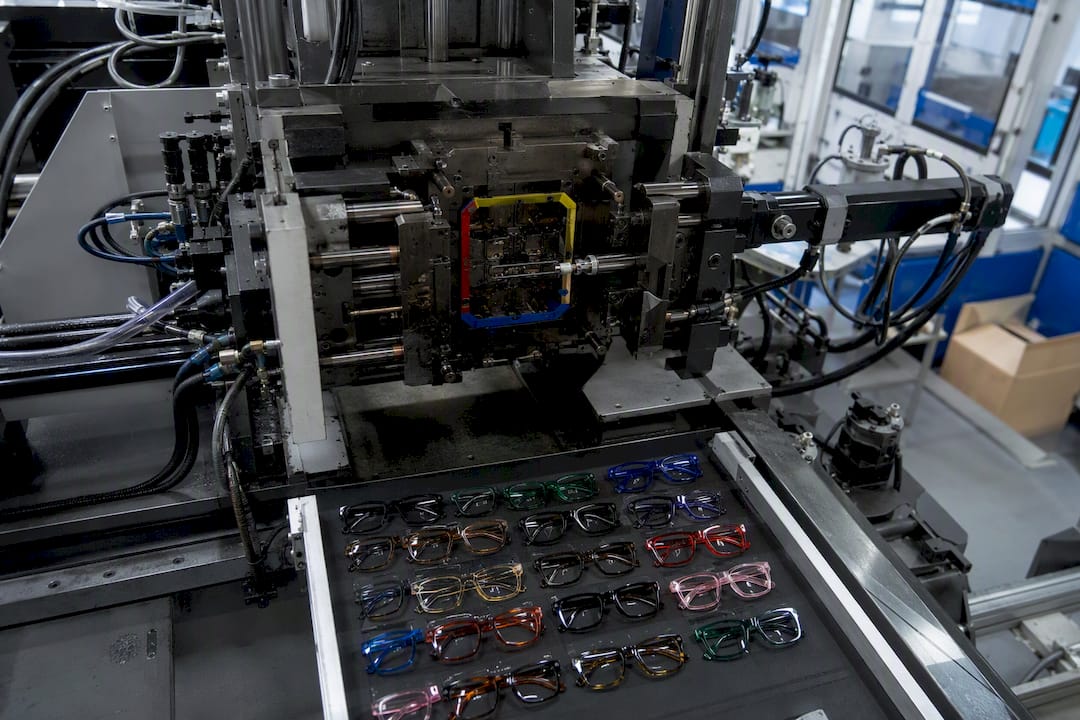
TR90 has a notably low density, so a full frame often weighs less than a coin, and it comes back to its original shape after being bent, twisted, or sat on. LANSEE’s sourcing guide describes this as high flex-cycle tolerance and shape memory, which explains why TR90 shows up so often in sport and kids’ eyewear where frames get abused daily. It also resists sweat, sunscreen, and other chemicals better than acetate, and Lens notes it’s generally hypoallergenic, a real consideration for anyone with sensitive skin around the temples or nose bridge. Many supply listings also carry biocompatibility certifications backing that claim.
Where nylon loses ground is finish. It doesn’t take the same glossy, layered color effects acetate does, so most nylon frames land in matte solids, translucent tones, or sport-oriented two-tone designs rather than the tortoiseshell or marbled patterns acetate can pull off.
- Best for runners, cyclists, and anyone doing repeated high-impact activity
- Best for kids’ eyewear, where frames get dropped, sat on, and stepped on
- Best for anyone with sensitivity to nickel or other metals commonly found in frame hardware
Pro Tip: If a product listing just says “plastic frame” without naming the resin, ask directly whether it’s TR90 or a generic nylon blend. The difference in flex and impact resistance is significant.
How Do Nylon and Acetate Compare Day to Day?
Material specs matter less than how a frame behaves after six months of actual wear. Here’s where the two diverge in ways you’ll actually notice.
| Factor | Acetate | Nylon / TR90 |
|---|---|---|
| Weight | Noticeably heavier, especially in thick frames | Very light, minimal pressure on nose and ears |
| Failure mode | Can crack or snap under a sharp impact | Bends and springs back rather than breaking |
| Adjustability | Heat-formable for a custom, lasting fit | Resists reshaping, holds molded shape |
| Finish options | Deep colors, gloss, marbled patterns | Mostly matte or solid, sportier look |
| Price and value | Higher cost from hand polishing and sheet waste | Lower per-unit cost from injection molding |
| Repair | Optician can often reshape or re-polish | Harder to reshape but rarely needs to be |
That price gap isn’t arbitrary. Hand-polishing acetate and cutting frames from flat sheets generates material waste and labor hours that injection molding simply skips, which is part of why Hua Ming Optical’s sourcing guide points to acetate carrying a consistent wholesale premium over TR90.
Adjustability cuts the other way, though. An optician can warm acetate temples and dial in a fit that lasts years. Nylon, once molded, tends to resist that kind of reshaping and will usually spring back toward its factory form. If your face shape is unusual or you’ve struggled with frames sliding down your nose, that’s worth weighing heavily.
How Should You Choose Between Nylon and Acetate?
Work through these questions in order, and the right material usually becomes obvious by the third one.
- What will you actually be doing while wearing them? Office work and evenings out point toward acetate. Running, cycling, fishing, or coaching kids’ soccer points toward nylon or TR90.
- Do you need a precise, adjusted fit? If your face shape is atypical or you’ve had frames slip before, acetate’s heat-forming gives an optician more to work with.
- What’s your budget, and what are you paying for? If you want hand-finished color and polish, expect to pay for it. If you want performance per dollar, injection-molded nylon usually wins.
- Do you have sensitive skin? Nylon’s hypoallergenic profile matters if metal or certain plastics irritate you.
Before buying, ask the retailer or optician three direct questions: What’s the exact material name, not just “plastic”? Is there a metal core wire inside the temples for extra strength? Is the frame heat-adjustable, and does the warranty cover breakage?
- Walk away from vague labels like “durable plastic” with no named resin
- Be cautious of any online listing that offers no repair or adjustment service at all
- Confirm return policies before buying acetate frames sight unseen, since fit can’t be judged from a photo
How Do You Care for Acetate and Nylon Frames?
Both materials are low-maintenance, but they fail differently when mistreated. Clean acetate and nylon the same basic way: lukewarm water, a drop of mild dish soap, and a microfiber cloth. Skip paper towels and shirt hems, since both can grind grit into the lens coating.
Heat is where the two materials part ways. Acetate can warp or discolor if left on a car dashboard or near a heater, the same heat sensitivity that lets an optician adjust it on purpose. Nylon and TR90 tolerate heat swings far better and rarely warp from casual exposure.
Common repairs run predictably: a loose hinge screw is a five-minute fix at most optical shops, often free. A full temple replacement or re-polish on acetate runs higher due to the hand labor involved, while cracked TR90 frames are typically replaced outright rather than repaired, since the material doesn’t take adhesive or reshaping well.
Pro Tip: Store frames in a hard case, not a soft pouch, if you’re rough on your glasses. It’s the single cheapest way to extend the life of either material.
Which Style and Fit Should You Try On?
Acetate rewards trying on in person. Photos flatten the color depth that’s the whole point of the material, so go feel the thickness and see how the layered tones shift in different light. Thicker acetate frames tend to suit bolder, statement-driven looks; thinner cuts read more understated.
Nylon and TR90 lean sporty by default, wraparound shapes, lightweight aviators, and slim rectangular profiles built for movement rather than statement-making. If you want a bold frame that still won’t snap on a trail run, look for hybrid designs that use a nylon core with an acetate-look coating.
- Check nose pad style: adjustable silicone pads work best on nylon, since the frame itself won’t reshape
- Ask whether temples are spring-hinged, which adds comfort regardless of material
- Match lens choice to activity: polarized for glare-heavy outdoor use, photochromic for frames worn both indoors and out
Which Chap’el Collections Match Your Needs?
Buyers chasing durability and low weight tend to land in Chap’el’s flexible, TR90-style frames, built for exactly the flex-and-recover behavior this guide covers. Anyone training, fishing, or riding regularly should look at the sport polarized lineup, where lightweight frames pair with lenses built for glare.
Brian, who covers frame material and fit questions on the Chap’el blog, puts it plainly: material choice should follow how you actually use your glasses, not just how they look on a shelf.
Buyers prioritizing color depth and a dressier look fit better in designer polarized styles, where acetate’s finish options do the most work.
- If you need a heat-adjusted fit, ask about optician services before buying acetate online
- If durability is non-negotiable, TR90 collections remove the guesswork
- Check Chap’el’s brand page for the full range across both material families
Does Frame Material Affect Sustainability?
Cellulose acetate has a genuine edge in raw-material sourcing: it’s derived largely from wood pulp and cotton fiber rather than petroleum, which makes it a partially bio-based plastic compared to fully synthetic resins. That doesn’t make it biodegradable in any practical sense once dyes, plasticizers, and hardware are added, but the starting material is less oil-dependent than a lot of alternatives.
Nylon and TR90 are petroleum-derived thermoplastics, and their environmental case rests more on longevity than sourcing. A frame that survives years of drops and flexing instead of cracking and getting tossed after six months has a smaller footprint over its lifetime, even if the raw plastic itself isn’t bio-based.
Neither material is close to compostable, and neither industry has a widespread, standardized recycling stream for old eyewear yet. The most meaningful sustainability move available to most buyers isn’t picking one resin over the other. It’s choosing a frame durable enough, or adjustable enough, to actually last, and repairing hinges and screws instead of replacing the whole pair at the first sign of wear.
What Actually Matters Most in This Decision
Most buying guides treat nylon versus acetate as a durability contest, and nylon usually “wins” on paper. That framing misses the actual question, which isn’t which material is objectively tougher, but which failure mode you can live with. Acetate’s brittleness only matters if you’re hard on your glasses. TR90’s resistance to reshaping only matters if your fit is unusual to begin with.
The overrated factor, in my view, is weight. Buyers fixate on gram counts when the bigger day-to-day difference is almost always the fit adjustment acetate allows and TR90 doesn’t. A frame that’s technically heavier but sits correctly on your face beats a feather-light frame that slides down your nose by 3pm.
Prioritize honestly assessing your own habits first: how often you drop things, whether you’ve had fit problems before, and what you’re actually doing while wearing the glasses. Get that right, and the material choice mostly makes itself.
Find Your Match in Chap’el’s Collections
Whether you land on nylon, TR90, or acetate, the harder part is usually finding a frame that nails the fit and finish you actually want, not just the resin. Chap’el Eyewear builds both directions on purpose: lightweight, flex-tested frames for the sport and outdoor crowd, and richer, custom-fit-friendly options for buyers who want a frame that reads as a style statement first.
If durability and weight are driving your decision, the sport polarized collection is built around exactly the impact resistance and low-weight profile covered above. If you’re after color depth and a fit an optician can dial in, browse custom fit options before you commit. Every pair ships with size and fit guidance, and Chap’el’s full collection is the fastest way to compare both material families side by side. Pick your use case, then try a pair on for yourself.
Frequently Asked Questions
Is nylon or acetate better for glasses overall? Neither is universally better. Nylon and TR90 hold up better under impact and weigh less, while acetate offers richer color and a heat-adjustable fit. The right choice depends on how you use your glasses.
Can acetate frames be adjusted like nylon frames can? Acetate adjusts far more easily. An optician can heat and reshape acetate temples for a custom fit, while nylon and TR90 tend to resist reshaping and spring back to their molded form.
Are TR90 frames worth the switch if I play sports? Yes, for most active use. TR90’s low weight, flex memory, and sweat resistance make it a stronger fit for running, cycling, and other high-impact activities than acetate.
Do acetate frames break more easily than nylon? Acetate is more prone to cracking under a sharp, direct impact, while nylon and TR90 tend to bend and spring back rather than snap.
Which material is better for kids’ glasses? Nylon or TR90 is generally the safer choice for kids, since it resists breaking when dropped or sat on and typically weighs less on a child’s face.
Sources
- Eyeglass frame materials — American Academy of Ophthalmology
- TR90 Sunglasses Frames: Complete B2B Sourcing & OEM Guide | LANSEE
- Lens
- A closer look at frame materials: Choosing the right one for your lifestyle