

Custom Fit Sunglasses: Design and Order Guide
For the sharpest path to sunglasses that actually stay on your face, start with Chapeleyewear. Measure your pupillary distance (PD), note your bridge width and temple length, then pick your frame style and lenses. Chapeleyewear’s collection covers UV400 protection, polarized and photochromic lenses, adjustable nose pads, and impact-resistant polycarbonate, so most buyers can build a pair that fits their face and their life without a trip to an optician.
Here is what you need to do:
- Measure PD at home with a ruler and mirror, or use a phone-based 3D scan
- Note bridge width, temple length, and lens height before selecting a frame
- Choose lenses based on your activity (polarized for glare, photochromic for variable light)
- Confirm the vendor’s fit guarantee and return policy before you pay
- Place the order and expect production plus US shipping to add a few days to your timeline
Table of Contents
- What design choices can you actually control on custom-fit sunglasses?
- How to get a true custom fit before you order
- Which lens options are worth paying for?
- Frame and lens materials: what changes comfort and durability
- What does the ordering process actually look like?
- What do custom-fit sunglasses cost?
- Build-your-own vs. bespoke: which path fits your situation?
- How reliable is AI 3D scanning for custom fit?
- Key Takeaways
- Why fit should come before style
- Chapeleyewear builds custom-fit sunglasses around what your face actually needs
What design choices can you actually control on custom-fit sunglasses?
True custom fit is not the same as picking a color. Frame geometry — bridge width, temple length, and lens curvature — is what prevents sliding, pinching, and pressure points. Color, finish, and engravings are cosmetic. Knowing which is which saves you from paying a premium for personalization that does not change how the frame sits.
Choices that affect fit and comfort:
- Frame shape and size: Wrap frames give more side coverage and suit active use; square and aviator shapes work better for casual wear. A frame that is too wide gaps at the temples; too narrow and it pinches.
- Temple length: Standard, short, or adjustable temples change how far back the frame sits and whether it digs behind the ear. If you have had frames slip forward, a longer temple or rubberized tip fixes it.
- Nose bridge: Fixed bridges suit symmetrical noses; adjustable silicone pads let you raise or lower the frame and prevent the lenses from sitting too close to your cheeks. Low-bridge designs are built for flatter nasal profiles.
- Frame curvature (wrap angle): A higher wrap angle keeps lenses closer to the face, which matters for UV coverage and wind protection in sport frames.
Choices that are mostly cosmetic:
- Color, finish (matte vs. glossy), and lens tint
- Engravings or custom text
- Accent colors on temples or nose pads
Pick the fit variables first. Style follows.
How to get a true custom fit before you order
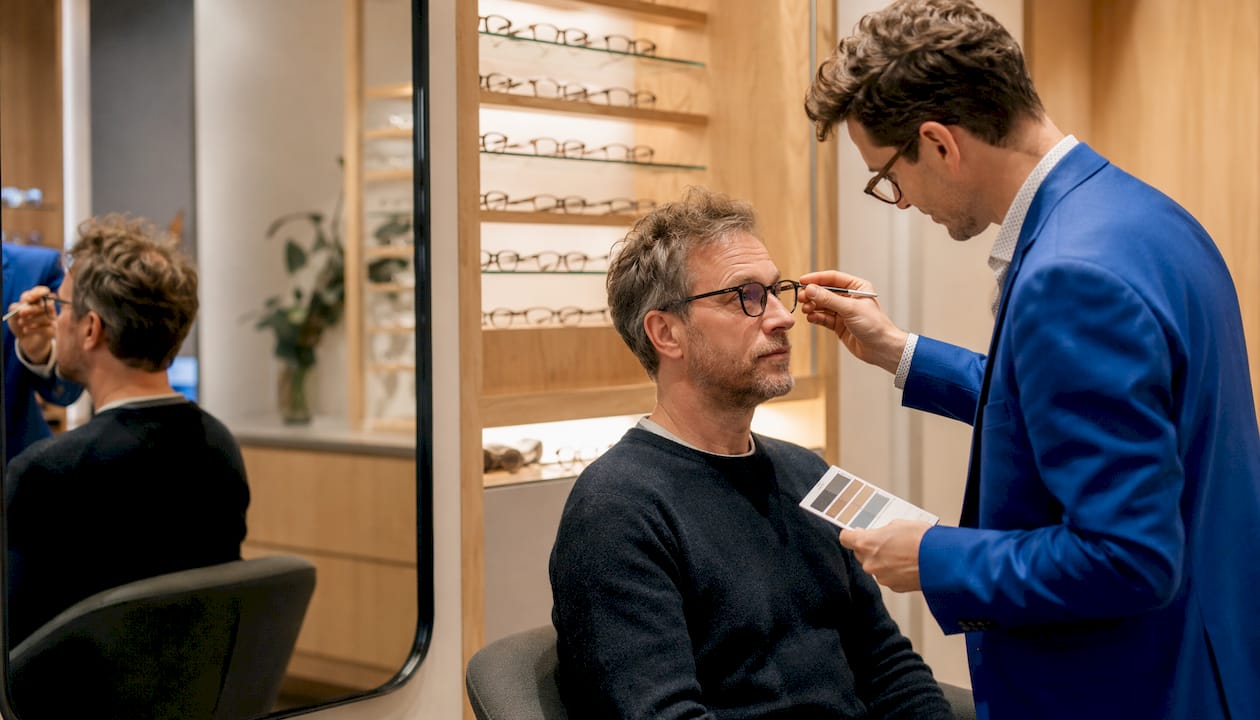
The four measurements that matter
| Measurement | What it controls | How to measure |
|---|---|---|
| Pupillary distance (PD) | Lens optical center alignment | Ruler + mirror, or phone scan app |
| Bridge width | How high the frame sits on your nose | Ruler across the nose bridge |
| Temple length | How far back the frame reaches | Ear tip to hinge, along the side |
| Lens width/height | Coverage and frame proportion | Existing frame or brand size chart |
Pro Tip: Take your PD measurement twice on different days. A single measurement can be off by 1–2 mm, and that error compounds with prescription lenses.
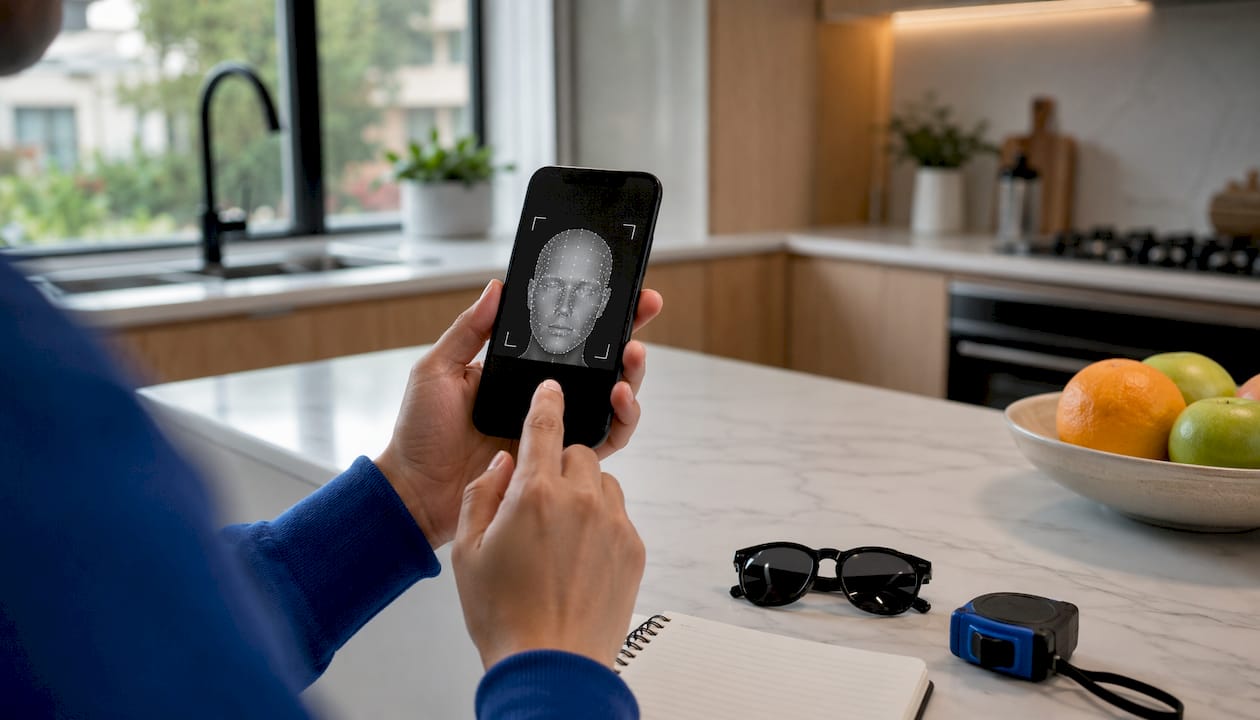
Phone-based 3D scanning, as used by services like iAyez, uses AI to capture detailed facial data in roughly 30 seconds. The technology is genuinely useful, but scan quality varies with lighting and camera capability. A well-lit room and a phone with a decent front camera produce far more reliable results than a dim hallway selfie.
Virtual try-on previews show proportion, not fit. Use them to rule out shapes that look obviously wrong, then verify the actual frame dimensions against your measurements before confirming.
- Always check the fit guarantee and exchange window before ordering
- Document your measurements in writing so you can reference them if a fit issue arises
Which lens options are worth paying for?
Lens choice is where personalized eyewear earns its keep beyond aesthetics. The right lens for your activity does more than look good.
- Polarized lenses cut reflected glare from water, roads, and snow. Chapeleyewear’s designer polarized collection is built for intense sunlight and everyday wear.
- Photochromic lenses darken outdoors and lighten indoors, which suits commuters and hikers who move between environments. See the photochromic vs. polarized breakdown for a direct comparison.
- Mirrored lenses reduce light transmission and add a reflective finish; useful in high-glare conditions, though they show scratches more readily.
- Tinted lenses (amber, gray, rose) filter specific wavelengths. Gray is the most color-neutral; amber improves contrast in low light.
UV protection: UV400 blocks wavelengths up to 400 nanometers, covering both UVA and UVB. Any lens marketed as UV400 meets this standard regardless of tint darkness. A dark lens without UV400 coating is worse than a light lens with it, because your pupil dilates behind the dark tint and admits more unfiltered radiation.
For prescription buyers, PD accuracy is critical. Even a 2 mm error in PD shifts the optical center off-axis and causes eye strain. Progressive lenses in sunglasses also require precise fitting height measurements, which is one reason bespoke services charge more.
Statistic to verify: Some vendors advertise large fit-success numbers in their marketing. Before you rely on those figures, check for documented return rates and independently verified customer reviews focused specifically on fit accuracy.
Frame and lens materials: what changes comfort and durability
Frame materials:
- TR90: Lightweight, flexible nylon used in sport frames. Resists impact and returns to shape after bending.
- Acetate: Heavier than TR90 but adjustable with heat, which lets an optician fine-tune fit. Richer color options.
- Injected nylon: Cost-effective and durable; less adjustable than acetate but holds shape well.
- Titanium: The lightest metal option, hypoallergenic, and highly adjustable. Adds cost.
Lens materials:
- Polycarbonate: Impact-resistant, lightweight, and the standard for sport use. Chapeleyewear’s sport polarized line uses impact-resistant polycarbonate lenses.
- CR-39: Optical plastic with excellent clarity and lighter than glass, but less impact-resistant than polycarbonate.
- Glass: Sharpest optical clarity, heaviest, and shatters on impact. Rarely used in sport or active frames.
Adjustable metal cores inside temples let you bend the arm to follow your ear’s angle. Integrated silicone nose pads, common on TR90 sport frames, grip better than fixed plastic bridges and resist sweat.
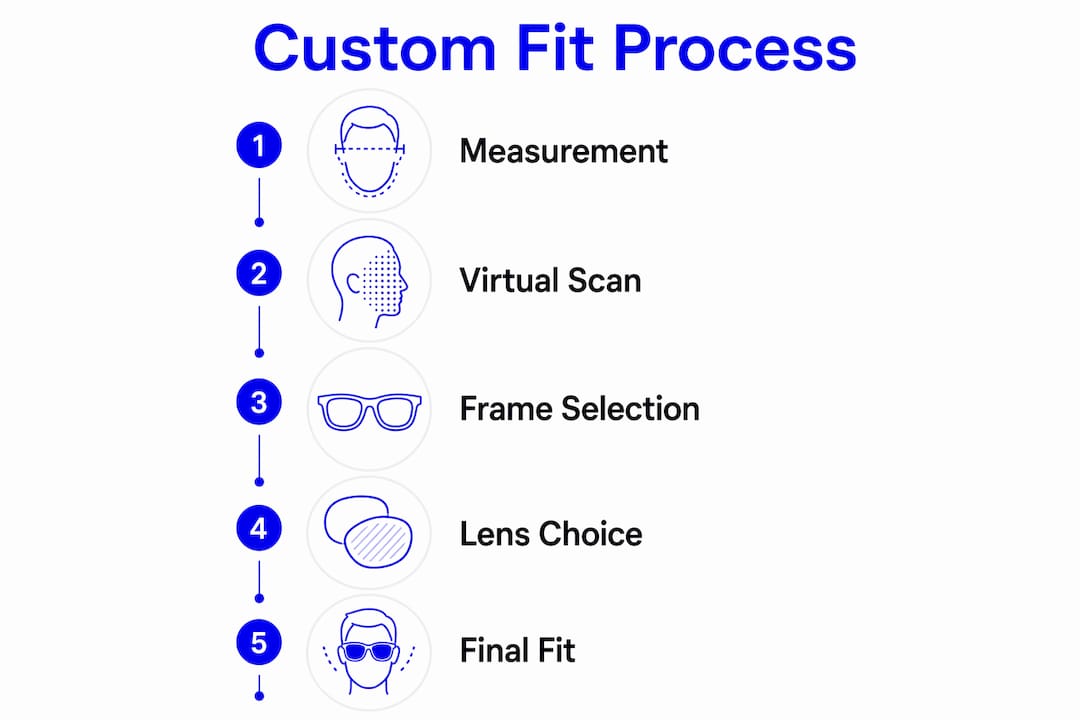
What does the ordering process actually look like?
- Choose your frame style and size range
- Enter measurements or complete a phone 3D scan
- Select lens type, tint, and any coatings
- Preview the configuration and confirm dimensions
- Submit the order and receive a production estimate
- Delivery to your US address
Choosing a retailer that offers at-home measuring guidance or a validated scan tool cuts the risk of a mis-fit order. Services like Yuniku from HOYA Vision Care use 3D face scanning to design and 3D-print frames around optimal lens position, showing what a fully bespoke workflow looks like at the professional end of the market.
Phone-based scan services like iAyez advertise delivery in about a week to ten days for 3D-printed frames. Standard custom builds from established brands typically add a few production days before US shipping begins.
What do custom-fit sunglasses cost?
Cost scales with how much the frame geometry is actually altered and how complex the lenses are.
- Build-your-own (style + lens selection): Lower cost; you choose from preset frame geometries and lens options. Good value when your measurements fall within standard ranges.
- Made-to-measure (bespoke geometry): Higher cost; frame dimensions are altered to your specific facial map. Worth it for asymmetrical faces, complex prescriptions, or repeated fit failures.
- Prescription lenses: Add cost based on prescription complexity. Progressives cost more than single vision.
- Coatings: Anti-reflective, hydrophobic, and hard coatings each add to the base lens price.
Ways to keep cost down: choose polycarbonate over glass, skip decorative engravings, and select standard tints over specialty coatings. Chapeleyewear’s affordable protection guide covers how to balance price and performance without sacrificing UV coverage.
Build-your-own vs. bespoke: which path fits your situation?
Choose build-your-own if:
- Your measurements fall within standard frame size ranges
- You have a straightforward prescription or no prescription
- You need faster turnaround
- You want to preview and adjust the design yourself
Choose made-to-measure bespoke if:
- You have facial asymmetry (different ear heights, uneven nose bridge)
- You have a complex or progressive prescription
- Standard frames have repeatedly slipped, pinched, or caused pressure points
- You need a specific wrap angle for sport performance
Red flags to watch for:
- No documented fit guarantee or exchange process
- No measurement guidance or scan tool offered
- Missing PD input field during checkout
- No US-based customer support contact
Ask vendors directly: what does the fit guarantee cover, how long is the warranty, and what happens if the scan produces a frame that does not fit?
How reliable is AI 3D scanning for custom fit?
AI-powered scanning has genuinely lowered the barrier to custom-fit eyewear. Yuniku’s 3D scanning approach designs frames around optimal lens position relative to the eyes, a standard that phone-based tools are working toward. The gap between professional optical scanning and a phone selfie scan is real, though it is narrowing.
Scan quality depends on lighting, user technique, and phone camera capability. A vendor’s marketing claim about data points captured in a scan tells you about their technology; a documented fit guarantee tells you what they will do when that technology falls short.
Pro Tip: Ask any vendor for sample scan outputs and an explanation of how the scan translates to frame dimensions. A vendor who cannot explain that workflow clearly has not thought through what happens when the scan is off.
When evaluating vendors, look for independently verified reviews that specifically mention fit accuracy after delivery, not just aesthetics.
Key Takeaways
Custom-fit sunglasses deliver real comfort gains only when frame geometry is matched to your actual measurements, not just your style preferences.
| Point | Details |
|---|---|
| Measure before you order | Get your PD, bridge width, and temple length before selecting any frame. |
| Fit guarantee is non-optional | Confirm the vendor offers a free exchange or adjustment, not just store credit. |
| Match lens to activity | Polycarbonate plus polarized for sport; photochromic for variable-light environments. |
| Bespoke for complex cases | Choose made-to-measure if you have asymmetry, a complex prescription, or prior fit failures. |
| Chapeleyewear for your build | Chapeleyewear offers UV400 protection, adjustable nose pads, polarized and photochromic options, and impact-resistant polycarbonate across sport and designer collections. |
Why fit should come before style
The conventional wisdom in eyewear marketing is that customization means picking your colors. That framing sells product but undersells the problem. Most people who struggle with sunglasses are not struggling because they chose the wrong tint. They are struggling because the bridge sits too low, the temples flex outward, or the wrap angle lets light in from the sides. Those are geometry problems, and no amount of color selection fixes them.
The smarter question to ask before any purchase is not “what do I want it to look like?” but “what does my face actually require?” Once you have that answer, style choices become easy because you are working within a frame that already fits.
Chapeleyewear builds custom-fit sunglasses around what your face actually needs
Chapeleyewear brings UV400 protection, impact-resistant polycarbonate lenses, adjustable nose pads, and polarized and photochromic lens options into one direct-to-consumer catalog built for US buyers. Whether you are outfitting for daily wear or high-output sport, the sport polarized collection and designer lines give you the lens and frame combinations that match real activity demands, not just aesthetics.
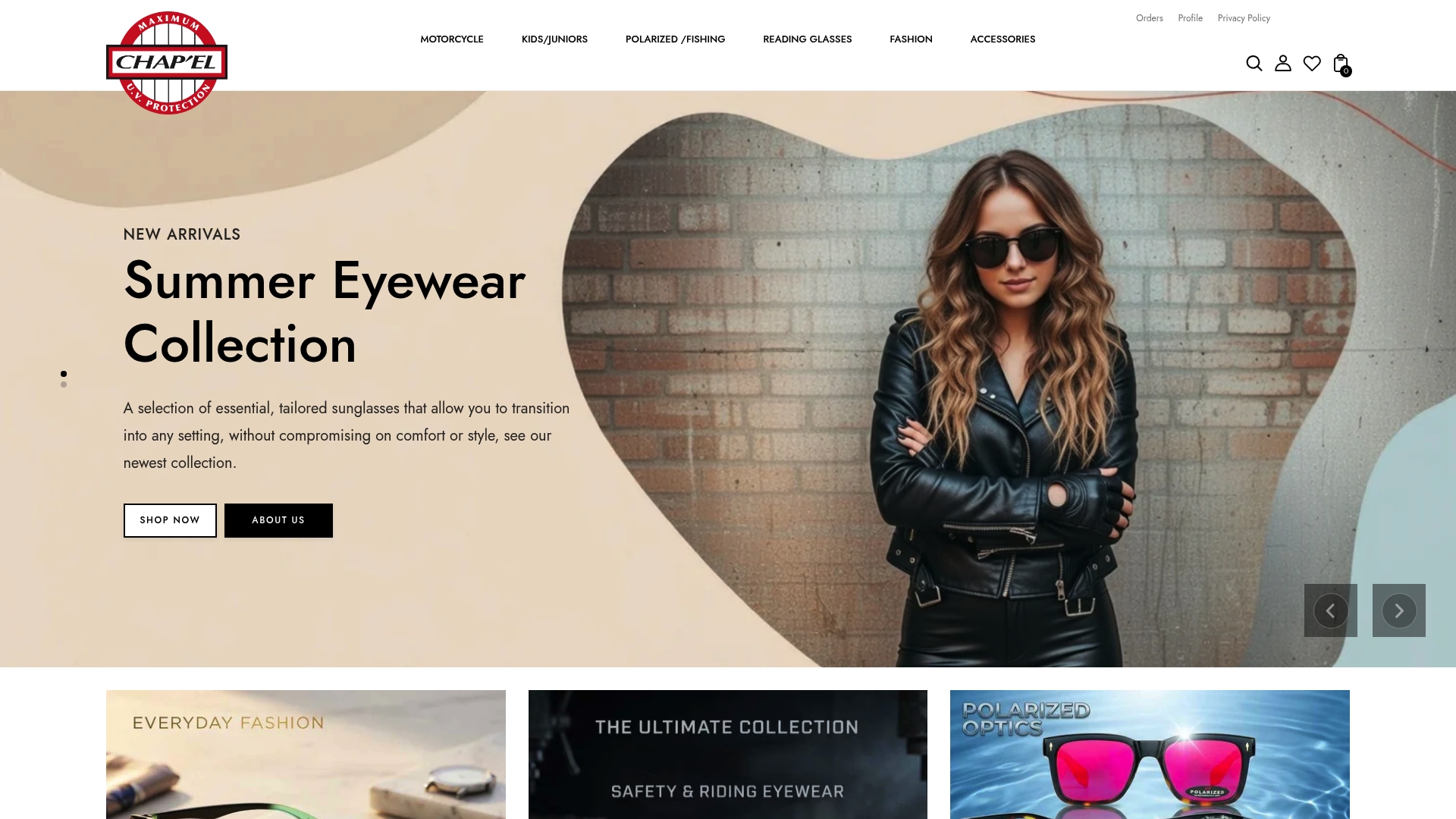
Use Chapeleyewear’s measurement guidance to confirm your PD, bridge width, and temple length, then build your pair from a collection designed to balance protection, comfort, and style. Visit Chapeleyewear to start your custom build today.