

Photochromic Sunglasses vs Polarized: 2026 Guide
Photochromic lenses automatically darken outdoors and clear up indoors by reacting to UV light. Polarized lenses carry a fixed filter that blocks horizontal glare from reflective surfaces like water, wet roads, and snow. Neither is universally better. The right choice depends entirely on your primary visual challenge: adapting to changing light, or eliminating reflective glare.
| Feature | Photochromic | Polarized |
|---|---|---|
| Glare reduction | Dims overall brightness; does not cut reflective glare | Eliminates horizontal glare from water, roads, and snow |
| Light adaptation | Adjusts tint automatically from clear to dark | Fixed tint; no response to changing light |
| Driving suitability | Often stays clear behind UV-blocking windshields | Reduces road glare; may distort dashboard screens |
| Eye strain impact | Reduces strain from overall brightness changes | Reduces fatigue caused by surface glare |
| UV protection | Full UVA and UVB protection | Full UVA and UVB protection |
Choose photochromic lenses if you:
- Move frequently between indoor and outdoor settings throughout the day
- Have light sensitivity and want continuous, automatic protection
- Wear prescription glasses and want one pair for all environments
- Do a lot of early morning or dusk outdoor activity in variable light
Choose polarized lenses if you:
- Spend extended time near water, snow, or bright roads
- Drive regularly in strong sunlight and need glare managed on the road
- Fish, boat, ski, or engage in any sport where reflected glare dominates
- Prioritize style variety and consistent tint appearance
How photochromic lenses work and what you should know
Photochromic lenses contain special molecules embedded directly in the lens material. When UV photons hit those molecules, they trigger a reversible chemical reaction that darkens the lens. Step back indoors, UV drops away, and the lens clears again. The whole process happens without any input from you, which is the core appeal.
The technology has come a long way. Early versions used silver chloride in glass lenses and came only in gray. Today’s lenses use organic photochromic dyes available in multiple colors and materials, including polycarbonate and high-index plastics, as the American Academy of Ophthalmology notes.
One limitation that surprises many buyers: temperature affects how well these lenses perform. Cold weather accelerates darkening while heat slows the chemical reaction, meaning lenses may not darken as deeply on a hot summer day as they would on a cool fall morning. That is not a defect; it is molecular kinetics.
Key photochromic lens characteristics:
- Tint shifts automatically from nearly clear indoors to a sunglass-dark tint outdoors
- Performance varies by brand, temperature, and UV intensity
- Prescription-compatible; available in bifocals, progressives, and most frame styles
- Do not darken adequately inside most cars because automotive glass blocks UV radiation required for activation
- Transition speed varies; cold conditions slow the clearing process
How polarized lenses eliminate glare
Polarized lenses work on a completely different principle. They do not adjust to brightness at all. Instead, they carry a microscopic vertical filter that blocks horizontally polarized light while letting vertically oriented light pass through. Glare from flat surfaces like water, wet pavement, and snow travels in horizontal waves. The filter strips those waves out, leaving everything else intact.
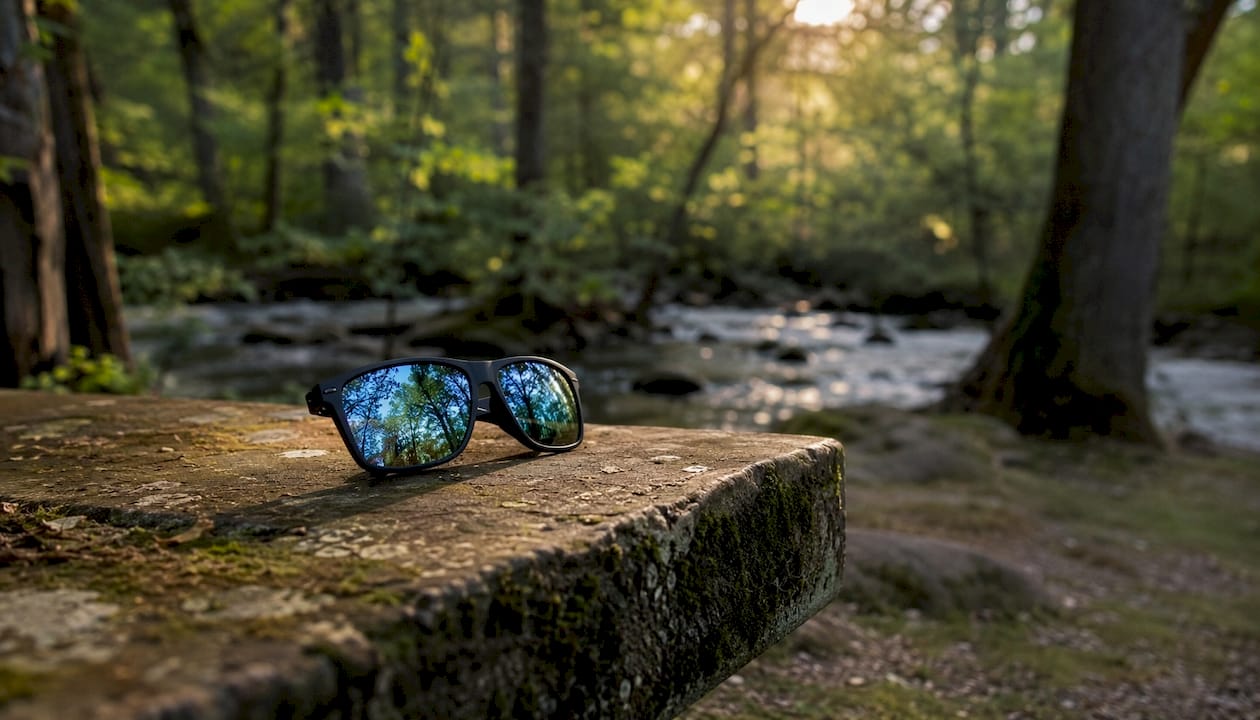
The result is not just dimmer light. It is cleaner, sharper vision with the most visually disruptive light removed. Fishermen can see beneath the water surface. Drivers see the road without the blinding flash off a wet hood. Skiers read terrain definition on snow that would otherwise wash out.
The trade-off is fixed tint. Polarized lenses do not adapt when clouds roll in or when you walk into a shaded canyon. What you see is what you get, regardless of ambient light.
Key polarized lens characteristics:
- Consistent tint level in all lighting conditions
- Excels for water, snow, and road glare where horizontal reflections dominate
- Available in prescription and non-prescription options
- Can interfere with LCD screens, GPS units, and phone displays at certain angles
- Pairs well with digital eye strain management strategies for people who split time between screens and outdoors
Photochromic sunglasses vs polarized: a detailed comparison
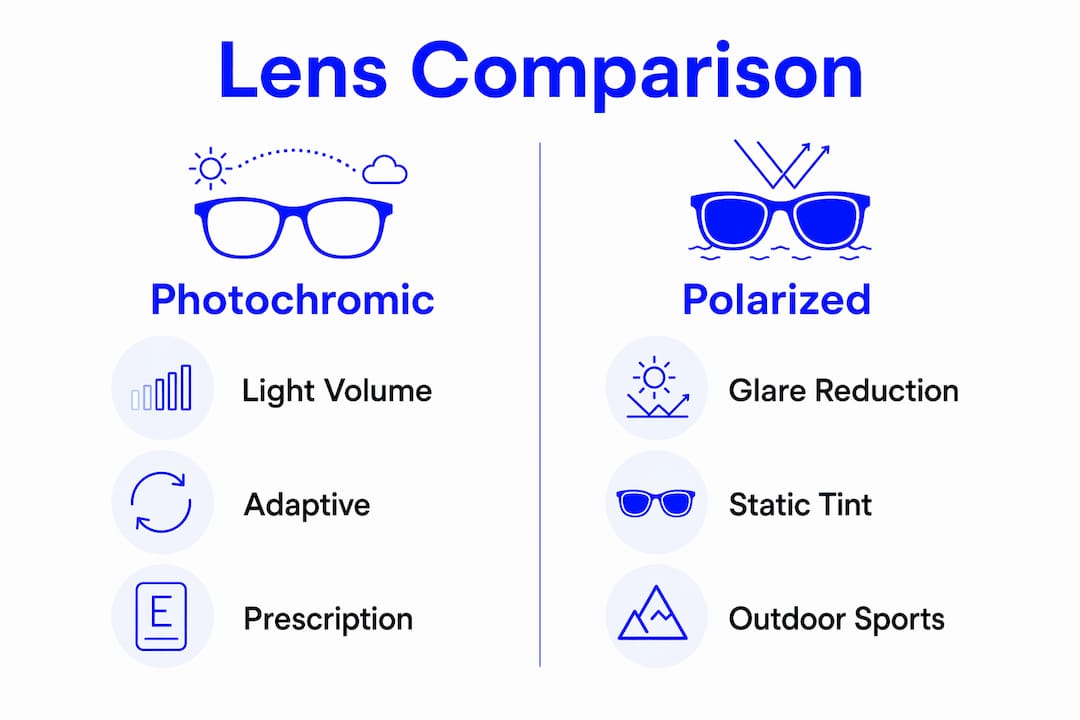
The core difference comes down to what problem each lens solves. Photochromic lenses manage total light volume. Polarized lenses eliminate a specific type of light. Buying the wrong one does not get you a lesser version of the right one; it gets you a tool built for a different job.
| Criterion | Photochromic | Polarized |
|---|---|---|
| Glare reduction effectiveness | Weak; dims brightness but leaves reflective glare intact | Strong; eliminates horizontal glare from reflective surfaces |
| Light adaptation and convenience | Strong; automatic tint shift from clear to dark | None; fixed tint regardless of conditions |
| Suitability for driving | Poor; windshields block UV activation | Adequate; cuts road glare but may distort dashboard screens |
| Impact on eye strain | Reduces strain from brightness transitions | Reduces fatigue from surface glare specifically |
| UV protection | Full UVA and UVB coverage | Full UVA and UVB coverage |
On cost: Photochromic lenses tend to cost more than standard tinted lenses because of the embedded dye technology, but they can replace two pairs (prescription glasses plus sunglasses), which often makes them cost-effective overall. Polarized lenses span a wide price range from budget sport frames to premium designer options. Chapeleyewear’s designer polarized collection shows what the premium end of that range looks like in practice.
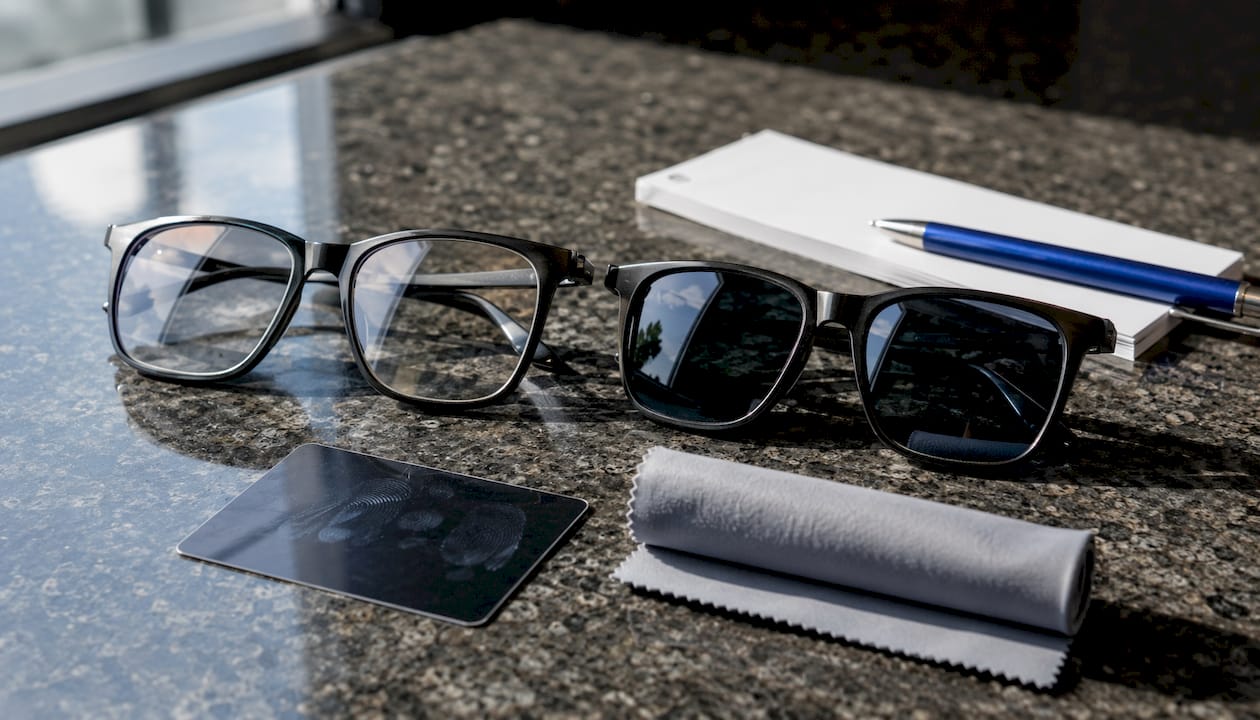
On maintenance: Both lens types benefit from microfiber cleaning cloths and lens-safe sprays. Avoid paper towels, which scratch coatings. Photochromic lenses can degrade over time with heavy UV exposure, gradually losing their darkening range. Polarized lenses can delaminate if the filter layer is scratched, so protective cases matter for both.
Who should choose photochromic lenses vs polarized lenses?
The decision is simpler than most comparisons make it. Identify your primary visual environment, and the answer follows.
Photochromic lenses are the right call for prescription wearers who want one pair that works everywhere. They function as clear glasses indoors and tinted sunglasses outdoors without any frame swap. For anyone who runs, cycles, or hikes across variable terrain including dawn starts and dusk finishes, the automatic tint adjustment removes the need to carry a second pair mid-session. People with light sensitivity (photophobia) also benefit from the continuous, automatic protection that photochromic lenses provide.
Polarized lenses belong on your face when reflective glare is your dominant problem. Fishing, boating, skiing, and driving in bright sun all involve intense horizontal glare that a photochromic lens simply does not address. If you primarily wear contacts and want a dedicated sunglass pair, polarized is the natural choice. You get better glare performance, more style options, and consistent tint that reads as intentional rather than mid-transition.
Some people genuinely need both. A photochromic pair for daily prescription wear and a polarized pair for weekends on the water is a practical setup, not an extravagance. Chapeleyewear’s top photochromic options for 2026 and sport polarized collection cover both sides of that combination.
Can sunglasses be both photochromic and polarized?
Yes, but it is uncommon. Lenses that combine both technologies exist, with some specialized designs becoming more polarized as they darken in sunlight. The deeper the tint, the stronger the polarization effect.
The practical reality is that most photochromic lenses do not include polarization by default. Combined lenses address a genuine niche: drivers and outdoor athletes who need both glare elimination and light adaptability in a single pair. The trade-off is cost and limited availability compared to either technology alone.
Combined lens considerations:
- Higher price point than single-technology lenses
- Polarization effect is often strongest only at full dark tint, not during transition
- Fewer frame and style options than standard photochromic or polarized lines
- Worth the investment if driving in variable conditions is your primary use case
What both lens types get right
Regardless of which direction you go, photochromic and polarized lenses share a set of meaningful advantages over standard clear lenses or cheap tinted sunglasses.
Both provide full UVA and UVB protection, which is the baseline requirement the American Optometric Association sets for any lens claiming sun protection. Look for “100% UVA and UVB” or “UV 400” on the label when you buy.
Shared advantages:
- Complete UV protection from harmful ultraviolet radiation
- Reduced eye strain compared to unprotected lenses in bright conditions
- Available in prescription and non-prescription formats
- Compatible with most frame styles and lens materials
- Provide meaningfully better outdoor visual comfort than clear lenses
What experts say about choosing in 2026
The American Academy of Ophthalmology’s guidance on this question is direct: match the lens to the specific visual problem, not to a general idea of “better protection.” Glare elimination and light adaptability are different problems, and no single lens type solves both equally well.
Industry guidance in 2026 also clarifies a persistent misconception about driving. Standard photochromic lenses are not a reliable driving solution because most automotive windshields block the UV light required to trigger darkening. Drivers who rely on photochromic lenses for sun protection behind the wheel often find their lenses remain largely clear, leaving them without adequate glare management when they need it most.
Key expert takeaways for 2026:
- Neither lens type is universally superior; the right choice depends on your primary activity
- Photochromic lenses are the practical solution for prescription wearers who want one pair
- Polarized lenses are the correct tool for water, snow, and road glare environments
- Combined photo-polarized lenses are a legitimate option for drivers with varied outdoor needs
- Chapeleyewear’s high-performance eyewear lineup reflects these distinctions across its collections
Find the right pair at Chapeleyewear

Chapeleyewear carries both polarized and photochromic options built for real-world use, from sport-ready frames with impact-resistant polycarbonate lenses to classic polarized styles designed for everyday wear. Whether you need one versatile pair or two dedicated options for different activities, the full Chapeleyewear collection covers both ends of the spectrum with UV protection, durable frames, and designs that hold up to daily use.
Key Takeaways
Photochromic lenses solve a light-volume problem; polarized lenses solve a glare problem, and choosing correctly means identifying which of those two challenges you actually face.
| Point | Details |
|---|---|
| Different problems, different tools | Photochromic lenses adapt to changing light; polarized lenses eliminate reflective glare. They are not interchangeable. |
| Driving limitation for photochromic | Most car windshields block UV, preventing photochromic lenses from darkening adequately behind the wheel. |
| Polarized and LCD screens | Polarized lenses can black out phone displays and GPS screens at certain angles, a real daily inconvenience. |
| Both offer full UV protection | Both lens types provide complete UVA and UVB coverage when rated UV 400 or “100% UVA and UVB.” |
| Owning both is practical | A photochromic pair for daily prescription wear and a polarized pair for water or road use suits many people well. |