

Best Site for Sunglasses: Your 2026 Shopping Guide
The best site for sunglasses is one that combines style variety, reliable UV protection, and customer-friendly policies into a single, easy-to-use shopping experience. Online eyewear retail has matured well beyond basic catalog browsing. The top online sunglasses stores now offer polarized lenses, prescription integration, and detailed filtering tools that rival what you’d find at a physical optician. Chapeleyewear is one example of a retailer that balances style with function, serving both fashion-conscious shoppers and outdoor enthusiasts without making them choose between the two.
What makes the best site for sunglasses stand out?
The strongest online sunglasses retailers share a specific set of features that go beyond a large product catalog. Top sunglasses sites balance style variety with UV protection, polarized lenses, and prescription options to serve diverse shopper needs. That combination matters because a site with thousands of frames but no lens technology details leaves you guessing about actual eye protection.
Lens technology and protection standards
Lens quality is the single most important factor to evaluate on any sunglasses site. Look for clear labeling of UVA/UVB protection, polarization, and photochromic capability. Sites that display these specs prominently on product pages signal that they take optical performance seriously. Without that transparency, you are buying on looks alone.
Prescription and optical services
Prescription integration separates general fashion retailers from true eyewear specialists. The best sites let you enter your prescription details directly at checkout, then ship lenses cut to your exact specifications. This feature is especially useful for shoppers who previously assumed online buying meant sacrificing optical accuracy.
Customer-friendly policies
Leading sunglasses retailers commonly offer 60-day returns, free shipping, and 365-day warranties. Those policies reduce the risk of buying eyewear you cannot try on in person. A site without a clear return window is a red flag, regardless of how good the frames look.
Here are the core features to check before purchasing from any online sunglasses store:
- UV protection labeling: Confirm UVA and UVB ratings appear on every product page.
- Lens type options: Look for polarized, photochromic, and blue light blocking choices.
- Prescription compatibility: Check whether the site accepts prescription uploads or manual entry.
- Return and warranty terms: Prioritize sites with at least 30-day returns and a stated warranty period.
- Filtering tools: Good sites let you sort by frame size, lens type, activity, and price.
- Verified customer reviews: Look for review systems that confirm purchases rather than anonymous posts.
Pro Tip: Filter by “polarized” first, then narrow by frame shape. This approach cuts browsing time significantly and keeps optical performance as your baseline, not an afterthought.
How to choose sunglasses online based on your lifestyle
Matching sunglasses to your lifestyle is more specific than picking a frame you like. Sites that offer filtering by activity and size help shoppers find better-fitting glasses suited to their actual use cases. The right pair for a weekend cyclist looks nothing like the right pair for a daily commuter or a beach vacationer.
Follow this process to match your lifestyle to the right type of sunglasses and the right type of retailer:
-
Identify your primary activity. Sports and outdoor use demand wrap-around frames with polarized lenses. Casual daily wear favors lighter frames with standard UV protection. Driving calls for anti-glare polarized lenses that cut road reflection without distorting traffic signals.
-
Consider your face shape and head size. Frame geometry affects both comfort and how well lenses protect your eyes from side-angle light. Shoppers with smaller head sizes benefit from sites that label frames by size category rather than one-size-fits-all descriptions.
-
Evaluate lens performance by environment. Bright, open environments like beaches and ski slopes demand darker tints and high polarization. Overcast or variable conditions favor photochromic lenses that adjust automatically. Urban environments often call for lighter tints with blue light filtering.
-
Match the site’s specialty to your need. Some retailers specialize in high-performance eyewear with detailed technical specs. Others focus on fashion-forward frames with trend-driven collections. Knowing which category fits your priority saves time and prevents buyer’s remorse.
-
Check size guides and virtual try-on tools. Sites that provide millimeter measurements for frame width, lens height, and bridge width give you far more confidence than generic size labels.
Pro Tip: Measure your current favorite pair of glasses with a ruler before shopping online. Matching those measurements to a new frame’s listed dimensions is the fastest way to get a comfortable fit without trying them on.
Why price, brand variety, and reviews matter when shopping online
Price range signals a lot about what you are actually buying, but it does not tell the whole story. Affordable sunglasses can deliver genuine UV protection when purchased from reputable sellers that comply with industry standards. The assumption that cheap means unprotected is simply wrong when the retailer is transparent about its specs.
What price tiers actually tell you
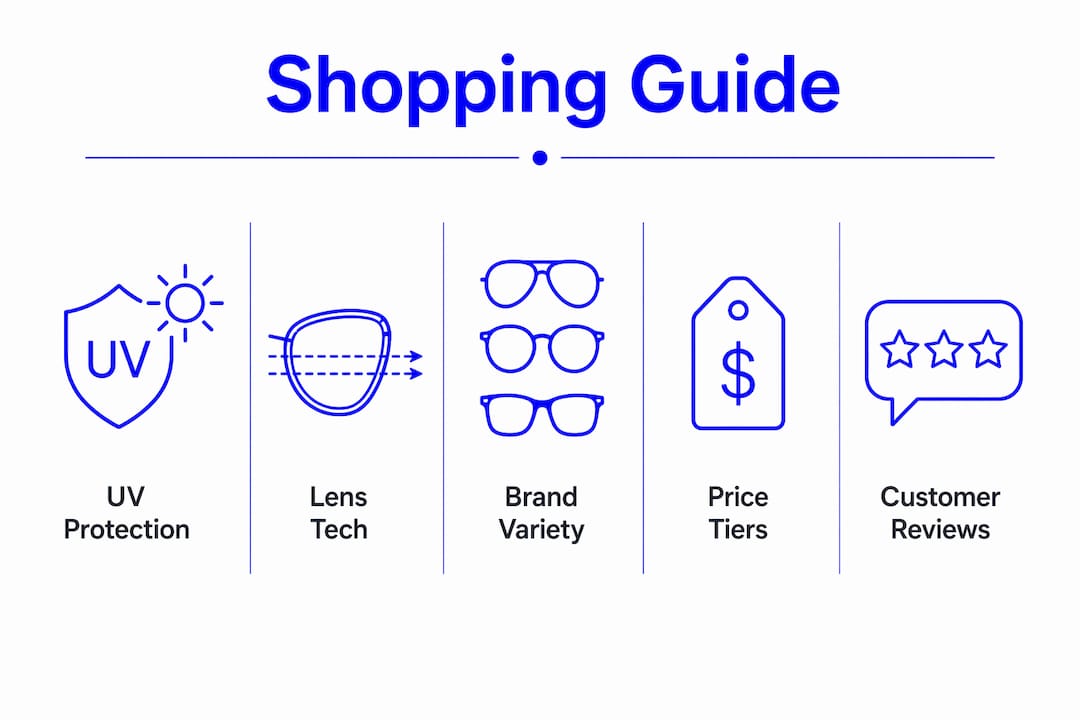
Budget options in the $20–$60 range typically offer standard UV400 protection with basic frame materials. Mid-range options from $60–$150 add polarization, better hinge construction, and more durable acetate or metal frames. Premium options above $150 often include optical-grade lenses, heritage craftsmanship, and extended warranties. The jump from budget to mid-range delivers the most noticeable performance improvement per dollar spent.
Brand variety and specialization
Heritage brands and newer specialists alike prioritize optical quality alongside style. A site that carries only mass-market labels gives you fewer options for specialized needs. Sites with a mix of established names and niche labels tend to serve a wider range of shoppers, from those chasing trends to those prioritizing technical performance.
Reading customer reviews critically
Customer reviews are a key trust factor in online shopping decisions, but they require careful reading. Look for reviews that mention specific use cases, like “wore these for a full day of fishing” or “used them driving into the sun.” Generic five-star reviews with no detail add little value. Reviews that mention fit, lens clarity, and durability over time are the ones worth weighing.
| Evaluation factor | What to look for |
|---|---|
| UV protection | UV400 or 100% UVA/UVB labeling on every product |
| Lens options | Polarized, photochromic, and blue light blocking availability |
| Price transparency | Clear pricing with no hidden fees at checkout |
| Review quality | Verified purchase badges and use-case-specific feedback |
| Return policy | Minimum 30-day window with prepaid return shipping |
What advanced lens technologies should you expect from top sites?
Polarized and photochromic lenses represent the two most significant upgrades over standard tinted lenses. Polarized lenses reduce glare and adapt to lighting changes, improving both visual comfort and safety in outdoor conditions. Photochromic lenses darken in sunlight and lighten indoors, making them ideal for shoppers who move between environments frequently.
Blue light blocking lenses address a different problem. They filter high-energy visible light from screens and artificial lighting, which matters for shoppers who wear sunglasses during long drives or outdoor work near reflective surfaces. Not every site labels these features clearly, so look for dedicated lens technology pages or filtering options that let you sort by lens type.
Sites offering advanced optical features typically include detailed product descriptions and filtering by lens technology, frame size, styling, and price range. That level of detail is a reliable indicator that the retailer understands its products rather than simply reselling them. When a site cannot tell you the difference between its lens options, that is a sign to look elsewhere.
UV protection compliance is non-negotiable. The standard to look for is UV400, which blocks wavelengths up to 400 nanometers and covers both UVA and UVB radiation. Any reputable online sunglasses retailer lists this specification clearly. If a product page omits UV ratings entirely, skip it.
Key Takeaways
The best online sunglasses store is the one that matches your specific priorities, whether that is optical precision, style variety, or value, rather than the one with the largest catalog.
| Point | Details |
|---|---|
| Lens specs come first | Always confirm UV400 protection and polarization options before evaluating style. |
| Policies reduce risk | Sites with 30-plus-day returns and stated warranties make online buying far safer. |
| Lifestyle drives selection | Match lens type and frame style to your primary activity, not just your face shape. |
| Price tiers have logic | The mid-range ($60–$150) delivers the best performance-to-cost ratio for most shoppers. |
| Reviews need context | Weight reviews that describe specific use cases over generic star ratings. |
What I’ve learned from years of watching the online eyewear market
The most common mistake I see shoppers make is treating sunglasses sites like clothing sites. They filter by color and style, add to cart, and move on. Then the frames arrive and the lenses are too dark for driving, or the bridge sits too wide, or there is no UV rating listed anywhere on the packaging.
The sites that earn repeat customers are the ones that make lens technology as easy to browse as frame color. That sounds obvious, but most popular sunglasses retailers still bury polarization details in a product description paragraph rather than surfacing them as a filter. When I evaluate a new site, the first thing I check is whether I can filter by lens type in under ten seconds. If I cannot, the site is not built for shoppers who actually care about eye protection.
The other thing I have noticed is that the online eyewear market has split into two clear camps. One camp competes on price and trend speed. The other competes on optical quality and fit precision. Neither is wrong, but they serve very different shoppers. The mistake is assuming a site that does both well is automatically the best choice. A site that does one thing exceptionally well and knows its audience is almost always a better experience than a generalist trying to cover every price point.
My honest advice: decide whether style or function is your primary driver before you open a single product page. That decision will cut your shortlist from dozens of sites to three or four, and you will make a better purchase faster.
— Brian
Chapeleyewear: a strong option for your sunglasses search
Chapeleyewear offers a collection built around the idea that style and function should not require a compromise. Their frames cover casual daily wear through performance-oriented options for active use, with UV protection and polarized lens options available across the range.
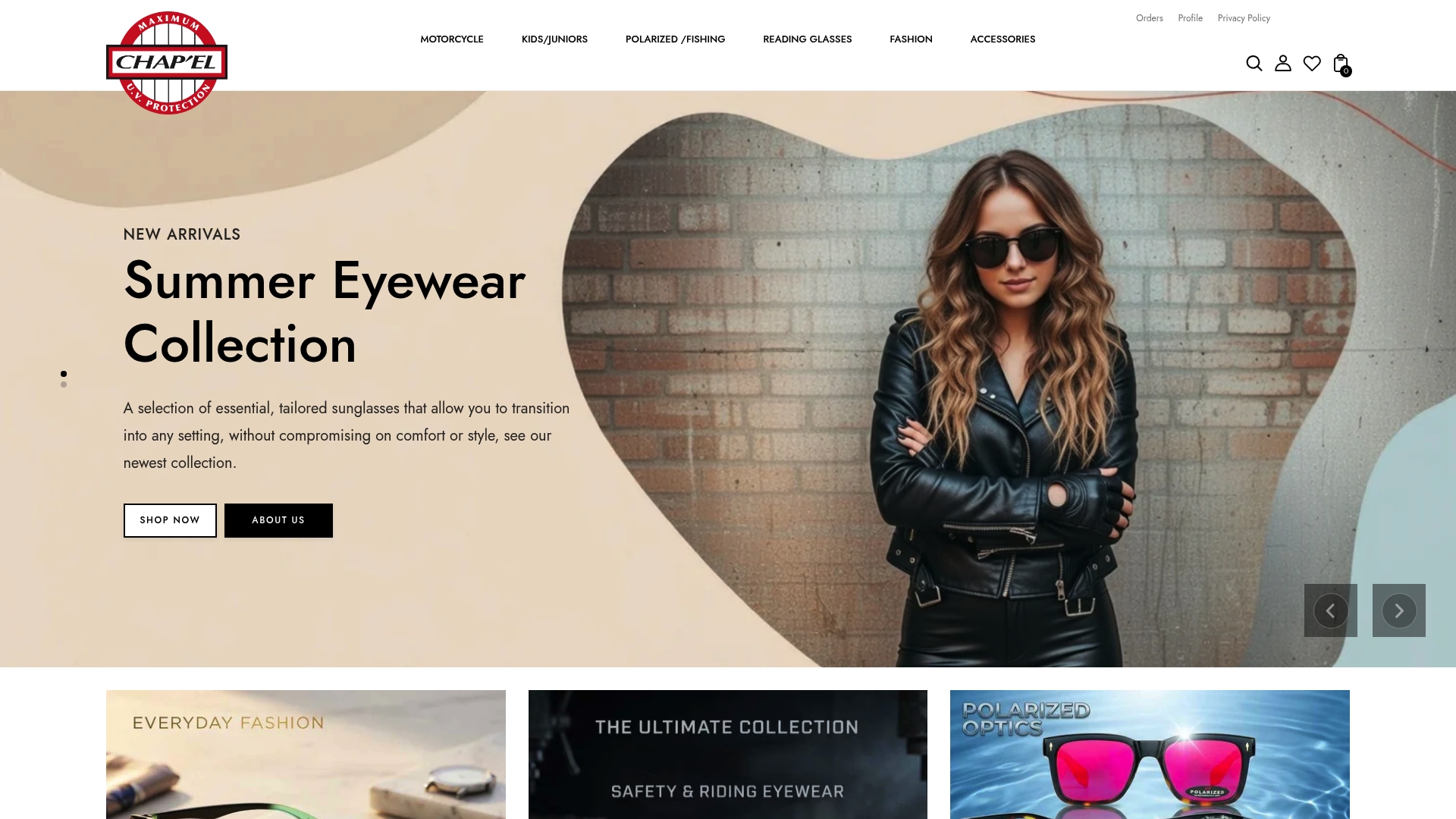
Chapeleyewear’s full sunglasses collection includes detailed product specs, size guidance, and customer-friendly policies that take the guesswork out of buying online. Whether you are looking for a weekend pair or something built for long days outdoors, their catalog gives you the filtering tools and product detail you need to buy with confidence.
FAQ
What should I look for in the best site for sunglasses?
Look for clear UV400 labeling, polarized lens options, verified customer reviews, and a return policy of at least 30 days. Sites that filter by lens type and frame size give you the most control over your purchase.
Are affordable sunglasses worth buying online?
Yes. Affordable sunglasses provide real UV protection when purchased from reputable retailers that list their protection standards clearly. Price alone does not determine optical quality.
What is the difference between polarized and photochromic lenses?
Polarized lenses block reflected glare from flat surfaces like water and roads. Photochromic lenses adjust their tint level based on light exposure, darkening outdoors and clearing indoors.
How do I find sunglasses that fit my face online?
Check the frame’s listed measurements in millimeters, including lens width, bridge width, and temple length. Measure a pair you already own and match those numbers to find a comparable fit.
Do online sunglasses sites offer prescription lenses?
Many top online sunglasses stores now accept prescription uploads or manual entry at checkout. Confirm this feature before purchasing if optical correction is part of your requirement.