

What UV400 Means for Your Sunglasses and Eyes
UV400 means a sunglass lens blocks all ultraviolet wavelengths up to 400 nanometers, covering both UVA and UVB rays. According to All About Vision, that translates to nearly 100% protection from harmful UV light. When the claim is genuine, UV400 is the standard you want on any pair of sunglasses you wear outdoors.
Three things to remember before you read further:
- Look for the label. A tag or spec sheet reading “UV400,” “100% UV protection,” or “UV absorption up to 400 nm” is your clearest signal.
- Tint is not protection. Dark lenses with no UV claim can let in as much UV radiation as clear ones.
- Polarization is separate. A polarized lens reduces glare; it does not automatically block UV unless the spec says so.
Key Takeaways
UV400 is the highest consumer UV protection standard for sunglasses, blocking all UVA and UVB wavelengths up to 400 nanometers, and it is the one spec worth verifying before every purchase.
| Point | Details |
|---|---|
| UV400 definition | Blocks all UV wavelengths up to 400 nm, covering full UVA and UVB range. |
| Label to look for | Confirm “UV400,” “100% UV protection,” or “UV absorption up to 400 nm” on the tag. |
| Polarization is separate | Polarized lenses reduce glare but do not guarantee UV blocking; verify both specs independently. |
| Darkness is not protection | Lens tint controls visible light, not UV radiation; a dark lens with no UV rating offers no UV protection. |
| Chapeleyewear | Offers UV400-rated polycarbonate lenses across designer, sport, and classic polarized collections. |
Table of Contents
- What does UV light actually do to your eyes?
- What “UV400” means for a sunglass lens
- Is UV400 the same as “100% UV protection”?
- How UV400 differs from polarized lenses
- How to verify sunglasses actually provide UV400 protection
- Common myths about lens darkness, mirror coatings, and “highest” protection
- Who benefits most from UV400 sunglasses?
- What standards and testing terms mean on a label
- The case for not overthinking it, and what actually matters
- Chapeleyewear’s UV400 sunglasses for every lifestyle
- Sources
What does UV light actually do to your eyes?
The sun emits ultraviolet radiation across three bands: UVC (below 280 nm), which the atmosphere absorbs almost entirely; UVB (280–315 nm), which causes sunburn and reaches the eye’s surface; and UVA (315–400 nm), which penetrates deeper into eye tissue. The 400 nm cutoff on a UV400 lens sits right at the top of the UVA band, so a lens meeting that standard filters the entire UV spectrum relevant to human eyes.
Chronic UV exposure is linked to several serious conditions. The World Health Organization identifies UV radiation as a confirmed risk factor for eye disease, and the American Academy of Ophthalmology connects overexposure to:
- Photokeratitis (essentially a sunburn on the cornea, causing temporary pain and vision blur)
- Cataracts (clouding of the lens, the leading cause of preventable blindness worldwide)
- Macular degeneration (damage to the central retina, affecting sharp vision)
- Eyelid skin cancer (a less-discussed but real risk from unshielded UV)
UV exposure accumulates over a lifetime. Damage done at 25 shows up at 55, which is why consistent protection matters even on overcast days when UV levels remain significant.
What “UV400” means for a sunglass lens
The “400” in UV400 refers to nanometers, the unit used to measure wavelength. A lens rated UV400 absorbs or reflects UV wavelengths from 0 up to 400 nm, which covers the full UVA and UVB range. All About Vision confirms that UV400 lenses block 99–100% of UVA and UVB rays.
One point that trips up a lot of shoppers: UV filtering and visible-light transmission (VLT) are completely different properties.
- UV filtering is about blocking invisible radiation. It is determined by the lens material or a UV-absorbing coating applied to it.
- VLT is about how much visible light passes through, which determines how dark the lens looks.
A lens can be very dark and filter almost none. Polycarbonate, the material used in many quality sunglass lenses, naturally absorbs UV radiation and is often paired with a UV-blocking coating to push the cutoff to 400 nm. The coating adds no visible tint, so you cannot judge it by eye.
Is UV400 the same as “100% UV protection”?
Functionally, yes. Vendors phrase it differently for various reasons, but the underlying standard is the same.
Labels you will see on compliant sunglasses:
- “UV400”
- “100% UV protection”
- “UV absorption up to 400 nm”
- “Blocks 99–100% of UVA and UVB”
The American Academy of Ophthalmology advises shoppers to look specifically for a sticker or tag promising 100% UV protection or “UV absorption up to 400 nm” and warns against assuming protection from tint or polarization alone.
Be skeptical of vague claims. Phrases like “UV-blocking,” “UV-resistant,” or “UV-treated” without a wavelength or percentage figure are not equivalent. They may indicate partial protection, or they may be marketing language with no measurable standard behind them.
How UV400 differs from polarized lenses
This is the most common point of confusion in sunglass shopping. UV protection and polarization solve different problems.
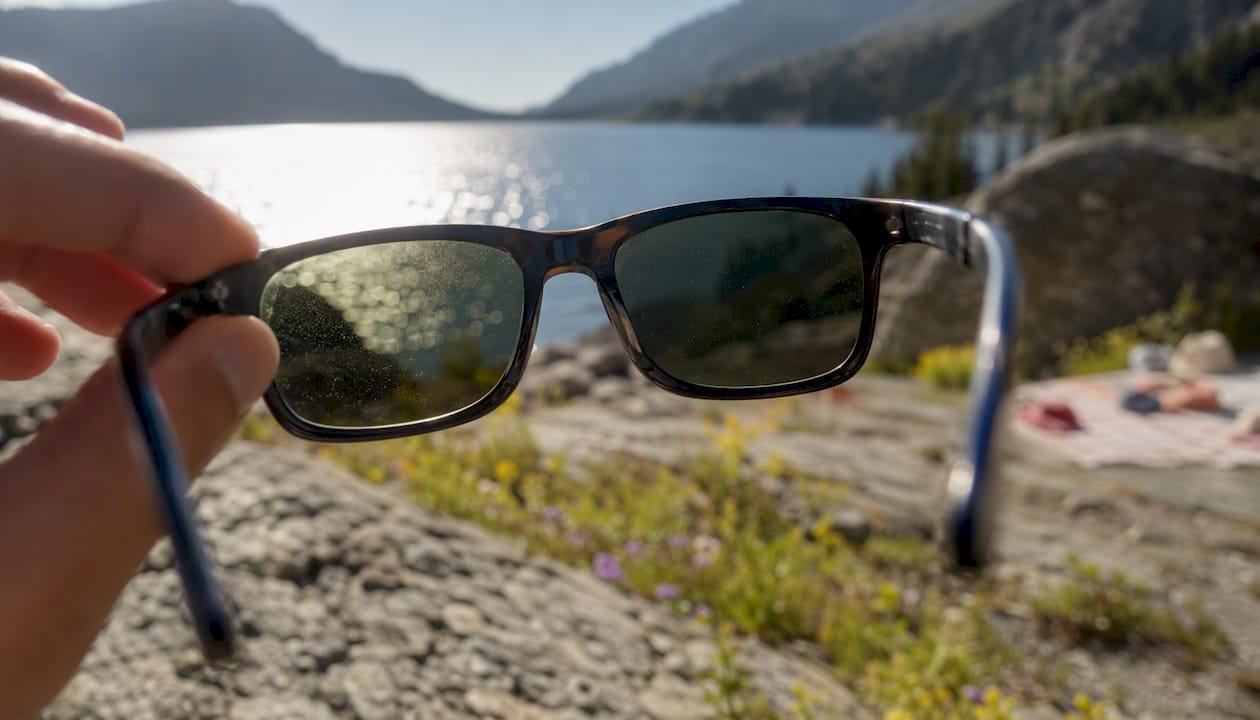
UV protection blocks invisible radiation that damages eye tissue. Polarization reduces glare from reflected light, such as the blinding shimmer off water, snow, or wet pavement. As OU Health explains, polarized lenses use an oriented filter to cut horizontally reflected light, but polarization itself does not guarantee UV blocking. A polarized lens without a UV coating can reduce glare while letting UV radiation pass straight through.
| Feature | UV400 | Polarized |
|---|---|---|
| Wavelength cutoff | Blocks up to 400 nm | No UV cutoff unless separately rated |
| UV coverage | Full UVA and UVB | None by default |
| Glare control | None | Yes, reduces reflected glare |
| Visible-light transmission | Independent of UV rating | Typically reduces VLT |
| Price/value | Available at all price points | Adds cost; worth it for glare-heavy environments |
The EyeDoctors put it plainly: combining UV protection with polarization gives you both eye safety and improved visual comfort, and for most outdoor use cases, that combination is the right call.
Pro Tip: A polarized label alone tells you nothing about UV protection. Many quality sunglasses offer both, but you need to see both stated explicitly.
How to verify sunglasses actually provide UV400 protection
Knowing what to look for is half the battle. Here is how to check before you buy, whether you are in a store or shopping online.
In-store checks:
- Read the tag or sticker. The spec should say “UV400,” “100% UV,” or “UV absorption up to 400 nm.” If it only says “polarized” or gives a tint percentage, keep looking.
- Ask an optician to test the lenses with a UV transmittance meter. A handheld meter gives a direct transmittance reading; a compliant lens will show near-zero UV transmission at 400 nm. Most optical shops have one and will test on request.
- Check the frame’s country of origin and any certification marks. Reputable manufacturers document their UV specs.
Online checks:
- Read the full product spec, not just the headline. Look for “UV400” or “100% UV” in the lens description, not just in marketing copy.
- Check whether the brand references third-party testing or certifications. A full UV protection buying guide can help you understand what verified specs look like.
- Prefer sellers with clear return policies so you can have lenses tested after purchase if needed.
Pro Tip: Very dark lenses with no UV wording on the tag are a red flag. Darkness is a VLT property, not a UV property. A lens that looks protective may offer none. Flip the tag and read the spec.
Common myths about lens darkness, mirror coatings, and “highest” protection
Myth 1: Darker lenses mean more UV protection. Lens tint and UV filtering are independent. A gray Category 4 lens (very dark, used in high-altitude mountaineering) can have zero UV coating. A lightly tinted lens with a UV400 coating blocks the same radiation. Tint affects how much visible light reaches your eye; UV coating determines what invisible radiation gets through.
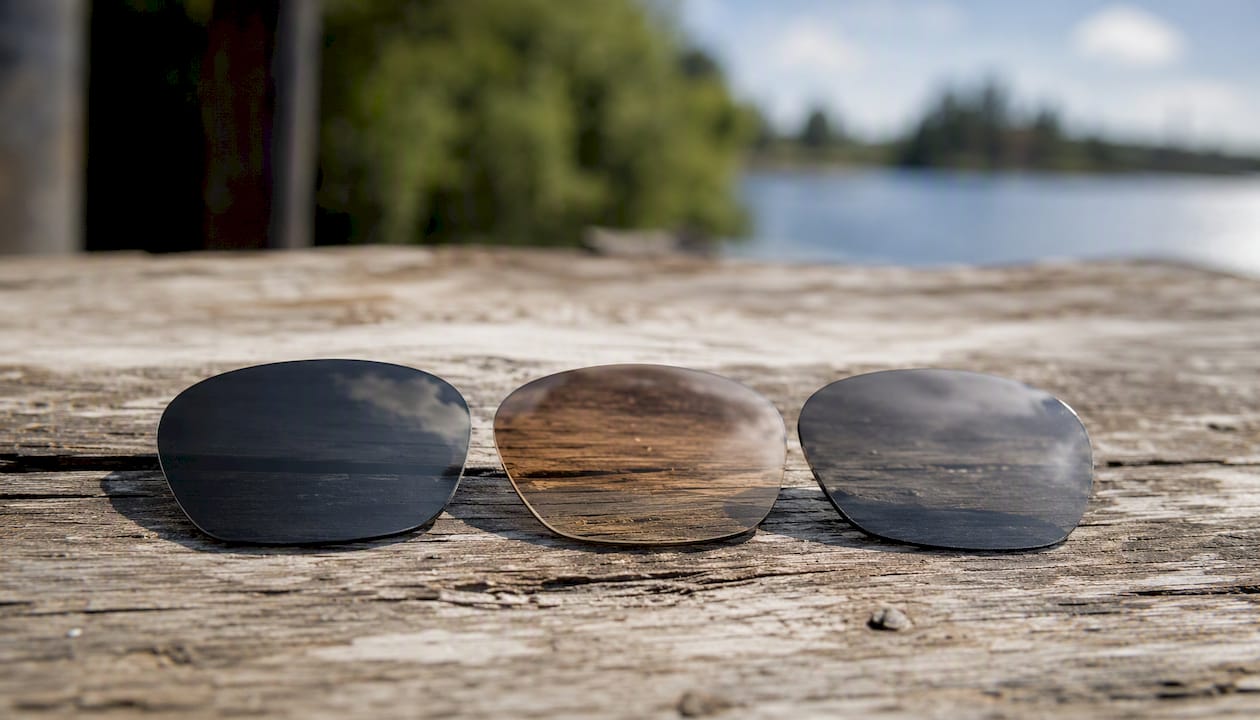
Myth 2: Mirror coatings add UV protection. Mirror finishes reflect some visible light and reduce glare, but they are a surface treatment applied over the lens. The UV protection comes from the lens material or a separate UV coating underneath. A mirrored lens without a UV400 rating is not UV-protective.
Myth 3: UV400 is not the highest standard available. For consumer sunglasses, All About Vision notes that UV400 is considered the highest level of UV coverage. Some industrial safety eyewear standards, such as EN 166/170, test to a 380 nm cutoff rather than 400 nm. That 20 nm gap matters because UVA extends to 400 nm; a lens certified only to 380 nm leaves a slice of UVA unfiltered. For everyday sunglasses, UV400 is the target.
Myth 4: Expensive sunglasses always have better UV protection. Price correlates with materials, build quality, and brand positioning, not necessarily with UV filtering. A $20 pair with a documented UV400 rating protects your eyes as well as a $300 pair with the same spec. The difference between affordable and expensive sunglasses comes down to durability, optics, and style, not UV performance when both carry the same rating.
Who benefits most from UV400 sunglasses?
Everyone who goes outside benefits, but certain groups and activities carry meaningfully higher UV exposure risk.
- Children. Their crystalline lenses transmit more UV to the retina than adult lenses do, and they accumulate lifetime UV exposure starting young. The Vision Council specifically recommends UV400 eyewear for kids as a priority.
- Outdoor workers and athletes. Prolonged daily sun exposure compounds cumulative damage faster than occasional recreational use.
- Beachgoers and water sports participants. Water reflects a notable portion of UV radiation back at you, increasing your overall UV exposure when near water.
- Skiers and high-altitude hikers. UV intensity increases with altitude, and snow reflects a high percentage of UV radiation, both factors increasing UV exposure in such environments.
- Drivers. Side windows in most vehicles do not block UVA, making polarized UV400 sunglasses particularly useful for long drives.
Frame choice matters too. Larger lenses and wrap-around or full-coverage styles reduce UV entering from the sides and top, where standard frames leave gaps. A close-fitting frame with wide temples offers noticeably better peripheral protection than a small fashion frame with the same lens rating.
What standards and testing terms mean on a label
When you shop for sunglasses, you may encounter certification marks or standard references. Here is what the main ones mean in practice.
- ANSI Z80.3 is the American National Standards Institute standard for non-prescription sunglasses sold in the United States. It sets requirements for UV transmittance, impact resistance, and optical quality. Sunglasses meeting ANSI Z80.3 must block UV to 380 nm at minimum; many quality products exceed this and reach 400 nm.
- EN 166/170 are European standards covering occupational and general-purpose eye protection. EN 170 specifically addresses UV filters and sets transmittance limits, but the cutoff tested is often 380 nm rather than 400 nm.
- ISO 12312-1 is the international standard for sunglasses for general use, covering UV transmittance, luminous transmittance, and optical power.
The practical gap between 380 nm and 400 nm is real. Safety eyewear certified to EN 166/170 may leave the 380–400 nm UVA band partially unfiltered. Consumer sunglasses claiming UV400 cover that gap. The WHO’s guidance on UV hazards supports recommending the highest available coverage for everyday eye protection, which points to the 400 nm standard.
The case for not overthinking it, and what actually matters
There is a version of this topic that gets very complicated very fast: spectral transmittance curves, photobiological hazard categories, optical density at specific wavelengths. Most of that detail is useful for industrial hygienists, not for someone buying sunglasses.
The real insight worth sitting with is simpler and a little counterintuitive: the sunglasses industry has a labeling problem, not a technology problem. UV-blocking coatings are cheap. Polycarbonate lenses absorb UV naturally. There is no technical reason any sunglass sold today should fail to reach UV400. The reason some do not is that no federal law in the United States currently requires sunglasses to meet a UV protection standard before being sold. The FDA classifies sunglasses as medical devices but does not mandate UV performance testing for general consumer eyewear. That gap is why the AAO’s advice to check the label explicitly matters so much: the market will not do it for you.
The other thing worth saying plainly: polarization is genuinely useful, but it has been over-marketed to the point where many shoppers treat it as the primary quality signal. It is not. A polarized lens that lets UV through is doing half the job. UV400 is the non-negotiable baseline; polarization is the upgrade you add when glare is a real problem in your life.
Chapeleyewear’s UV400 sunglasses for every lifestyle
Chapeleyewear builds UV protection into every pair it sells, with polycarbonate lenses and UV-blocking coatings that meet the 400 nm standard.
The designer polarized collection pairs UV400 protection with polarized lenses for readers who want both glare reduction and full UV coverage in one frame. For higher-intensity outdoor use, the sport polarized collection adds impact resistance and close-fitting frames that cut peripheral UV exposure.
Every product spec at Chapeleyewear states UV protection explicitly, so you are not guessing from tint or marketing language. Browse the full range at Chapeleyewear and filter by the activities and styles that fit your life.
Sources
The claims in this article draw on guidance from the following authoritative sources. Each is worth bookmarking if you want to go deeper.
- How to Choose the Best Sunglasses to Avoid Sun Damage - American Academy of Ophthalmology
- What Is UV 400 Protection on Sunglasses?
- Polarized vs. Non-polarized Sunglasses: What Is the Difference?
- Radiation: Ultraviolet (UV) - WHO Q&A
- Polarized vs. UV Protection: Which Lens Is Right For You? | The EyeDoctors Optometrists