

Polarized vs Tinted: Pick the Right Sunglasses for You
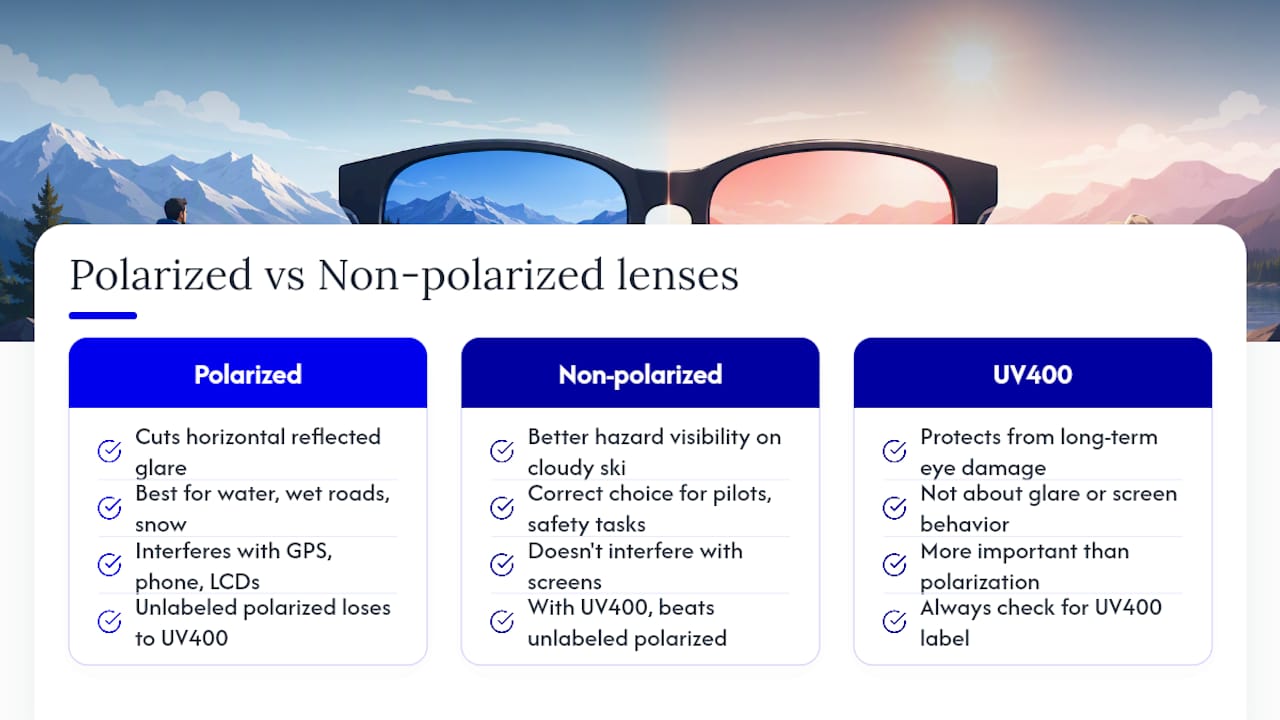
Choose polarized for glare-heavy outdoor tasks like driving, fishing, and boating. Choose non-polarized tinted lenses when you need reliable screen visibility, specific color contrast, or instrument legibility. That’s the short version. The rest of this guide explains why, with activity-by-activity picks so you can stop guessing at the sunglass rack.
The American Academy of Ophthalmology frames polarization as a targeted tool, not a universal upgrade. Harvard Health adds a critical reminder: lens darkness has nothing to do with UV protection. Both points shape every recommendation below.
Pick polarized when you:
- Spend significant time near water, snow, or wet roads where horizontal glare is intense
- Want less eye strain during long outdoor sessions
Pick tinted (non-polarized) when you:
- Regularly use a GPS, phone, or instrument display outdoors
- Need specific color contrast tuning (yellow for low light, amber for depth perception)
Key Takeaways
Polarized lenses are the right default for glare-heavy outdoor activities, but non-polarized tinted lenses are the better choice whenever screen visibility or instrument legibility matters.
| Point | Details |
|---|---|
| Polarized for glare | Choose polarized for driving, fishing, boating, and snow where reflected glare is intense. |
| Tinted for screens and contrast | Non-polarized tinted lenses keep screens readable and let you tune contrast via tint color. |
| UV400 is non-negotiable | Darkness does not equal UV protection; always verify a UV400 or 100% UV label before buying. |
| Own both types | Optometrists recommend keeping polarized for water/road days and non-polarized tinted for screen-heavy or instrument use. |
| Chapeleyewear collections | Chapeleyewear’s polarized and tinted lines both carry UV400 protection and polycarbonate lenses for everyday and sport use. |
Table of Contents
- How polarized lenses actually work
- What tinted lenses do and how tint color changes your vision
- UV protection vs tint darkness: what actually protects your eyes
- Pros and cons of polarized vs tinted lenses
- Which lens works best for your activity?
- How to tell if a lens is polarized
- What to check before you buy
- An honest take on the polarized-vs-tinted debate
- Chapeleyewear’s polarized and tinted collections
- Sources
How polarized lenses actually work
A polarized lens contains a chemical filter oriented vertically, like a set of microscopic blinds. Sunlight bouncing off flat surfaces, water, pavement, and snow, reflects back as horizontal light waves. The vertical filter blocks those waves almost entirely. The result is a dramatic reduction in surface glare that you feel immediately when you put them on near water or a wet road.
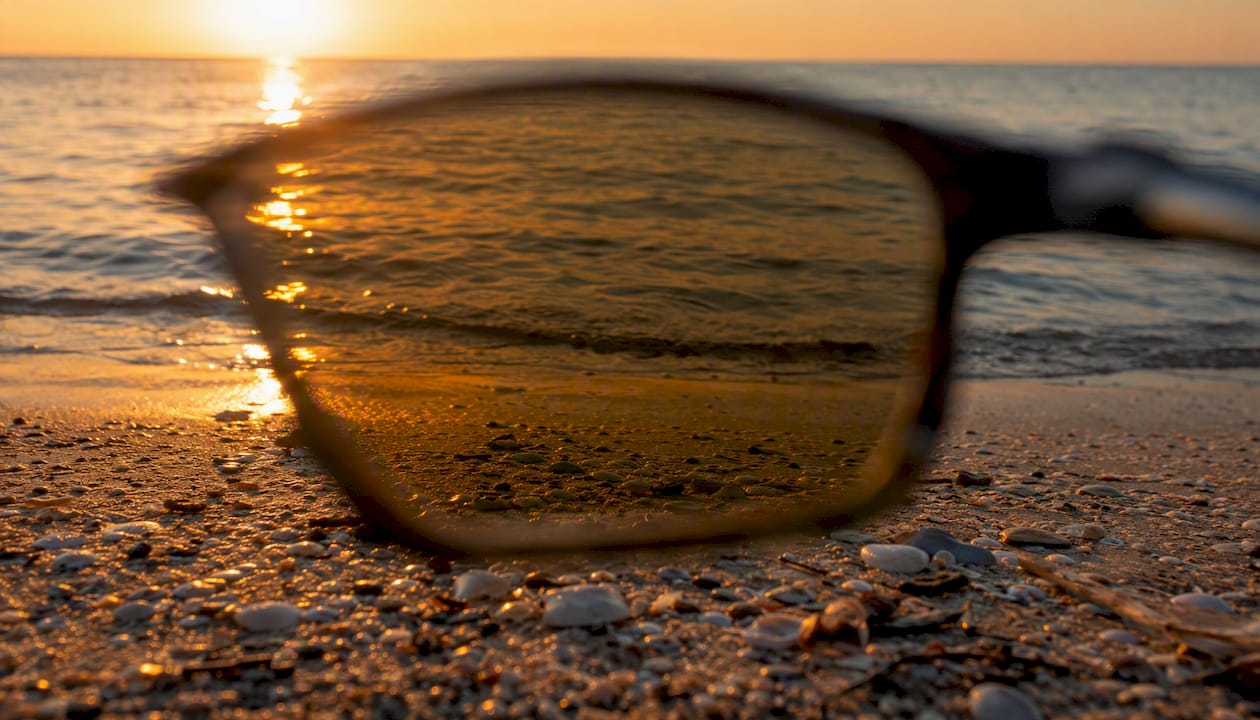
The NCBI’s overview of polarized light confirms that polarized filters selectively transmit light of a specific orientation, which is exactly why they cut reflected glare so effectively. The tradeoff is that the same filter can darken or distort LCD screens, which are themselves polarized. Tilt your phone at certain angles while wearing polarized lenses and the screen can go nearly black.
Pro Tip: Before committing to polarized lenses for driving, hold them up to your car’s GPS screen and rotate slightly. If the display dims or shifts color, that’s the interference you’ll live with every day.
What tinted lenses do and how tint color changes your vision
Tinted lenses reduce overall brightness by lowering visible light transmission (VLT), which is simply the percentage of light that passes through the lens. Neither number tells you anything about UV protection. That’s a separate spec entirely.
Tint color matters more than most buyers realize:
- Gray: Neutral dimming with minimal color distortion. Good all-purpose choice for bright sun.
- Brown/amber: Boosts contrast and depth perception. Popular for driving and variable-light conditions.
- Yellow/orange: Enhances contrast in low light or overcast conditions. Common in shooting glasses and ski goggles.
- Green: Reduces glare while preserving color balance. Often used in golf and tennis.
Each color tunes your vision differently without adding a polarizing filter. That’s why tinted lenses stay popular for screen-heavy environments and activities where color accuracy matters. As OE Berlin’s lens comparison notes, tint choices are used to tune vision for specific activities rather than to block directional glare.
UV protection vs tint darkness: what actually protects your eyes
This is the most misunderstood part of sunglass shopping. A dark lens feels protective, but darkness only reduces visible light. It does nothing to block ultraviolet radiation.
Harvard Health is direct on this point: lens darkness is about comfort, not UV safety.
The danger with very dark, unlabeled lenses is real. Dark lenses cause your pupils to dilate, letting in more light overall. If that lens lacks a UV coating, your eye is now exposed to more ultraviolet radiation than it would be without any sunglasses at all. Polarization and UV blocking are separate technologies: polarization handles directional glare; UV coatings or lens materials block the radiation that causes long-term eye damage like cataracts and macular degeneration.
Always check the label. UV400 means the lens blocks wavelengths up to 400 nanometers, covering both UVA and UVB. No label, no guarantee.
Pros and cons of polarized vs tinted lenses
Polarized lenses
Pros:
- Superior glare reduction on water, roads, and snow
- Reduced eye strain during long outdoor sessions
- Clearer detail on reflective surfaces, especially for fishing
Cons:
- Can darken or distort LCD screens (phones, GPS units, ATMs)
- May obscure low-contrast icy patches on ski slopes
- Not inherently UV-protective unless the label says so
Non-polarized tinted lenses
Pros:
- Consistent, reliable screen readability
- Color and contrast tuning via tint color choice
- Often more affordable; wider style variety
Cons:
- Less effective at cutting glare on highly reflective surfaces
- No glare-reduction benefit from the lens itself, only from reduced brightness
AllAboutVision notes that polarized lenses improve color perception and reduce eye fatigue during long outdoor hours, but they are not always appropriate for night driving, viewing LCD screens, or spotting ice. That caveat is worth repeating because it surprises people who assume “better” is always better.
Which lens works best for your activity?
Driving
Polarized lenses cut road glare on wet pavement and reduce fatigue on long highway drives. The catch: test them against your specific dashboard and GPS before you commit. Some instrument clusters use LCD panels that polarized lenses will dim or color-shift. If your car’s displays look fine, polarized is the stronger choice for daytime driving.
Fishing, boating, and water sports
Verywell Health recommends polarized lenses specifically for fishing and boating because they cut the surface glare that makes it impossible to see below the waterline. For anglers, that’s not a comfort feature; it’s a functional one. Chapeleyewear’s sport polarized collection is built for exactly this kind of high-glare, high-activity use.
Skiing and snow sports
Polarized lenses handle bright snow reflections well. The problem is that they can hide the subtle contrast differences between packed snow and ice. On groomed runs in full sun, polarized works. On variable terrain with icy patches, a non-polarized amber or brown tint often gives you better hazard visibility. Chapeleyewear’s ski goggle guide covers interchangeable lens options for exactly this reason.
Golf
No single answer here. Polarized reduces glare from water hazards and wet fairways. Some golfers prefer amber or brown tints for the contrast boost that helps them read greens. Try both if you can; it genuinely comes down to personal preference and your home course conditions.
Screen use, pilots, and instrument operators
Non-polarized tinted lenses are the right call. Polarized lenses can make cockpit displays, ATM screens, and phone screens difficult or impossible to read. Gray or brown tints reduce brightness without the interference risk.
Pro Tip: Optometrists often suggest owning both types. Keep polarized for water and driving days, non-polarized tinted for everything involving screens or instrument panels. The cost of a second pair is far less than the frustration of the wrong lens at the wrong moment.
How to tell if a lens is polarized
1. The two-lens rotation test
Hold two pairs of sunglasses face-to-face so the lenses overlap. Slowly rotate one pair 90 degrees. If the overlapping area darkens significantly, both lenses are polarized. If nothing changes, at least one pair is not. This simple test works reliably at home or in a store.
2. The smartphone screen test
Put on the sunglasses and look at your phone screen at arm’s length. Tilt the phone slowly from vertical to horizontal. If the screen dims or changes color at a certain angle, the lenses are polarized. A non-polarized tinted lens will dim the screen uniformly regardless of angle.
3. In-store checks
Ask staff to show you a polarization demo card, which most optical retailers carry. Look for a “polarized” label on the lens itself or the hang tag. Reputable brands print it directly on the lens or include it in the product specs.
What to check before you buy
Lens material: Polycarbonate is the standard recommendation for impact resistance. It’s lighter than glass and holds up to drops, sports, and everyday wear. Scratch-resistant coatings extend lens life significantly; hydrophobic coatings repel water and oil, which matters more than most buyers expect on rainy days or near the water.
Tint color and VLT: Match the tint to your primary activity. For general outdoor use, gray tints are a safe default. Brown or amber tints can add contrast for variable light or driving. Yellow or orange tints enhance visibility in overcast or low-light conditions.
Label checklist before purchasing:
- UV400 or 100% UV protection (non-negotiable)
- Polarized label if you need glare reduction
- Impact-resistant or polycarbonate lens material
- Scratch-resistant coating noted in specs
- Warranty or return policy confirmed
Chapeleyewear’s full UV protection buying guide walks through UV ratings in detail if you want to go deeper on what the labels actually mean.
Pro Tip: For online purchases, check the return window before you order, then wear the sunglasses outside in direct sunlight on the first day. Artificial indoor light won’t reveal glare performance or screen interference. Daylight will.
An honest take on the polarized-vs-tinted debate
The conventional wisdom treats polarized as the automatic upgrade. Pay more, get polarized, done. That framing misses something real.
Polarization solves one specific problem: horizontal reflected glare. If your life involves a lot of water, wet roads, or snow, it solves that problem extremely well. But the same filter that cuts glare from a lake surface will fight with your car’s GPS, your phone, and any LCD panel you look at outdoors. For a lot of people, that tradeoff is genuinely annoying on a daily basis.
The smarter framing is to treat lens type as a tool selection, not a quality tier. A non-polarized amber lens on a cloudy ski day will outperform a polarized gray lens for hazard visibility. A non-polarized gray lens for a pilot is not a budget compromise; it’s the correct choice. The AllAboutVision overview puts it plainly: polarized lenses can enhance color perception and reduce glare but create real problems for screen visibility and safety-critical tasks.
What actually matters more than the polarized-vs-tinted question is UV400 labeling. That’s the spec that protects your eyes from long-term damage. A stylish non-polarized lens with UV400 beats an unlabeled polarized lens every time.
Chapeleyewear’s polarized and tinted collections
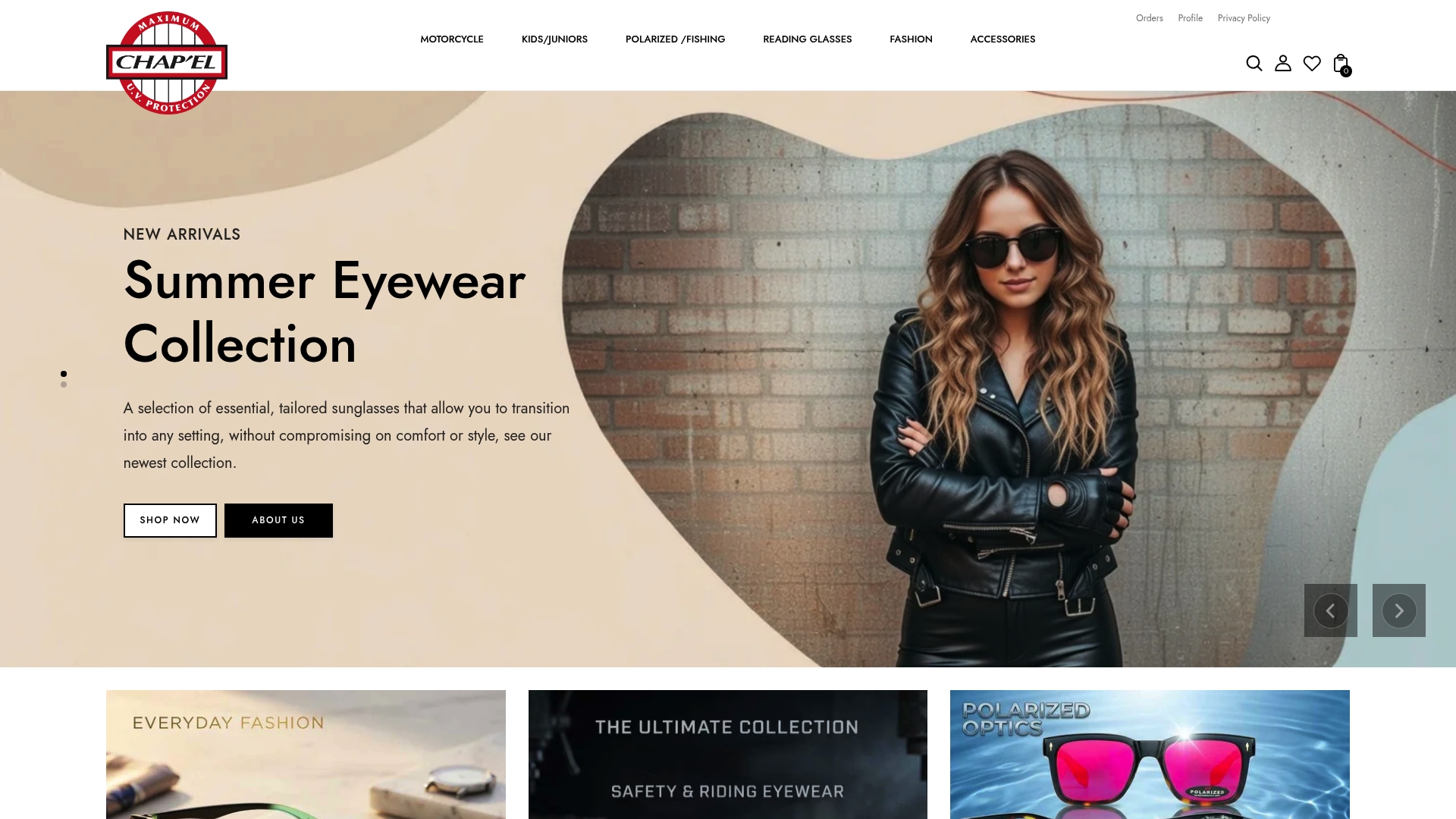
Chapeleyewear builds both polarized and tinted collections around the specs that matter: UV400 protection, polycarbonate lenses for impact resistance, and protective coatings that hold up to real outdoor use. The designer polarized collection covers style-forward frames with full glare-cutting performance. The sport polarized line is built for fishing, water sports, and high-activity days where you need a secure fit and serious glare reduction.
Every order ships with a return window so you can test the lenses in actual daylight before committing. Pair any frame with a protective zipper case to keep lenses scratch-free between uses. Browse the full collection at Chapeleyewear and filter by polarized or tinted to find the right lens for your primary activity.
Sources
- What Are Polarized Lenses? - American Academy of Ophthalmology
- Polarized sunglasses: Protecting your eyes from harmful glare - Harvard Health
- Polarized Sunglasses: How They Work and Benefits
- Polarized light (NCBI Bookshelf / scientific overview)
- Polarized lenses advantages - AllAboutVision