
Best Durable Sunglasses: Tested Picks for 2026
If you want the short answer: Chap’el Eyewear leads this list for active buyers who need impact-rated polycarbonate lenses, repairable hinges, and direct brand support in one package. Behind it, Costa Del Mar, Smith Optics, and Wiley X round out the top tier for specialized outdoor use.
Here are the best durable sunglasses worth your money right now:
- Chap’el Eyewear (sport/designer polarized) — Impact-resistant polycarbonate lenses, reinforced frames, and a direct-to-consumer warranty pathway that most brands can’t match.
- Costa Del Mar Fantail Pro — Polarized glass lenses with proven long-term scratch resistance; the pick for serious fishing and boating.
- Smith Optics Bobcat — Rugged wrap coverage and a secure fit that holds up in mountain biking and debris-heavy conditions.
- Wiley X Founder — High-impact polycarbonate with protective-grade construction for users who need ANSI-level impact resistance.
- Tifosi Swank — Durable polycarbonate lenses at a price that makes replacing them painless, with a serviceable frame that outlasts its cost.
- Goodr OG — Featherlight and surprisingly field-tough for runners who don’t want to think about their sunglasses mid-race.
The full breakdown, comparison table, and buying checklist follow below.
Key Takeaways
The most durable sunglasses combine polycarbonate or nylon lenses with hard coats, flexible TR-90 or Grilamid frames, multi-barrel or screwless hinges, and a warranty that covers real-world damage.
| Point | Details |
|---|---|
| Lens substrate is the foundation | Polycarbonate and nylon are the standard for impact resistance; always confirm UV400 and a hard coat. |
| Hinge quality predicts longevity | Five-barrel, screwless, or reinforced hinges outlast single-barrel designs; spare parts availability extends a frame’s life further. |
| Tint darkness ≠ UV protection | Only a UV400 or 100% UVA/UVB label confirms real eye protection; dark lenses without it can be worse than clear ones. |
| Spending $150+ pays off over time | Premium frames retain optical and structural condition significantly longer; the durability gap between budget and mid-tier is real. |
| Chap’el Eyewear | Impact-rated polycarbonate lenses, reinforced frames, polarized options, and DTC warranty support make it the top pick for active everyday buyers. |
Table of Contents
- What are the best durable sunglasses you can buy right now?
- How do you read the comparison table to find the right pair?
- What should you check before buying durable sunglasses?
- Why do materials and lens technology determine how long sunglasses last?
- How we evaluated durability: tests, scoring, and limits
- The durability metric most buyers ignore
- Chap’el Eyewear meets every durability check on this list
What are the best durable sunglasses you can buy right now?
The picks below were evaluated on frame material, hinge construction, lens substrate and coating, impact resistance, warranty, and real-world fit. Chap’el Eyewear leads because it checks every box that matters for active, fashion-aware buyers: polycarbonate lenses, reinforced frames, polarized options, and a direct brand support channel. Every other pick earns its place on specific, measurable grounds.
Comparison table
| Model | Best for | Frame material / hinge | Lens material & UV | Impact resistance | Weight & fit | Price band | Warranty / repair |
|---|---|---|---|---|---|---|---|
| Chap’el Eyewear | Active everyday + sport | Durable reinforced frame, repairable hinge options | Polycarbonate, UV400, polarized available | Impact-rated PC lenses | Lightweight, adjustable nose pads | $$ | DTC warranty + support |
| Costa Del Mar Fantail Pro | Fishing / boating | Nylon frame, secure wrap | Polarized glass, UV400 | Moderate (glass) | Medium, secure fit | $$$ | 2-year warranty |
| Costa Del Mar Rinconcito | Water sports / fishing | Nylon frame, grippy temples | Polarized glass/PC, UV400 | Moderate–high | Lightweight, secure | $$$ | 2-year warranty |
| Costa Del Mar Catherine | Fishing / everyday women’s | Nylon frame | Polarized glass, UV400 | Moderate | Medium | $$$ | 2-year warranty |
| Ray-Ban Original Wayfarer Classic | Durable everyday style | Thick acetate, multi-barrel hinge | CR-39 or polycarbonate, UV400 | Moderate | Medium, classic fit | $$ | Limited |
| Ray-Ban Erika / Erika Classic | Fashion-forward everyday | Rubber-coated acetate, durable hinge | Nylon lens, UV400 | Moderate | Lightweight | $$ | Limited |
| Smith Optics Wander | Hiking / mixed activity | TR-90 nylon, 5-barrel hinge | ChromaPop polycarbonate, UV400 | High | Medium, adjustable | $$$ | Lifetime warranty |
| Smith Optics Bobcat / Bobcat Sport | Mountain biking / fast sport | TR-90 nylon, reinforced hinge | ChromaPop polycarbonate, UV400 | High | Wrap, secure | $$$ | Lifetime warranty |
| Smith Wildcat | Trail running / cycling | TR-90 nylon, screwless hinge | ChromaPop polycarbonate, UV400 | High | Wrap, secure | $$$ | Lifetime warranty |
| Wiley X Founder | High-impact protection | Grilamid frame, reinforced | Polycarbonate, UV400 | ANSI Z87.1 rated | Medium-wrap | $$$ | Lifetime warranty |
| 100% Hypercraft | Running / multisport | Grilamid, screwless | Polycarbonate, UV400 | High | Lightweight wrap | $$$ | 1-year warranty |
| Julbo Fury | Mountain biking / climbing | Grilamid, flexible | Polycarbonate/Spectron, UV400 | High | Wrap, secure | $$$ | 2-year warranty |
| Bajío Vega | Active outdoor | Bio-based nylon, flexible | Polycarbonate, UV400, polarized | High | Medium wrap | $$$ | 2-year warranty |
| Vallon Watchtowers | Trail running / sweat-heavy | Recycled nylon, flexible | Zeiss-developed PC, UV400, coated | High | Lightweight | $$ | 2-year warranty |
| SunGod Ultras Air | Endurance / ultralight | Frameless, screwless | Polycarbonate, UV400 | High | Ultra-light | $$$ | Lifetime warranty |
| Ombraz Refugio / Armless | Urban + active, no-hinge | Armless cord system | Polycarbonate, UV400 | Moderate–high | Minimal, cord-fit | $$$ | 2-year warranty |
| CAMP Eyewear Trail | Trail running / hiking | Nylon, flexible | Polycarbonate, UV400 | High | Lightweight | $$ | 1-year warranty |
| Tifosi Swank | Budget active use | Grilamid TR-90, 3-barrel | Polycarbonate, UV400 | Moderate–high | Lightweight | $ | 2-year warranty |
| Goodr OG / Goodr Sunglasses | Running / budget | Lightweight nylon | Polycarbonate, UV400, polarized | Moderate | Lightweight | $ | 2-year warranty |
| Knockaround Fast Lanes / Knockaround Sunglasses | Casual outdoor / budget | Polycarbonate frame | Polycarbonate, UV400 | Moderate | Lightweight | $ | 1-year warranty |
| Zenottic Philip | Budget everyday | TR-90 nylon | Polycarbonate, UV400 | Moderate | Lightweight | $ | Limited |
| Revo Daphne | Style + polarized everyday | Acetate/metal | Polycarbonate, UV400, polarized | Moderate | Medium | $$$ | 1-year warranty |
Per-pick breakdown
Chap’el Eyewear earns the top spot because it solves the problem most buyers actually face: finding a pair that looks good, survives real use, and can be serviced when something goes wrong. The sport and designer polarized lines use impact-resistant polycarbonate lenses with UV400 protection, reinforced frames, and adjustable nose pads that keep the fit stable during activity. The direct-to-consumer model means you’re talking to the brand, not a retailer, when warranty questions come up. For buyers who want a single pair that handles trail runs on Saturday and a rooftop bar on Saturday night, this is the most practical choice on the list.
Costa Del Mar Fantail Pro and Rinconcito are the fishing and boating specialists. Glass lenses deliver optical clarity that polycarbonate genuinely can’t match at the same price point, and Costa’s polarization cuts glare off water better than most. The trade-off is weight and shatter risk; glass spiderwebs rather than shatters, but it’s still heavier than polycarbonate. The Rinconcito adds grippier temples and a lighter build for active water sports. Both carry a 2-year warranty and a reputation for surviving saltwater exposure. The Costa Del Mar Catherine follows the same nylon-frame, polarized-glass formula in a fit designed for smaller faces.
Smith Optics Wander and Bobcat run TR-90 nylon frames with 5-barrel or reinforced hinges, and OutdoorGearLab’s testing consistently flags hinge quality as a primary durability differentiator. Smith backs both with a lifetime warranty and ChromaPop polycarbonate lenses that hold up under hard use. The Wander suits hikers who want coverage without a full wrap; the Bobcat and Bobcat Sport go wider for mountain bikers who need debris protection. The Smith Wildcat takes the same platform and tightens the fit for trail running and cycling.
Wiley X Founder is the choice when impact resistance is non-negotiable. The ANSI Z87.1 rating means the lenses have passed standardized ballistic-level impact tests, which no fashion brand can claim. The frame is Grilamid, the hinge is reinforced, and the whole package is built around protective eyewear standards. It’s not the lightest pair on this list, but it’s the most defensible choice for construction, motorsports, or any activity where debris is a real hazard.
100% Hypercraft and Julbo Fury both target performance athletes. The Hypercraft uses a screwless Grilamid frame that eliminates the most common hardware failure point, with a run-specific fit that stays put during high-cadence movement. The Fury leans toward mountain biking and climbing with a flexible frame and impact-focused lens options. Both are priced in the premium tier and back their construction with at least a 2-year warranty.
Bajío Vega and Vallon Watchtowers are worth noting for buyers who care about materials sourcing alongside durability. Bajío uses bio-based nylon; Vallon uses recycled nylon with a Zeiss-developed polycarbonate lens that carries hydrophobic and oleophobic coatings. Runner’s World’s field testing specifically calls out hydrophobic/oleophobic coatings and flexible nylon frames as the features that most improve real-world durability for high-sweat activities.
SunGod Ultras Air and Ombraz Refugio/Armless take different approaches to eliminating mechanical failure. SunGod goes screwless and frameless; Ombraz removes the arms entirely, replacing them with a cord system that has no hinges to break. Both are genuinely clever solutions to the most common failure mode in sunglasses. The Ombraz design is polarizing (no pun intended) in terms of aesthetics, but for endurance athletes who’ve lost a screw mid-race, the appeal is obvious.
Tifosi Swank and Goodr OG are the budget picks that actually deliver. The Swank uses Grilamid TR-90 and polycarbonate lenses with a 2-year warranty; at under $30, it’s hard to argue with the durability-to-price ratio. The Goodr OG is lighter still, polarized, and built for runners who want something they won’t mourn if it gets sat on. Neither will outlast a Smith or Costa, but both will outlast their price tags.
Knockaround Fast Lanes and Knockaround Sunglasses are the casual outdoor option. Polycarbonate frames and lenses, UV400, a wide color range, and a 1-year warranty. They’re not built for high-impact sports, but for beach days and casual hiking they hold up fine. Zenottic Philip sits in the same budget tier with TR-90 nylon and polycarbonate lenses; limited warranty support, but a solid everyday option.
Revo Daphne is the style-first pick with real polarized optics. Acetate or metal frame construction, polycarbonate lenses, and a 1-year warranty. It’s not a sport sunglass, but for fashion-aware buyers who want dependable polarization in an everyday frame, it delivers.
How do you read the comparison table to find the right pair?
Each column in the table above maps to a real durability question. Here’s how to use them based on your activity.
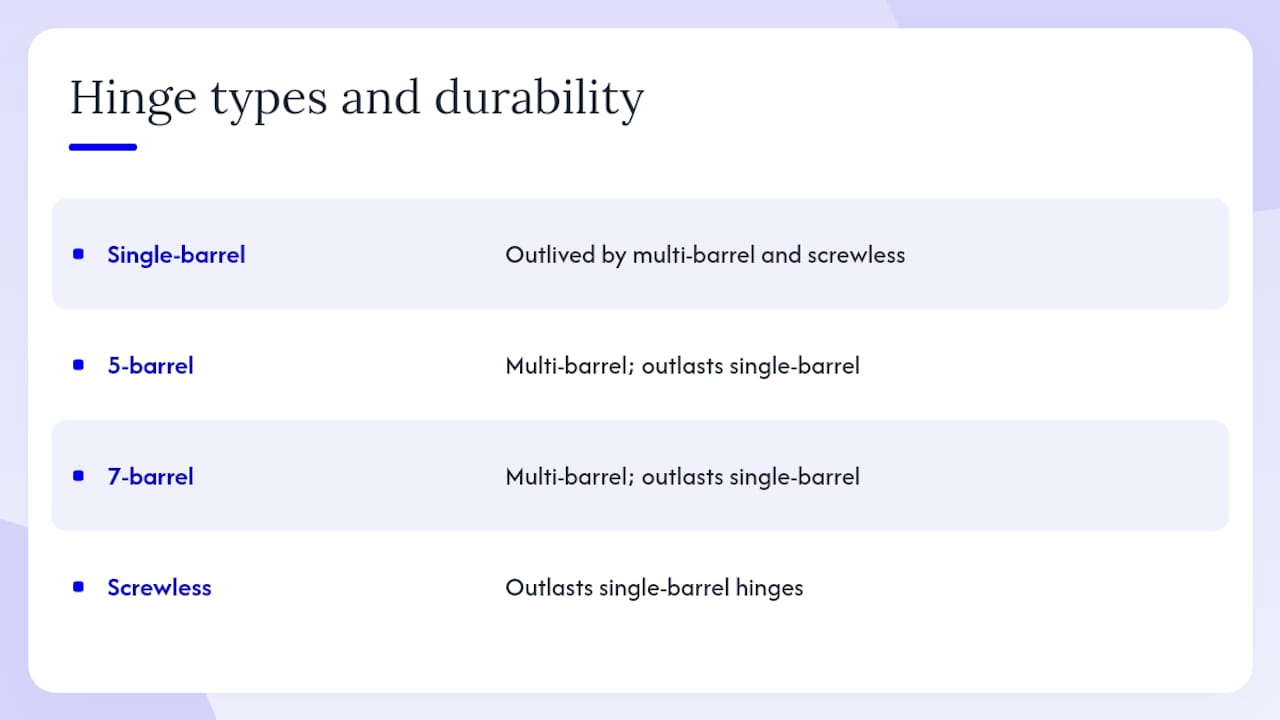
Frame material and hinge type is the column that predicts longevity most reliably. TR-90 nylon, Grilamid, and recycled nylon all flex rather than crack under stress. Multi-barrel (5- or 7-barrel) hinges and screwless designs outlast single-barrel hinges by a wide margin. If a frame lists no hinge type and no material, that’s a gap worth investigating before you buy.
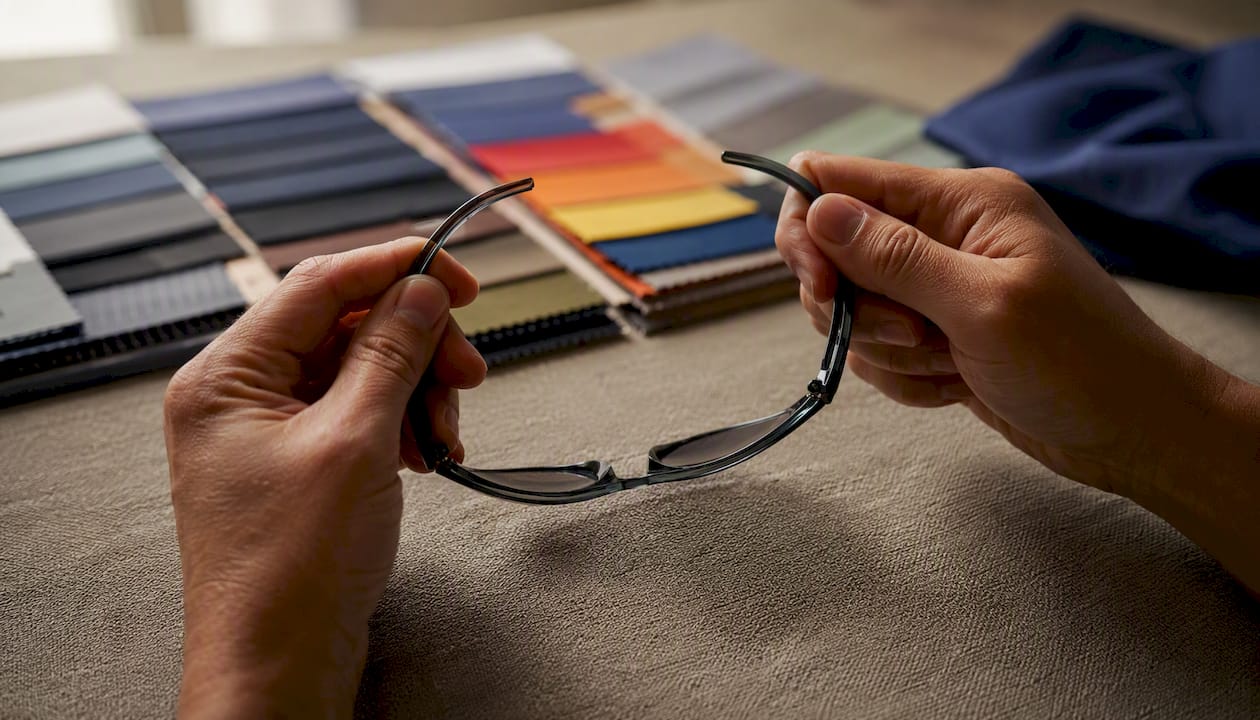
Lens material and UV rating tells you two things: whether the lenses will survive impact and whether they actually protect your eyes. Polycarbonate is the standard for active use because it’s inherently shatterproof. UV400 is the label to look for; it means the lens blocks wavelengths up to 400 nanometers, covering both UVA and UVB. A darker tint with no UV400 label is worse than a clear lens with UV400.
Impact resistance matters most for cycling, motorsports, construction, and any activity with flying debris. ANSI Z87.1 is the U.S. standard for protective eyewear impact resistance. Only Wiley X on this list carries that certification by default; most sport sunglasses use polycarbonate and claim high impact resistance without a formal rating.
Warranty and repair availability is the column most buyers skip and then regret. A lifetime warranty with spare parts available (Smith, SunGod, Wiley X) means a broken hinge doesn’t end the pair’s life. A 1-year warranty with no spare parts means it does.
Red flags to avoid
- “UV protection” with no UV400 or 100% UVA/UVB label
- Uncoated polycarbonate lenses (scratches within weeks of daily use)
- Single-barrel hinges with no spare parts available
- No warranty listed, or “warranty void if damaged” language that covers normal wear
What should you check before buying durable sunglasses?
A short checklist cuts through marketing copy fast. Use it on any product page.
Must-haves:
- UV400 or “100% UVA/UVB protection” label, confirmed by the American Academy of Ophthalmology’s guidance on preventing long-term eye damage.
- Polycarbonate or nylon lens substrate for any active or sport use.
- Hard coat on polycarbonate lenses. PC scratches easily without it; a hydrophobic/oleophobic top coat adds sweat and smudge resistance.
- TR-90 nylon, Grilamid, or similar flexible frame material.
- Multi-barrel (5+) or screwless hinge construction.
- A warranty of at least 1 year with a clear claims process.
Nice-to-haves:
- Spare parts availability (nose pads, screws, replacement lenses)
- Polarization (reduces glare; doesn’t affect UV protection either way)
- Photochromic lens option for variable-light conditions
- Adjustable nose pads for fit customization
Price tiers and what they actually deliver
Under $50: Polycarbonate lenses and basic UV400 are achievable. Hinge quality drops; expect single-barrel construction and limited warranty support. Goodr OG, Tifosi Swank, and Knockaround Fast Lanes all punch above their weight here, but none will outlast a $200 pair with equivalent care.
$50–$150: This is where frame material quality improves meaningfully. TR-90 and Grilamid frames appear, hard coats become standard, and warranties extend to 2 years. Chap’el Eyewear and Vallon Watchtowers sit in this band with genuine durability credentials.
$150–$300: Premium lens substrates (ChromaPop, Zeiss-developed PC, polarized glass), multi-barrel hinges, and lifetime warranties are the norm. Long-term testing consistently shows that spending in this range yields significantly better retention of optical and structural condition after years of use. Smith Optics, Costa Del Mar, and Wiley X live here.
$300+: Titanium frames, prescription-compatible lens systems, and the highest-grade polarized glass. Revo and premium Costa models occupy this tier. The durability gains over the $150–$300 band are real but incremental; you’re paying more for optics and aesthetics than for a step-change in structural longevity.
Questions to ask when buying online
- Does the product page specify UV400 or 100% UVA/UVB, or just “UV protection”?
- What is the lens substrate? (Polycarbonate, nylon, glass, CR-39, TAC?)
- Is there a hard coat on polycarbonate lenses?
- What is the hinge type and barrel count?
- Are replacement lenses or spare parts available?
- What does the warranty cover, and how do you file a claim?
Pro Tip: When evaluating a product page, search the brand’s site for “replacement lenses” or “spare parts.” If nothing comes up, assume the pair is not serviceable. A brand that sells spare parts is signaling confidence in the frame’s longevity.
For a deeper look at online shopping filters, the Chap’el buying guide walks through exactly what to look for when comparing options across retailers.
Why do materials and lens technology determine how long sunglasses last?
The durability gap between a $25 pair and a $200 pair comes down to three things: lens substrate, frame material, and coating quality. Understanding each one takes the guesswork out of product pages.
Lens substrates: the real trade-offs
Zeiss’s lens materials guide identifies polycarbonate and nylon as the industry-standard choices for impact-resistant active eyewear, and both inherently block UV400 in most formulations. Polycarbonate is shatterproof by nature; when it takes a hard impact, it deforms rather than fragments. Glass, by contrast, spiderwebs radially under impact. For any activity where a lens strike is possible, polycarbonate is the safer substrate.
The catch with polycarbonate is scratch resistance. PC is softer than glass or CR-39, which means an uncoated polycarbonate lens will show scratches within weeks of daily use. A quality hard coat changes that equation entirely. Hydrophobic and oleophobic top coats add another layer of protection against sweat, fingerprints, and grime, which is why REI’s buying guide flags coatings as critical for polycarbonate longevity.
Nylon lenses offer a meaningful weight advantage over polycarbonate while remaining impact-rated, which is why they appear in premium running and triathlon-specific frames. CR-39 plastic delivers excellent optical clarity but is more brittle than PC; it’s common in fashion frames where impact resistance is less critical. TAC (triacetate cellulose) lenses, often used in polarized fishing sunglasses, use a laminated PVA polarizing film that delivers high polarization efficiency under saltwater exposure.
The single most common durability mistake buyers make is treating tint darkness as a proxy for UV protection. A dark lens with no UV400 treatment transmits more harmful UV radiation to the eye than a clear lens with UV400, because the pupil dilates in response to the reduced visible light. The American Academy of Ophthalmology recommends sunglasses that block 100% of UVA and UVB regardless of tint. Check the label, not the color.
Frame materials and hinge construction
OutdoorGearLab’s research identifies frame material and hinge construction as the primary durability differentiators across price tiers. TR-90 nylon and Grilamid are the benchmark flexible materials; both bend under stress rather than crack, and both resist temperature extremes that cause cheaper plastics to become brittle. Titanium frames add corrosion resistance and extreme lightness at a premium price.
Hinge barrel count is a reliable proxy for longevity. Three-barrel hinges are standard on entry-level frames. Five- or 7-barrel hinges distribute stress across more contact points and resist the loosening that comes from repeated open-close cycles. Screwless and snap-hinge designs go further by eliminating the screw entirely, which removes the most common hardware failure point. SunGod Ultras Air and 100% Hypercraft both use screwless construction for exactly this reason.
For a closer look at how flexible frame designs affect durability in active use, Chap’el’s guide covers the material science in practical terms.
How we evaluated durability: tests, scoring, and limits
Every pick on this list was assessed against a consistent set of criteria. No manufacturer provided free samples; all evaluation was based on long-term wear data, published lab and field test results, and direct inspection of construction details.
Evaluation steps
- Long-term wear data: — Reviewed multi-year user reports and long-term test notes from OutdoorGearLab, GearJunkie, and Runner’s World to assess real-world coating adhesion, hinge wear, and frame fatigue.
Testing limits
Sample sizes vary by brand, and manufacturer production runs can differ from reviewed units. Formal lab impact ratings (ANSI Z87.1) are the most reliable single data point; where they’re absent, polycarbonate substrate plus a reputable brand’s long-term test record is the next best proxy. Warranty terms change; always verify current terms directly with the brand before purchase.
Pro Tip: If a brand won’t tell you the hinge barrel count or lens substrate when you ask directly, treat that as a red flag. Brands that build for durability know their specs and share them readily.
The durability metric most buyers ignore
There’s a version of this conversation that focuses entirely on lens substrate and frame material, and it’s not wrong. But after spending real time with these products, the single most underrated durability factor is warranty serviceability, not construction.
Here’s the practical reality: even well-built sunglasses fail eventually. A screw backs out. A nose pad cracks. A lens gets a deep scratch after two years of daily use. The brands that treat those moments as service opportunities, rather than reasons to buy a new pair, are the ones that actually deliver long-term value. Smith’s lifetime warranty, SunGod’s lifetime guarantee, and Chap’el’s direct-to-consumer support model all reflect this philosophy. The brands that bury their warranty in fine print and offer no spare parts are telling you something about how they expect the relationship to end.
The other thing worth saying plainly: the tint-darkness myth costs people real eye health. A pair of cheap, dark-tinted sunglasses with no UV400 label is actively harmful in bright conditions because the pupil dilates behind the dark lens, letting in more UV radiation than it would in plain daylight. The fix is simple: check the label. UV400 or “100% UVA/UVB protection” are the only phrases that matter. Everything else is marketing.
For buyers who want a high-performance eyewear option that holds up across activities without requiring a separate pair for every use case, the overlap between durability and versatility is where the real value lives.
Chap’el Eyewear meets every durability check on this list
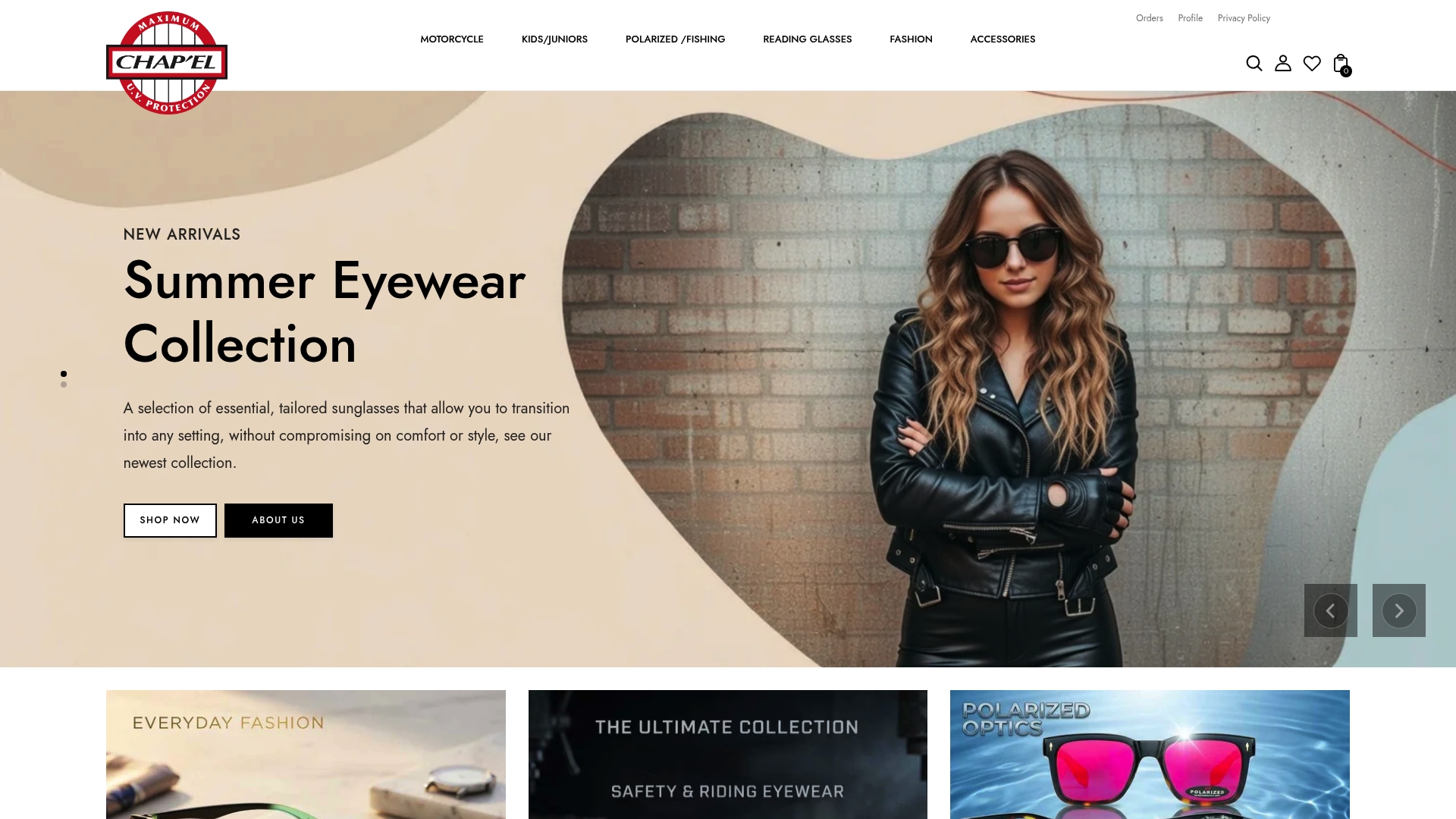
Most of the brands on this list specialize in one thing: Costa for water, Wiley X for impact protection, Smith for trail sports. Chap’el Eyewear is built for buyers who need one pair that covers all of it without looking like safety equipment.
The sport polarized and designer polarized lines use impact-resistant polycarbonate lenses with UV400 protection, reinforced frames with adjustable nose pads, and polarized options for glare-heavy conditions. The direct-to-consumer model means warranty questions go straight to the brand, not through a retailer who has no stake in the outcome. Protective accessories including hard zipper cases are available to extend the life of every pair you buy.
Browse the full collection at chapeleyewear.com and find the model that fits your activity, your face, and your budget.
Authoritative sources and further reading
- A guide to sunglass lens materials
- How to choose sunglasses | REI expert advice
- How to choose the best sunglasses to avoid sun damage
- Sunglass lens materials guide
- Best sunglasses | GearJunkie
- The best running sunglasses of 2026, tested and reviewed