

Best Sunglasses for Big Heads: Roomy, Protective Picks
If you have a larger head, the fastest fix is to shop for oversized wayfarer, square, or large aviator frames with temple lengths of at least 140mm and lens widths above 55mm. These two numbers alone will eliminate most of the frames that pinch your temples or sit crooked on your nose. Chap’el Eyewear’s wide-fit collections cover exactly that spec range, and every lens carries UV400 or 100% UV protection — which the American Academy of Ophthalmology identifies as the label to look for before anything else. Price, brand name, and lens color tell you nothing about UV safety; only the label does.
Table of Contents
- What makes sunglasses actually fit a big head?
- Which frame shapes work best for wide faces?
- What lens features actually matter for eye safety?
- Frame materials and fit features that make wide frames comfortable
- Chap’el picks for bigger heads
- Key Takeaways
- The fit problem nobody talks about
- Chap’el Eyewear: wide-fit sunglasses worth trying on
- Sources and further reading
What makes sunglasses actually fit a big head?
Reading a frame’s size spec takes about ten seconds once you know the format. Most frames list three numbers on the inner temple arm: lens width · bridge width · temple length, written as something like 58-18-145. For wider heads, target a lens width above 55mm, a bridge in the 18 to 22mm range, and a temple length at least 140mm (longer temples are better for most people in the XL range).
How to measure before you shop:
- Wrap a soft tape measure around the widest part of your head, just above your ears. A larger head circumference puts you firmly in wide-fit territory.
- Measure a pair of sunglasses that already fit well: lay them flat and measure temple tip to temple tip. That number is your baseline.
- Check the lens width by measuring one lens horizontally at its widest point.
Shopping checklist for wide-fit frames:
- Filter by “wide” or “XL” on any online retailer before browsing styles.
- Pull up the frame’s size spec and confirm lens width above 55mm and temple length at least 140mm.
- Look for the UV400 or 100% UV label — not just “UV protection” without a standard attached.
- Check the return window before ordering. Thirty days minimum is reasonable; some retailers offer free home try-on programs.
- Ask customer service whether the frame runs narrow or wide relative to its listed spec — the same 58mm lens can feel very different across frame styles.
- If buying in-store, put them on and shake your head gently. They should not slide forward.
Which frame shapes work best for wide faces?
Oversized wayfarer and square frames
Thick, squared-off frames are the most forgiving shape for larger heads. The straight horizontal top bar creates a strong visual line that balances a broad forehead, and the wide lens opening gives your eyes room without the frame cutting into your temples. Look for versions with a lens width above 55mm and a relatively flat bridge.
Large-fit aviators
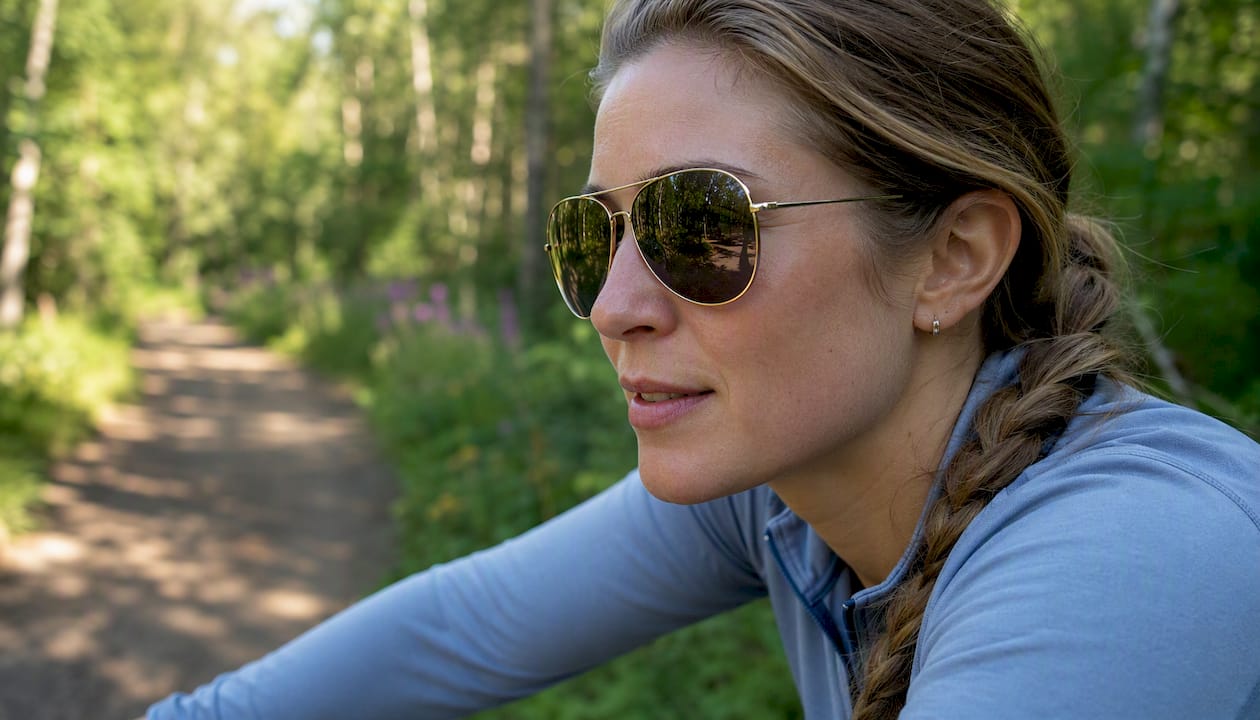
Aviators with teardrop lenses in a large size sit wide and low on the face, which works well for people with prominent cheekbones or a longer face shape. The thin metal frame keeps the overall weight down, and double-bridge designs add structural rigidity without adding bulk. Stick to large-fit versions specifically; standard aviators often run narrow.
Rectangular frames
A wide rectangular lens gives excellent coverage across a broad face and tends to sit more stably than rounder shapes. The flat bottom edge also keeps the frame from riding up when you smile or talk, which is a small but real comfort advantage over the long day.
Wraparound frames
Wraparounds offer the best peripheral UV coverage, but the curvature that makes them protective can also create pressure points on wider heads. The American Academy of Ophthalmology notes that wraparound styles provide extra side protection while cautioning that fit matters — a frame that presses against your temples will cause headaches on a long hike regardless of how good the lenses are. If you want a wraparound, try before you buy and check that the curve doesn’t tighten against your skull behind the ear.
Oversized cat-eye
Cat-eye frames have moved well past a purely feminine association. Oversized versions with a lens width above 58mm and a high-set hinge work on wider faces because the upswept outer corner draws the eye upward rather than outward. They suit oval and heart-shaped wider faces particularly well.
Pro Tip: Whatever shape you choose, make sure the frame sits at least 2–3mm away from your lashes and cheeks. Frames that rest on your skin trap heat and fog up within minutes in warm weather — a gap keeps airflow moving across the lens.
What lens features actually matter for eye safety?
The single most common misconception about sunglasses: polarization does not mean UV protection. A lens can be polarized and still let UV radiation through. The American Academy of Ophthalmology is explicit on this point — always verify that a polarized lens also carries a “100% UV” or “UV400” claim.
UV400 means the lens blocks all light wavelengths up to 400 nanometers, covering both UVA and UVB. That is the standard to look for. “UV protection” alone, without a number or percentage, is not a guarantee of full-spectrum coverage. Check the label, not the price tag — affordable sunglasses with proper certification can protect your eyes better than expensive pairs that skip the labeling.
Tint selection by activity
Gray lenses reduce brightness evenly without shifting colors, which makes them the most versatile choice for everyday wear and driving. Brown and amber lenses boost contrast and work well in variable light — on the trail, on the golf course, or in partly cloudy conditions where flat light makes depth perception tricky. Neither tint replaces UV protection; they are purely about visual comfort.
Polarized lenses cut reflected glare from water, pavement, and snow, which is why they are the standard for fishing, boating, and highway driving. The tradeoff is that they can make LCD screens harder to read and may slightly reduce depth perception on certain terrain. Photochromic lenses, which darken in sunlight and lighten indoors, are a practical choice if you move between environments frequently — though they react more slowly in cold temperatures.
Lens safety checklist before you buy:
- “100% UV protection” or “UV400” on the label or product page
- Polarized claim backed by a UV protection claim (not polarized alone)
- Lens tint matched to your primary activity (gray for general use, brown/amber for contrast, polarized for glare-heavy settings)
- For international purchases, CE or UKCA markings confirm the lens meets European or UK optical standards — though for U.S. shoppers, the UV spec is the primary check
Frame materials and fit features that make wide frames comfortable
The material a frame is made from affects how it feels after two hours, not just how it looks in the store.
| Material | Weight | Flexibility | Durability | Best for |
|---|---|---|---|---|
| Acetate | Medium–heavy | Low–medium | High | Style-focused, everyday wear |
| Nylon / TR90 | Light | High | High | Active use, wide heads needing flex |
| Metal (titanium/stainless) | Light–medium | Low | Very high | Slim profiles, adjustable fit |
| Polycarbonate | Light | Medium | High | Impact resistance, sport use |
Nylon and TR90-style frames are the practical choice for wider heads. They flex slightly under pressure instead of cracking, which means a frame that’s a millimeter or two narrower than ideal won’t snap the first time you put it on. Acetate frames look great but have less give — if the fit isn’t right off the shelf, it won’t improve without a professional adjustment.
Beyond material, a few small features make a measurable difference in daily comfort:
- Rubber or silicone temple tips grip behind the ear and prevent the frame from sliding during activity. Chap’el’s flexible sunglasses include these features across several sport and active lines.
Chap’el picks for bigger heads
Chap’el Eyewear builds several collections with the specs and features that wider-head shoppers need: longer temples, roomy lens openings, adjustable nose pads, and lenses that carry UV400 certification. Here’s how the main lines break down:
| Chap’el Collection | Key fit features | Lens spec | Best for |
|---|---|---|---|
| Designer Polarized | Wide lens opening, adjustable nose pads, spring hinges | UV400 + polarized | Everyday wear, driving, style-focused |
| Sport Polarized | Rubber temple grips, flexible TR90-style frames, extended temples | UV400 + polarized | Active use, cycling, water sports |
| Performance / Wrap styles | Full-coverage lens, padded nose bridge, wide fit | UV400, impact-resistant polycarbonate | Motorcycle, trail, high-glare environments |
The Designer Polarized line is the natural starting point for most shoppers: the frames run wide, the nose pads are adjustable, and the polarized UV400 lenses cover both glare control and full UV safety. The Sport Polarized collection adds rubber grip points at the temples and nose, which keeps the frame locked in place during movement — a feature that matters a lot when you’re on a bike or a boat and can’t stop to push your glasses back up.
Chap’el’s UV protection buying guide walks through exactly what to look for on a label, which is worth reading alongside the product pages. If you’re unsure which size to order, the site’s size guidance and customer service team can confirm which frames run widest.
Key Takeaways
Sunglasses for larger heads fit best when you prioritize temple lengths of 140mm or more, lens widths of 55–60mm+, and verified UV400 labeling — style and price are secondary to those three specs.
| Point | Details |
|---|---|
| Target these size specs | Look for lens width above 55mm and temple length at least 140mm for a reliable wide fit. |
| UV400 label is non-negotiable | Price and brand name don’t confirm UV safety — only the UV400 or 100% UV label does. |
| Polarization ≠ UV protection | Always verify a polarized lens also carries a UV400 claim before buying. |
| Best frame shapes for wide faces | Oversized wayfarer, large aviator, and wide rectangular frames give coverage without side pressure. |
| Chap’el wide-fit collections | The Designer Polarized and Sport Polarized lines offer UV400 lenses, adjustable nose pads, and extended temples suited to larger heads. |
The fit problem nobody talks about
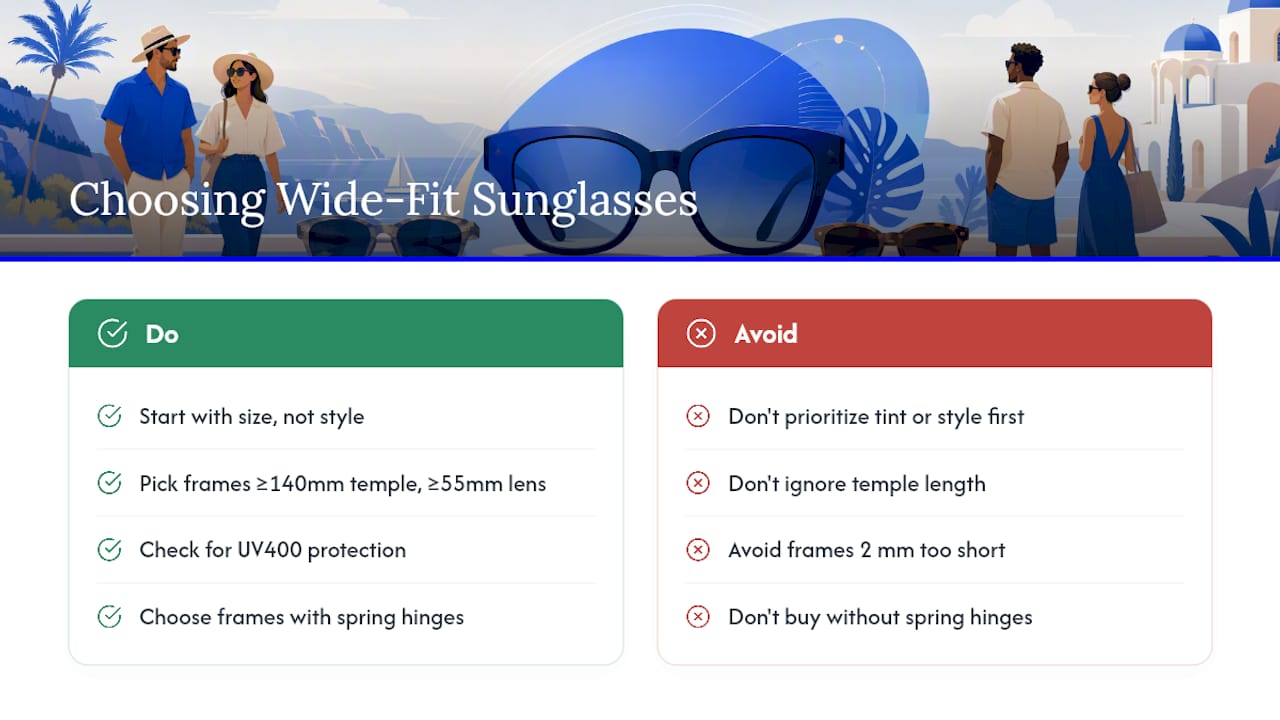
Most sunglasses guides spend their word count on lens tints and celebrity-approved styles. What they skip is the part that actually determines whether you wear the glasses or leave them in the glove box: the temple length.
A frame that’s 2mm too short doesn’t just feel tight. It sits at the wrong angle, which pushes the lenses down your nose, which means you’re looking over them half the time. That’s not a comfort issue — it’s a protection issue. UV exposure doesn’t care that your frames are stylish.
The other thing guides consistently understate is how much spring hinges change the experience for wider heads. A standard hinge is engineered to a fixed opening angle. If your head is wider than that angle, the frame is in a constant state of trying to close against your skull. Spring hinges eliminate that entirely. It’s a small mechanical detail that costs manufacturers almost nothing to include, and it makes the difference between a frame you wear for an hour and one you wear all day.
My recommendation: start with the size spec, not the style. Find frames that hit the 140mm temple and 55mm+ lens threshold, confirm the UV400 label, and then choose the shape you like from that filtered set. Chap’el’s Designer Polarized and Sport Polarized collections are built around exactly that logic — wide fit first, style second, and UV protection on every lens.
Chap’el Eyewear: wide-fit sunglasses worth trying on
If you’ve spent any time searching for sunglasses that actually fit a larger head, you already know how many “one size fits most” frames end up being “one size fits narrow heads.” Chap’el Eyewear built its collections differently: wider lens openings, longer temples, adjustable nose pads, and UV400 lenses across the board.
The Designer Polarized collection is the best starting point for everyday wear, with polarized UV400 lenses and frames that run wide enough for most XL head sizes. For active use, the Sport Polarized line adds rubber temple grips and flexible frames that stay put during movement. Both collections ship with a return policy that gives you time to confirm the fit at home. Browse the full range at Chap’el Eyewear and use the size guide on the product pages to match your measurements before you order.
Sources and further reading
- How to Choose the Best Sunglasses to Avoid Sun Damage — American Academy of Ophthalmology
- 10 Best Sunglasses of 2026 | Tested & Ranked
- The best sunglasses for men and women: 27 favourites with UV protection | The Guardian
- How to Determine the Best Sunglasses for UV Protection | The EyeDoctors Optometrists
- The best sunglasses to protect your eyes in 2026, tested and reviewed
- Full UV Protection Sunglasses: Your 2026 Buying Guide
- Polarized Sunglasses Advantages: Your 2026 Guide
This article is general buying guidance, not medical advice. For prescription eyewear or specific eye health concerns, consult a licensed optometrist or ophthalmologist.
Recommended
- Top 6 Best Sunglasses for Small Heads Alternatives 2026 – Chap’el Eyewear
- Best Full Coverage Sunglasses for Outdoor Protection 2026 – Chap’el Eyewear
- Affordable Sunglasses That Actually Protect Your Eyes – Chap’el Eyewear
- Top 5 Lightweight Sunglasses for Small Faces Alternatives 2026 – Chap’el Eyewear