

Full UV Protection Sunglasses: Your 2026 Buying Guide
The only sunglasses that genuinely protect your eyes are ones labeled UV400 or “100% UV protection.” These two designations mean exactly the same thing: the lenses block all light with wavelengths up to 400 nanometers, covering the entire ultraviolet spectrum. That includes:
- UVA rays (315–400 nm): the most abundant UV radiation at ground level, linked to long-term eye damage
- UVB rays (280–315 nm): the primary cause of sunburn and a major driver of cataract formation
- UVC rays (100–280 nm): largely absorbed by the atmosphere, but blocked by UV400 lenses regardless
One thing worth knowing upfront: a dark lens tint tells you nothing about UV protection. A pair of cheap, dark-tinted sunglasses with no UV coating can actually make things worse by dilating your pupils and letting in more harmful radiation. The label is everything. Polarization is a separate feature entirely. It reduces glare, but it does not add UV blocking.
What do full UV protection sunglasses actually do for your eyes?
UV radiation accumulates in your eyes the same way it accumulates on your skin. Years of unprotected exposure raise your risk of cataracts and macular degeneration, two of the leading causes of vision loss in adults. The American Academy of Ophthalmology recommends wearing UV-blocking eyewear any time you are outdoors, not just on bright summer days, because UV radiation penetrates cloud cover.
“UV400 means a pair blocks all rays with wavelengths shorter than 400 nanometers — the entire ultraviolet spectrum.” — Wirecutter, 2026 sunglasses review
UV400 lenses work by incorporating UV-absorbing compounds directly into the lens material or applying a specialized coating. Polycarbonate, one of the most common lens materials in quality sunglasses, naturally blocks most UV radiation and becomes fully UV400-rated with minimal additional treatment. The protection is invisible. You cannot see it, feel it, or judge it by how dark the lens looks.
Polarized lenses filter reflected light from horizontal surfaces like water, roads, and snow, which reduces eye strain and improves visual clarity. That is genuinely useful, especially for driving or water sports. But polarization and UV protection are independent properties. A polarized lens without UV400 certification still exposes your eyes to harmful radiation.
Key features to look for in sunglasses with full UV protection
Not every pair of sunglasses sold in the United States meets the UV400 standard. Here is what to check before you buy:
- UV400 or “100% UV protection” labeling: This is the only reliable indicator. Lens darkness alone does not guarantee UV blocking. Look for the label on the tag, the lens itself, or the brand’s product page.
- Lens material: Polycarbonate lenses offer durable UV blocking with good optical clarity. They are also impact-resistant, which matters for active use.
- Frame coverage: Wraparound frames and larger lenses reduce UV exposure from the sides and below. Peripheral UV exposure is real, especially near reflective surfaces like water or snow.
- Polarization: Adds glare reduction and visual comfort, particularly for outdoor activities. It does not replace UV protection, but it is a worthwhile addition.
- Price range: Full UV protection is available across a wide price range. Affordable sunglasses with UV protection exist at every budget level. The key is verifying the label, not spending more.
- Certifications and brand transparency: Brands that clearly disclose UV400 certification and offer warranties signal confidence in their product quality.
Pro Tip: Ask the retailer or check the product page for explicit UV400 certification. If a brand cannot confirm the rating, treat the sunglasses as unprotected. A UV photometer at an optician’s office can also verify protection on any pair you already own.
Which styles and collections offer the best UV protection?
Style and protection are not a trade-off. Several frame categories deliver full UV blocking while fitting different lifestyles and face shapes.
-
Wraparound frames provide the widest coverage, blocking UV from the front and sides. They are the top choice for cycling, running, skiing, and any activity where peripheral exposure is a concern. Chapeleyewear’s Sport Polarized collection is built around this principle: UV400 certified lenses in sturdy, sport-ready frames designed for glare-heavy environments.
-
Aviators and oversized frames cover a large portion of the face, making them practical as well as fashionable. The Designer Polarized collection from Chapeleyewear pairs UV400 lenses with fashion-forward frame designs suited to everyday wear, travel, and occasions where you want protection without sacrificing style.
-
Classic shapes (wayfarers, rounds, rectangles) suit the widest range of face shapes and social settings. Chapeleyewear’s Classic Polarized line delivers UV400-rated protection in timeless silhouettes, with polarized lenses that work equally well on a beach vacation or a daily commute.
The comparison below covers all three Chapeleyewear collections on the dimensions that matter most for buyers evaluating full UV protection sunglasses.
| Collection | UV Protection | Polarization | Lens Type | Best For |
|---|---|---|---|---|
| Designer Polarized | UV400 | Yes | Polycarbonate | Fashion-conscious everyday wear |
| Sport Polarized | UV400 | Yes | Polycarbonate | Active outdoor sports |
| Classic Polarized | UV400 | Yes | Polycarbonate | Timeless style, versatile use |
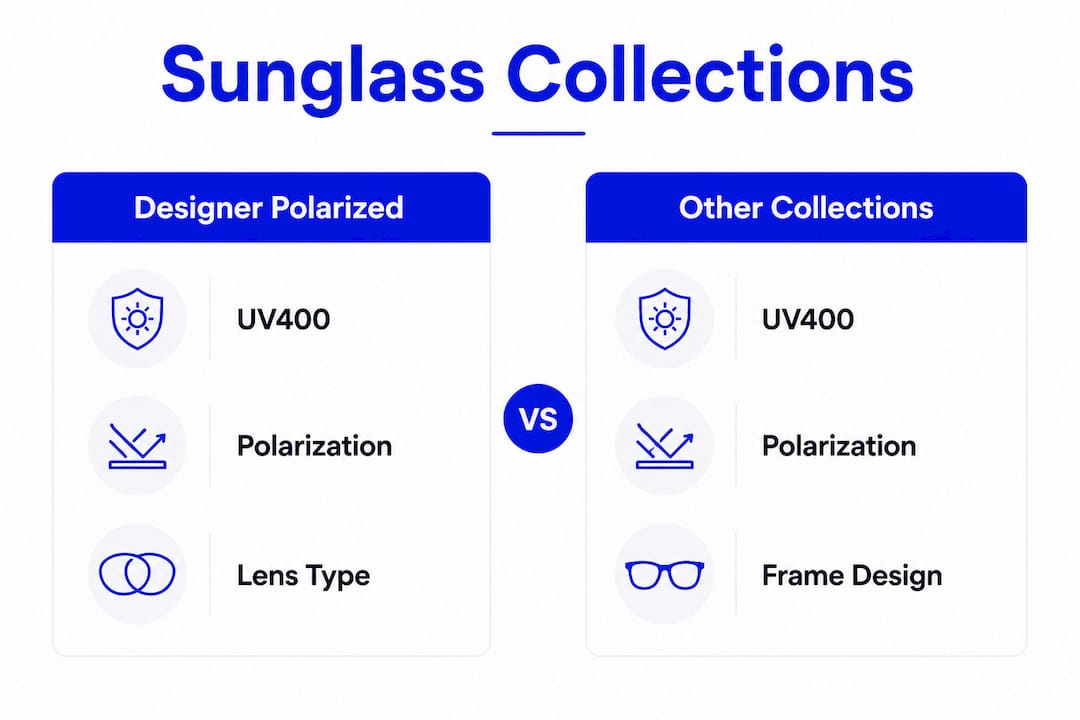
All three collections share the UV400 standard and polarized lenses. The difference is in frame construction and design intent. Sport Polarized frames are built for durability and secure fit during physical activity. Designer Polarized prioritizes frame aesthetics and trend-forward shapes. Classic Polarized sits in the middle: clean, versatile, and built to work across settings.
How to choose the right pair for your needs
Picking the right sunglasses comes down to five practical steps.
-
Verify the UV400 label. Check the product listing, the tag, or the lens marking. “UV400” and “100% UV protection” are equivalent. Anything vague like “UV protection” without a rating is not a guarantee.
-
Match the lens to your environment. Polarized lenses are worth it if you spend time near water, drive frequently, or ski. For casual urban use, non-polarized UV400 lenses are perfectly adequate. If you want guidance on polarized vs. non-polarized options, the tradeoffs are straightforward once you know your primary use case.
-
Choose a frame that fits your face and activity. Wraparound frames maximize coverage. Larger lenses protect more of the eye area. A frame that sits close to your face leaves less room for reflected UV to reach your eyes from the sides.
-
Consider price and warranty. Affordable sunglasses with UV protection are widely available. Spending more does not automatically mean better UV blocking. What matters is the certification. Brands that offer clear warranty terms and certification disclosure give you more confidence in what you are buying.
-
Look for trust signals. Expert endorsements, published certifications, and transparent return policies all indicate a brand that stands behind its UV claims.
- Store sunglasses in a hard case when not in use to prevent lens scratches that can degrade coatings.
- Clean lenses with a microfiber cloth and lens-safe solution, not paper towels or clothing.
- Avoid leaving sunglasses in a hot car. Prolonged heat can warp frames and weaken lens coatings.
- Replace sunglasses if lenses are deeply scratched. Scratches do not reduce UV protection directly, but they compromise optical clarity and can indicate coating wear.
Pro Tip: UV protection in quality lenses is built into the material, not just the surface coating. Polycarbonate lenses retain their UV blocking even after minor surface scratches. That said, deep scratches are a reason to replace the pair regardless.
How Chapeleyewear balances style and eye safety
Chapeleyewear’s position is that UV400 certification and good design are not competing priorities. Every collection carries UV400 certified lenses, and the frame designs span casual, sport, and fashion categories without treating protection as an afterthought.
The fade lens designs in select collections show how lens technology can serve both aesthetics and function. Gradient and photochromic options maintain full UV blocking while offering a distinct visual style. Adjustable nose pads and lightweight polycarbonate frames address fit and comfort for extended wear. The brand’s approach reflects a straightforward principle: protection should be a baseline, not a premium feature.
Experts at the American Academy of Ophthalmology consistently emphasize that UV protection should never be sacrificed for style. Chapeleyewear’s collections are built around that principle, with UV400 certification across every line rather than reserved for select tiers.
How to care for your sunglasses to preserve UV protection
Regular cleaning and proper storage keep lens coatings intact and extend the life of your UV protection. A few habits make a real difference over time.
Rinse lenses with clean water before wiping to remove grit that can scratch the surface. Use a microfiber cloth rather than a shirt or tissue, both of which can leave fine scratches. Store the sunglasses in a hard protective case whenever they are not on your face. Heat and pressure are the two biggest threats to frame shape and lens coating integrity.
UV protection built into polycarbonate lens material is durable, but surface coatings can degrade with rough handling. Replacing a scratched pair is cheaper than treating the eye conditions that come from years of unprotected UV exposure.
Chapeleyewear: full UV protection without the trade-offs
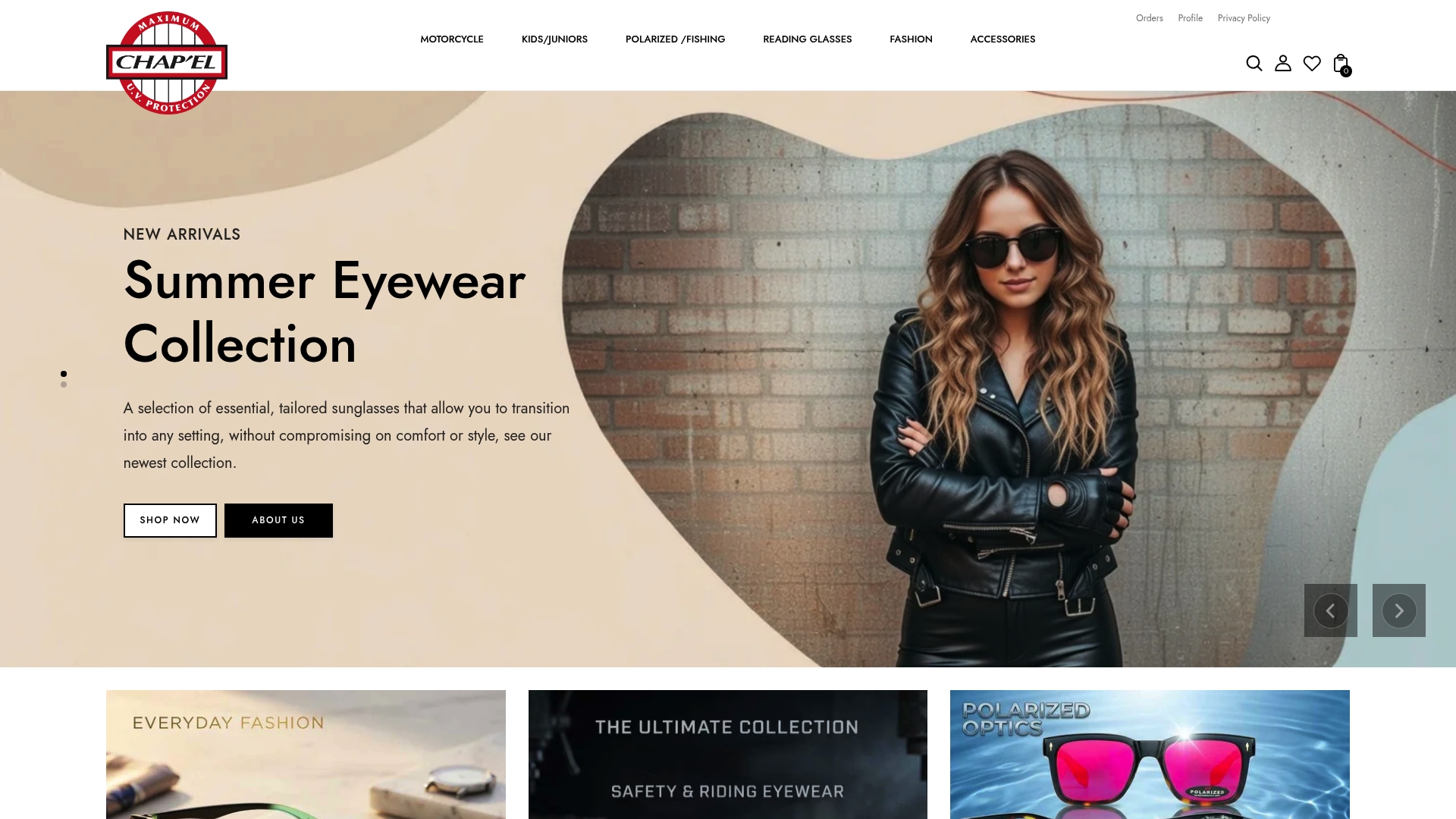
If you have been comparing options and want a direct path to UV400-certified sunglasses that do not force a choice between protection and style, Chapeleyewear is worth a close look. The full collection at chapeleyewear.com covers three distinct lines: Designer Polarized for fashion-forward buyers, Sport Polarized for active outdoor use, and Classic Polarized for everyday versatility. Every pair carries UV400 certification and polarized lenses as standard, not as an upgrade. Frames are polycarbonate and lightweight, built for all-day wear. If you want to protect your eyes without giving up the look you want, that is exactly what Chapeleyewear is built for.
Key Takeaways
UV400 certification is the only reliable standard for full UV protection in sunglasses, covering all UVA, UVB, and UVC rays regardless of lens color or price.
| Point | Details |
|---|---|
| UV400 is the standard | UV400 lenses block all wavelengths up to 400 nm, equivalent to 100% UV protection. |
| Tint does not equal protection | Dark lenses without UV400 labeling offer no guaranteed UV blocking. |
| Polarization is separate | Polarized lenses reduce glare but do not add UV protection on their own. |
| Frame fit matters | Wraparound and larger frames reduce peripheral UV exposure from reflected light. |
| Chapeleyewear’s collections | Designer, Sport, and Classic Polarized lines all carry UV400 certification as standard. |