


Polarized Sunglasses Advantages: Your 2026 Guide
What are the main advantages of polarized sunglasses?
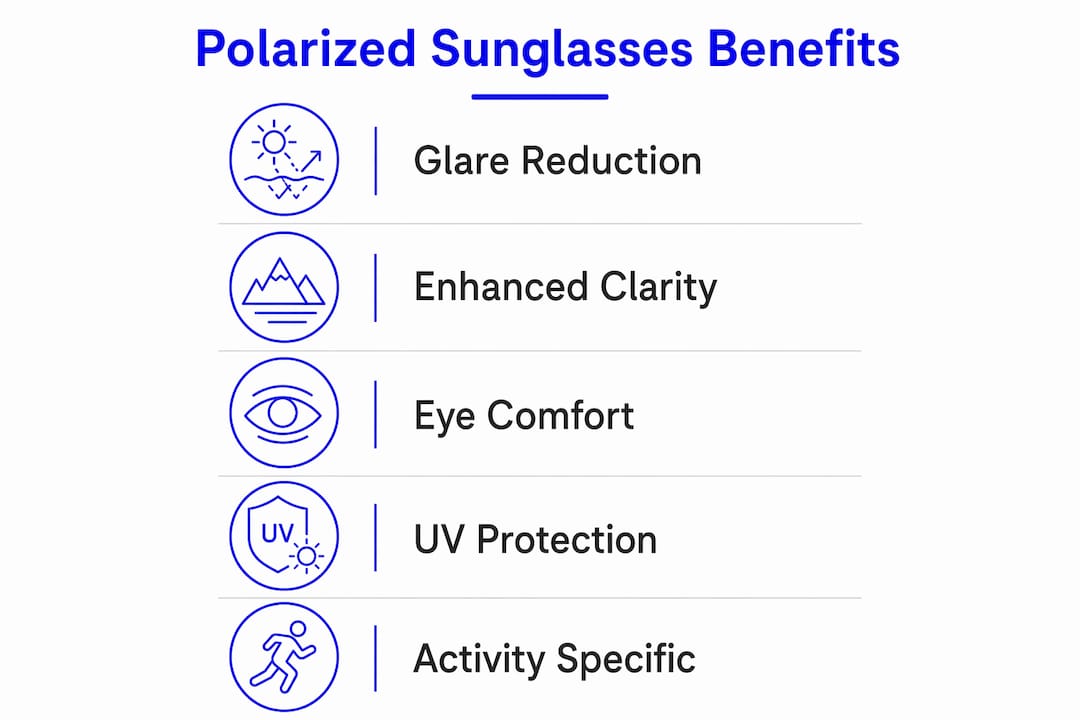
Polarized sunglasses do one thing non-polarized lenses simply cannot: they selectively block the horizontal light waves that cause blinding glare. The result is sharper, more comfortable vision in almost every bright outdoor setting.
Here is what you actually get when you put on a quality pair:
- Glare elimination. Reflective surfaces like water, asphalt, and snow send horizontal light straight at your eyes. Polarized lenses block that reflected light before it reaches you, cutting squinting and eye strain dramatically.
- Sharper visual contrast. Objects appear crisper and details are easier to pick out, even in harsh midday sun.
- Truer color perception. Without glare washing out the scene, colors read more accurately. Blues look deeper, greens more vivid.
- Less eye fatigue. People who wear polarized sunglasses feel less tired after hours in bright conditions compared to those wearing standard tinted lenses.
- Improved safety. Reduced glare means fewer distractions while driving, cycling, or navigating on water.
Ophthalmologists consistently recommend polarized lenses for daytime outdoor use, and the optical science behind them is well established. The key is understanding both where they excel and where they fall short.
Table of Contents
- How polarized lenses actually filter light
- Where does glare come from, and why does it matter?
- Practical benefits of polarized sunglasses for specific activities
- When polarized sunglasses are not the right choice
- Polarization versus UV protection: they are not the same thing
- What ophthalmologists say about polarized lenses
- What the science says about polarized lenses and eye health
- Chapeleyewear’s polarized sunglasses for every outdoor need
- Key Takeaways
How polarized lenses actually filter light
Most people assume sunglasses just darken the world. Polarized lenses do something more precise than that.
When sunlight bounces off a flat, smooth surface like a calm lake or a car hood, it reflects at a single horizontal angle. That concentrated horizontal light is what you experience as glare. A polarized lens has a chemical filter oriented vertically, working like a miniblind in front of a window: only light coming through the vertical “slats” gets in. Horizontal glare is stopped cold.
Non-polarized lenses, by contrast, simply reduce the total amount of light reaching your eyes. They dim everything uniformly, glare included, but they never eliminate it. You still squint; you still lose contrast. Polarized lenses let vertical light pass through cleanly, which is why the image looks sharper rather than just darker.
Key differences at a glance:
- Polarized: Selectively blocks horizontal light waves; reduces glare at the source
- Non-polarized: Reduces overall brightness; glare persists at a lower intensity
- Result: Polarized lenses produce sharper vision; non-polarized lenses produce dimmer vision
For a deeper breakdown of how these two lens types compare in real-world conditions, the polarized vs. non-polarized comparison from Chapeleyewear covers the practical trade-offs clearly.
Where does glare come from, and why does it matter?
Glare is not just annoying. Reflected light from smooth surfaces like snow, water, or flat roads can cause temporary blindness, reduce depth perception, and raise accident risk in ways most people underestimate.
Common glare sources and their effects:
- Water. Sunlight bouncing off a lake or ocean creates intense, shifting glare that makes it nearly impossible to see below the surface or judge distances accurately.
- Asphalt roads. On hot days, the road surface creates a mirror effect. Glare distorts the true color of objects ahead and makes it harder to spot hazards.
- Snow and ice. Snow reflects a high percentage of incoming sunlight. Extended exposure causes squinting, headaches, and a condition sometimes called snow blindness.
- Glass surfaces. Windshields, storefronts, and building facades scatter reflected light directly at eye level, especially in the morning and late afternoon.
- Sand. At the beach, light bounces off both water and sand simultaneously, creating glare from multiple angles.
The consequences go beyond discomfort. Glare has been linked to pedestrian deaths and traffic accidents, according to research cited by Verywell Health. Squinting to compensate strains the muscles around your eyes, accelerating fatigue. Depth perception suffers when your visual system is fighting reflected light instead of processing the actual scene. For anyone spending meaningful time outdoors, managing glare is not optional.
Practical benefits of polarized sunglasses for specific activities
The polarized lenses benefits vary depending on what you are doing, but a few activities see outsized gains.
Daytime driving
Eye care professionals recommend polarized lenses for daytime drivers specifically because windshield glare is one of the most common and dangerous visual distractions on the road. When sunlight hits curved glass, it spreads into bright streaks that force you to look away or shield your eyes. Polarized lenses cut most of that, giving you a cleaner view of the road surface, lane markings, and the vehicles ahead.

Fishing and boating
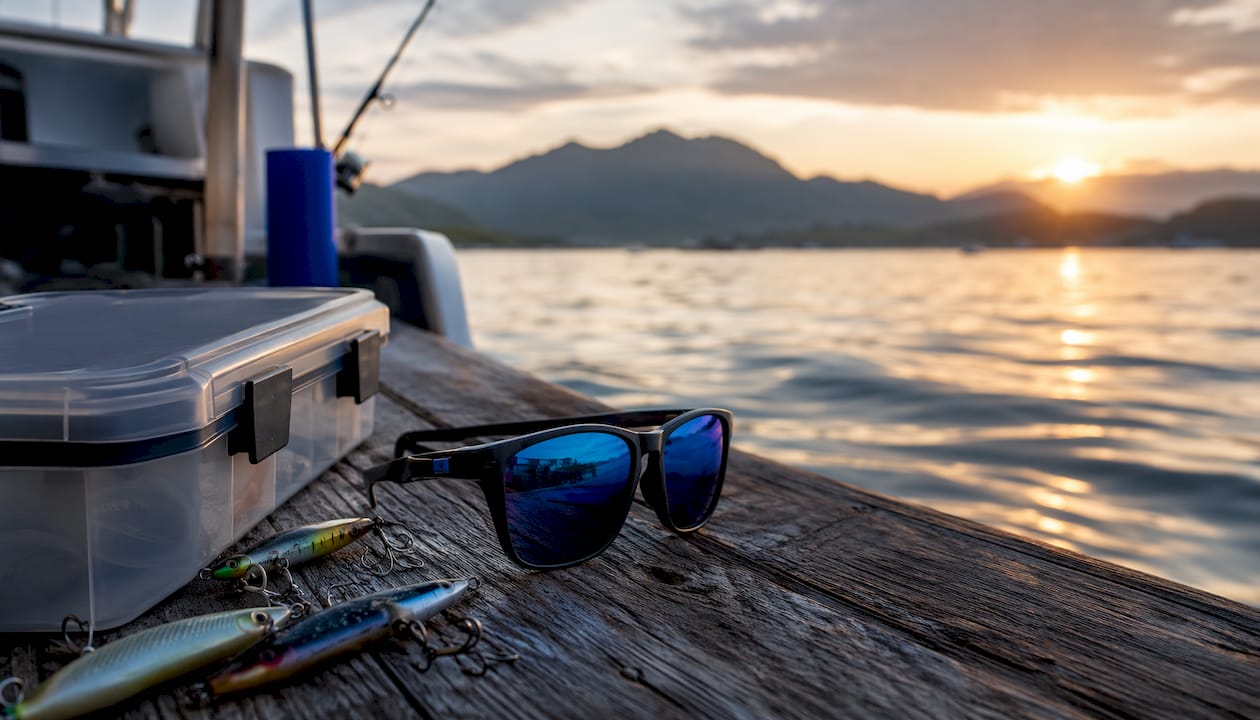
This is where polarized lenses genuinely change the experience. Polarized lenses filter out horizontal light waves that cause blinding reflections on water, letting anglers see below the surface to spot fish, read the bottom structure, and track what they are reeling in. For boaters, reduced eye strain over a full day on the water is a significant comfort gain. Kayakers and sailors report the same benefit: the water reads like a different environment entirely.
Golf
Glare on fairways flattens the visual field, making it harder to read terrain and judge distances. Polarized lenses restore contrast between light and shadow, which helps with course reading. One practical note: some golfers find polarized lenses make reading greens slightly harder because they reduce the subtle light variations that reveal slope. Taking them off for putting is a reasonable workaround.
Skiing and snow sports
Snow reflects an enormous amount of light, and polarized lenses handle that well under most conditions. The tradeoff is addressed in the limitations section below, but for general skiing on groomed runs and open terrain, the glare reduction improves comfort and visibility considerably.
Beach and hiking
At the beach, you are dealing with glare from both water and sand at the same time. Polarized lenses cut both. On trails, they improve contrast between light and shadow, which helps you spot uneven ground and obstacles. For outdoor enthusiasts who invest in quality outdoor gear, polarized eyewear belongs in the same category as any other performance equipment.
When polarized sunglasses are not the right choice
Polarized lenses are not universally ideal. Knowing when to leave them at home is part of using them well.
- Night driving. Polarized lenses reduce overall light transmission. At night, when incoming light is already scarce, that reduction impairs vision more than any glare from oncoming headlights would. The American Academy of Ophthalmology notes that polarized lenses at night can be detrimental.
- LCD and digital screens. Polarized lenses interact with the light-modulating properties of LCD displays, making screens appear fuzzy or nearly unreadable depending on the angle. This affects car dashboard controls, ATM screens, smartphones, GPS devices, and some watches.
- Spotting ice on roads or ski slopes. Polarized lenses reduce the visual contrast that makes ice patches visible. A skier who cannot see a sheet of ice before hitting it faces a real hazard. Drivers in winter conditions should be aware of the same issue.
- Certain cockpit instruments. Pilots flying aircraft with LCD instrument panels are generally advised against polarized lenses for the same screen-visibility reason.
- Low-light conditions generally. Overcast days, dawn, and dusk are situations where you want maximum light transmission. Polarized lenses are optimized for bright, high-glare conditions.
The takeaway: polarized lenses are a daytime, high-brightness tool. Matching the lens to the condition is what separates smart eyewear use from just owning an expensive pair.
Polarization versus UV protection: they are not the same thing
This is one of the most common misunderstandings in eyewear. Polarization and UV protection are completely separate features, and you need both.
Polarized lenses do not inherently provide UV protection. The chemical filter that blocks horizontal light waves does nothing to stop ultraviolet radiation. UV rays are invisible and pass through lenses regardless of polarization unless the lens material or coating specifically blocks them.
Why this matters:
- UV-A and UV-B rays cause cumulative damage to the cornea, lens, and retina. Long-term exposure raises the risk of cataracts and macular degeneration.
- Dark lenses without UV protection are worse than no sunglasses. Your pupils dilate behind dark lenses, allowing more UV radiation to enter the eye than they would in bright light without any eyewear.
- Polarized lenses must be paired with 100% UV protection to provide full eye safety. Look for lenses labeled “UV400” or “100% UV protection,” which means they block wavelengths up to 400 nanometers, covering both UV-A and UV-B.
How to verify your sunglasses have both features:
- Check the label or product description for “UV400” or “100% UV protection”
- Ask the retailer directly; reputable brands list this specification clearly
- Larger lens sizes offer additional coverage by protecting more of the eye area and blocking peripheral UV exposure
Chapeleyewear’s polarized collections include UV protection as a standard specification, which is the baseline any quality polarized sunglass should meet. If a pair does not list UV protection, the polarization alone is not enough.
What ophthalmologists say about polarized lenses
The expert consensus on polarized sunglasses is clear, with one important nuance.
The AAO recommends polarized lenses as the primary choice for outdoor use while advising awareness of their limitations. That is not a hedge: it is a practical framework for getting the most out of them.
Chapeleyewear’s Designer Polarized and Sport Polarized collections are built around exactly this framework: polarized lenses paired with UV protection, in frames designed for both everyday wear and high-performance outdoor conditions. The sport line uses impact-resistant polycarbonate lenses and lightweight frames suited for active use. The designer line prioritizes style without sacrificing optical performance.
One insight worth noting: polarized lenses improve visual comfort by eliminating glare, but they do not directly enhance athletic skill. What they do is remove a visual obstacle. A cleaner, less fatigued visual field lets you perform closer to your actual ability.
What the science says about polarized lenses and eye health
Research on polarized sunglasses consistently supports their role in reducing visual discomfort and protecting long-term eye health, particularly for people who spend significant time outdoors.
A study published in the National Institutes of Health database examined the relationship between glare, visual fatigue, and lens type, finding that selective light filtering produces measurably better visual comfort outcomes than uniform light reduction. The mechanism is straightforward: when your visual system is not fighting reflected glare, the muscles controlling your pupils and focus work less hard, reducing the fatigue that accumulates over hours outdoors.
The broader body of evidence points in the same direction. Prolonged UV exposure without adequate protection is associated with accelerated development of cataracts and age-related macular degeneration. Polarized lenses, when paired with UV400 protection, address both the immediate comfort problem and the long-term health risk. For people who drive frequently, work outdoors, or pursue water sports regularly, the cumulative benefit over years of use is substantial.
For those deciding between polarized and photochromic lenses, the photochromic vs. polarized guide from Chapeleyewear walks through how each technology performs across different light conditions.
Chapeleyewear’s polarized sunglasses for every outdoor need
If you have spent time outdoors squinting through glare, you already know the problem polarized lenses solve. The question is finding a pair that handles both the optical performance and the practical demands of your life.

Chapeleyewear offers polarized sunglasses across two focused collections: Designer Polarized for those who want premium optics in a style-forward frame, and Sport Polarized for active use where impact resistance and a secure fit matter more than anything else. Both lines include UV protection as standard, polycarbonate lenses, and lightweight frames built to stay comfortable over a full day outdoors.
Whether you are on the water, on the road, or just spending a long afternoon outside, the right pair of polarized sunglasses makes a real difference in how your eyes feel by the end of the day. Browse Chapeleyewear’s full collection at chapeleyewear.com and find the pair that fits your activity and your style.
Key Takeaways
Polarized sunglasses reduce glare by selectively blocking horizontal light waves, delivering sharper vision, less eye fatigue, and improved safety in bright outdoor conditions.
| Point | Details |
|---|---|
| Glare reduction mechanism | Polarized lenses block horizontal light waves; non-polarized lenses only dim all light uniformly. |
| Eye fatigue benefit | Wearers report less tired eyes after hours in bright sun compared to standard tinted lenses. |
| Polarization ≠ UV protection | Polarized lenses must be paired with UV400 protection to guard against UV-A and UV-B damage. |
| Key limitations | Avoid polarized lenses for night driving, LCD screen viewing, and spotting ice on roads or slopes. |
| Chapeleyewear’s offering | Designer Polarized and Sport Polarized collections combine polarized lenses with UV protection and impact-resistant polycarbonate frames. |