

Sunglasses That Look Like Glasses: Style + UV Guide
The fastest way to get sunglasses that genuinely look like regular eyeglasses is to start with the frame, not the lens. Choose a classic optical silhouette in full-rim acetate or metal, then pair it with a light or photochromic lens that keeps your eyes visible. Chapeleyewear builds exactly this combination, with 100% UVA/UVB protection baked in.
Two things to decide before you buy:
- Frame first: Pick a rectangular, round, wayfarer, or slim cat-eye silhouette with a visible rim line. That geometry is what signals “eyeglasses” to anyone looking at you.
- Lens second: Choose a lower-density fixed tint, a gradient, or a photochromic lens. All three preserve the glasses aesthetic better than a dark, opaque lens.
Table of Contents
- What makes sunglasses look like glasses?
- Which lens type keeps the glasses-like look?
- How frame materials affect the glasses-like look
- How to check fit and quality before you buy
- How to style glasses-like sunglasses in real life
- Keeping your glasses-style sunglasses in shape
- Key Takeaways
- Why the glasses-like sunglass is a smarter daily choice
- Chapeleyewear has the styles that fit this guide
- Useful sources
What makes sunglasses look like glasses?
The glasses-like effect is almost entirely a frame story. Full-rim acetate or plastic designs define the optical-spectacle identity far more than lens color does, and that same frame can accept a tinted or transition lens without losing its character.
Frame shapes that read as eyeglasses:
- Rectangular: The most universally “optical” silhouette. A modest lens height with a clear upper rim line keeps the face-reading cues of standard spectacles.
- Round: Classic and literary. Works best when the diameter stays proportional to the face rather than oversized.
- Wayfarer: Slightly bolder but still reads as eyewear because of its flat top bar and full rim.
- Slim cat-eye: The upswept corner stays subtle enough to register as fashion eyewear rather than sport gear.
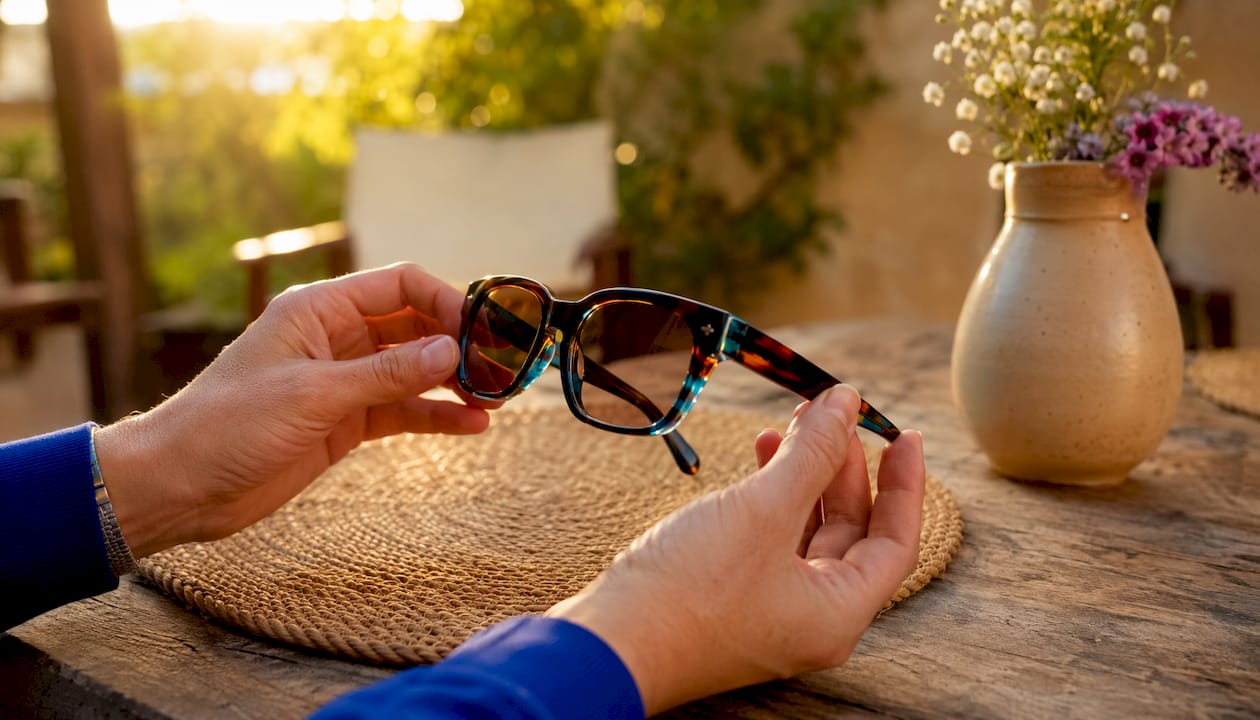
Rim thickness matters too. A full-rim acetate frame with a medium barrel reads as premium eyewear in person and in photos. Thin metal rims achieve the same effect with a lighter, more minimalist feel. What breaks the illusion fast is a wraparound or shield lens, which covers too much of the face and signals “dedicated sunglasses” regardless of tint.
Temple design is the detail most shoppers overlook. Discrete barrel hinges, tapered temples that narrow toward the ear, and a clean nosepad setup all signal optical quality. Chunky sport hinges or rubberized temple tips push the frame toward athletic territory, away from the eyeglass aesthetic you’re after.
Which lens type keeps the glasses-like look?
Lens choice is where most buyers make the wrong trade-off. Here’s how the main options stack up.
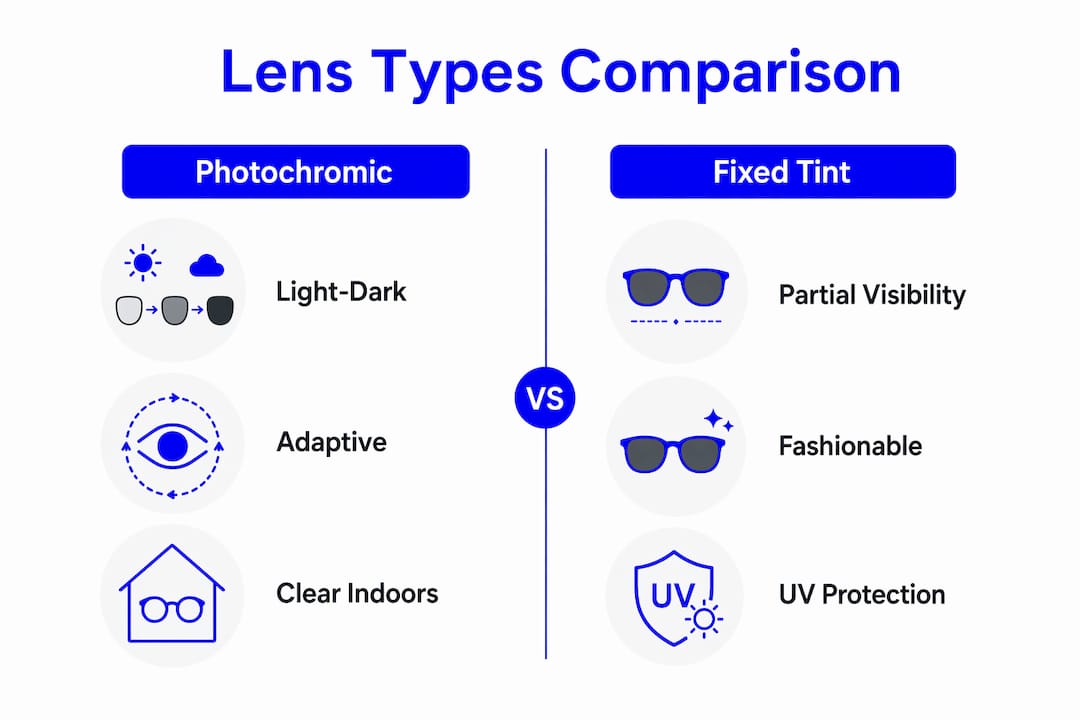
Photochromic lenses darken outdoors and clear up indoors, which makes them the closest thing to a single pair that does both jobs. The catch: many car windshields filter the UV wavelengths that activate the chemistry, so the lenses may stay lighter than you’d expect while driving.
Fixed light tints and gradients keep the eyes partially visible, which is exactly what makes sunglasses read as eyewear in photos and everyday wear. A gray or brown gradient that’s darker at the top and fades toward clear at the bottom is a particularly clean choice.
Polarized lenses cut glare well, but heavy, dark polarized lenses work against the glasses look. If you want polarized, go with a lighter tint in the polarized coating. For a deeper comparison, the photochromic vs. polarized guide from Chapeleyewear covers the trade-offs in detail.
Always confirm 100% UVA/UVB protection regardless of tint density. A light lens with no UV coating is worse than a dark lens with full protection.
| Use case | Best lens type | Visual density | Key trade-off |
|---|---|---|---|
| Everyday / fashion | Photochromic or light fixed tint | Low to medium | Photochromic may stay light in overcast conditions |
| Driving | Light polarized fixed tint | Low to medium | Photochromic often won’t activate behind windshield |
| Sport / outdoor | Polarized or medium fixed tint | Medium | Darker tint reduces glasses-like appearance |
Pro Tip: In cold climates, photochromic lenses darken and fade more slowly than in warm weather. If you live somewhere with harsh winters, pair a photochromic lens with a very light permanent tint so the frame still reads as sunglasses even when the photochromic activation is sluggish.
How frame materials affect the glasses-like look
Material choice shapes both the aesthetic and the durability of your frame.
Acetate and acetate-like plastics are the go-to for a full-rim optical look. The material holds color well, machines to a clean edge, and gives frames that satisfying slight weight that reads as quality. It also accepts fade or gradient lenses cleanly.
Metal frames (stainless steel, titanium, or aluminum alloy) produce thinner rims that read as refined and minimal. They’re lighter than acetate, which some wearers prefer for all-day use, though thin metal can feel less substantial in hand.
Key design details that signal premium construction:
- Eyewire finish: A polished or brushed interior rim edge, not a raw cut.
- Branding placement: Subtle temple engraving rather than large logo badges on the lens or front.
- Temple taper: Temples that narrow smoothly from hinge to tip, matching how optical frames are built.
One practical note: acetate frames generally accept photochromic lens swaps more easily than thin metal frames, because the eyewire has more material to grip the lens. If you plan to swap lenses later, acetate is the safer bet.
How to check fit and quality before you buy
A frame that fits well looks like eyewear. One that sits crooked or gaps at the bridge looks like a costume prop.
Fit checklist:
- Bridge width: The frame should sit flat across your nose without pinching or sliding. Most optical-style frames list bridge width in millimeters; 16–22 mm covers most faces.
- Lens height: Modest lens height (roughly 30–40 mm) keeps the optical silhouette. Taller lenses start reading as fashion sunglasses.
- Temple length: Standard optical temples run 140–150 mm. Too short and the frame bows outward; too long and it slides.
- Face proportion: For narrow faces, the fit guide for narrow faces at Chapeleyewear is a useful reference.
Quality inspection steps:
- Open and close the temples. They should move with consistent resistance, not flop or snap.
- Check hinge screws. Visible, properly seated screws (or clean spring hinges) signal real construction.
- Look at the lens seating. The lens should sit flush in the eyewire with no visible gap or uneven edge.
- Sight down the temples from the front. Both should align symmetrically; any twist means the frame was assembled poorly.
- Check the finish. Consistent color, no bubbling, no visible mold lines on the inner rim.
Online red flags: single generic product photo, no millimeter measurements listed, lens material described only as “plastic.” Ask customer service for the bridge width and temple length before ordering.
How to style glasses-like sunglasses in real life
The frame does most of the work, but a few styling choices reinforce the eyewear effect.
- Match frame color to your wardrobe’s neutrals. Tortoiseshell, black, and warm brown all read as eyewear. Neon or mirrored frames push toward statement sunglasses territory. Pairing your frames with complementary clothing pieces makes the whole look more cohesive.
- Avoid heavily reflective lenses for the glasses look. Mirror coatings catch light and immediately signal “sunglasses.” A clear or lightly tinted lens keeps the optical illusion intact.
- In photos, angle slightly away from direct overhead light. That angle shows the rim silhouette clearly, which is what reads as eyeglasses in an image.
- For outdoor events, a medium-tint lens works fine. For indoor-outdoor days, a photochromic or light gradient keeps you from looking like you forgot to take your sunglasses off inside.
- Keep accessories minimal. Heavy statement earrings or bold makeup compete with the frame’s optical character. The frame should be the face detail, not a background accessory.
Keeping your glasses-style sunglasses in shape
A well-maintained frame holds its fit and keeps looking like quality eyewear. A loose, scratched, or misaligned one reads cheap fast.
Daily cleaning:
- Rinse lenses with lukewarm water to remove grit before wiping.
- Use a microfiber cloth and a lens-safe cleaner. Household glass cleaners strip coatings.
- Store in a hard case, not a soft pouch. Soft pouches allow the temples to flex and misalign over time.
Hinge and frame care:
- Check hinge screws every few months. A small eyeglass screwdriver tightens them in seconds.
- Spring hinges need no lubrication, but if one feels stiff or grinds, take it to an optical shop rather than forcing it.
- Nosepads on metal frames shift with wear. Gently re-center them if the frame starts sitting crooked.
Seasonal checks: Inspect lens coatings in spring and fall. Look for delamination (a cloudy edge or peeling film) on plastic lenses, especially if the frame spent time in a hot car. Delaminated coatings reduce UV performance and look worn.
Key Takeaways
Sunglasses that genuinely look like glasses come down to three decisions: optical-style frame geometry first, moderate lens density second, and quality construction throughout.
| Point | Details |
|---|---|
| Frame geometry is primary | Rectangular, round, wayfarer, or slim cat-eye silhouettes with full rims read as eyeglasses. |
| Lens density matters | Light fixed tints, gradients, or photochromic lenses preserve the glasses look better than dark opaque lenses. |
| UV protection is non-negotiable | Always confirm 100% UVA/UVB protection regardless of how light or clear the lens appears. |
| Photochromic limits apply | Photochromic lenses often won’t activate behind car windshields; use a light polarized fixed tint for driving. |
| Chapeleyewear fits the criteria | Chapeleyewear offers optical-style frames with photochromic and polarized options, UV protection, and impact-resistant polycarbonate lenses. |
Why the glasses-like sunglass is a smarter daily choice
The conventional advice is to buy one pair of sunglasses for outdoors and keep your regular glasses for everything else. That works, but it misses something: a well-chosen pair of glasses-style sunglasses handles both roles better than most people expect.
The optical illusion here isn’t a trick. Modest lens height, a visible rim line, and a classic silhouette genuinely read as prescription eyewear to most observers. That means you can wear them in a meeting, at a restaurant with outdoor seating, or in a photo without looking like you forgot to swap out your eye protection. The frame does the social signaling; the lens handles the UV load.
What I find underrated is the photochromic option for exactly this use case. Most people dismiss it because of the driving limitation, which is real. But for anyone who moves between indoor and outdoor settings throughout the day, a photochromic lens in an acetate optical frame is the closest thing to a single pair that works everywhere. The driving gap is easy to close with a polarized clip-on or a second dedicated driving pair. Chapeleyewear’s approach, building optical-quality frames with UV-rated polycarbonate lenses and offering both photochromic and polarized options, is the practical answer to a problem most eyewear brands don’t even frame correctly.
Chapeleyewear has the styles that fit this guide
If you’ve read this far, you know what to look for: a full-rim optical silhouette, a light or photochromic lens, 100% UV protection, and construction that holds up. Chapeleyewear’s collections are built around exactly those criteria, with lightweight frames, impact-resistant polycarbonate lenses, and both polarized and photochromic options across everyday and sport styles.
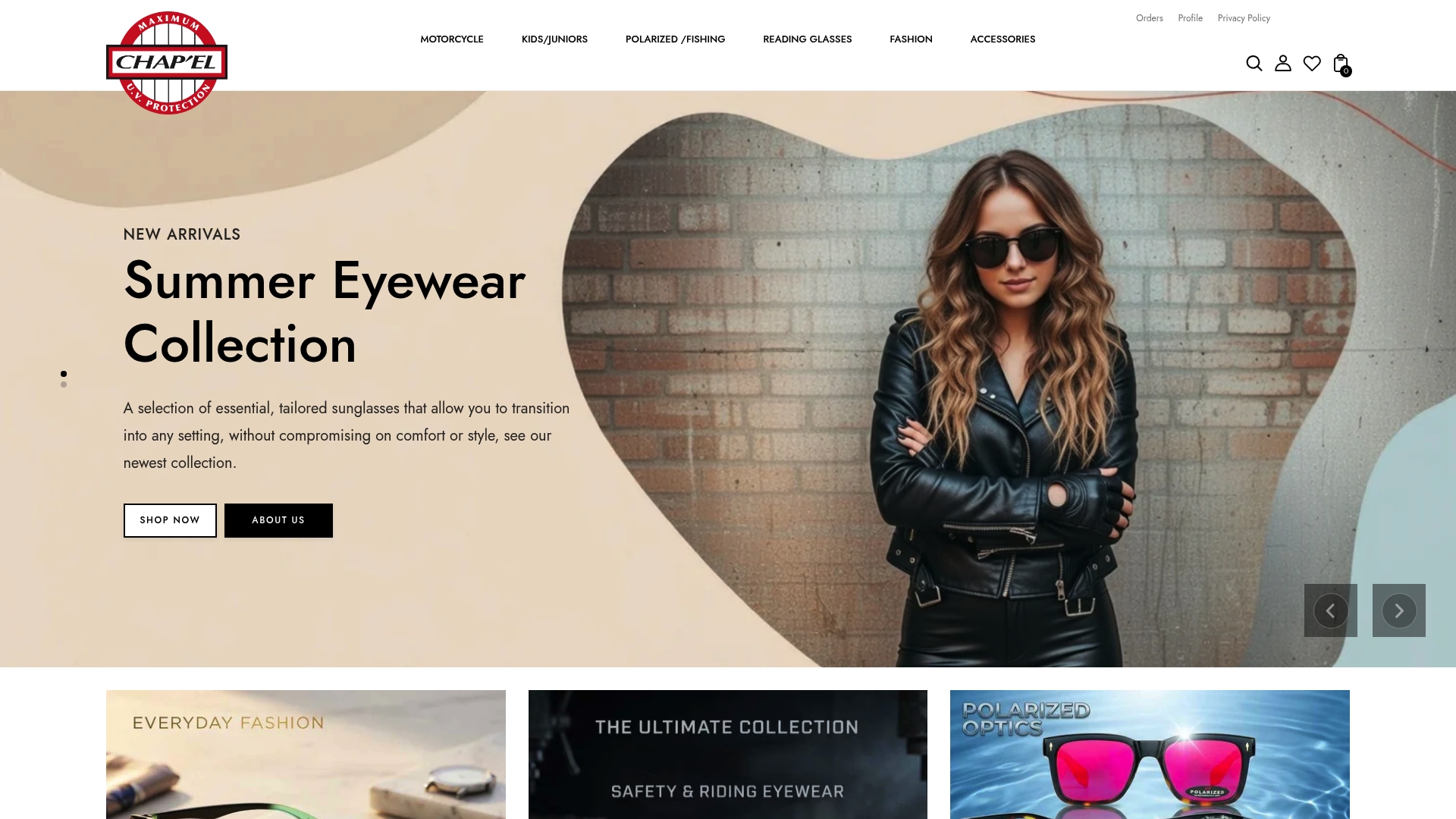
For everyday wear, the Designer Polarized collection pairs optical-style frames with polarized lenses in lighter tints that keep the glasses aesthetic. For active use, the Sport Polarized line adds durability without going full wraparound. Browse the full range at Chapeleyewear and use the frame measurements in this guide to find your fit.
Useful sources
- Rx Safety: Prescription Glasses That Look Like Sunglasses — explains how full-rim acetate frames define the optical-spectacle identity and can be fitted with tinted lenses.
- 39DollarGlasses: Glasses That Turn Into Sunglasses — covers how photochromic lenses work across lens materials and why they’re a practical all-day option.
- Transitions Lenses — manufacturer information on photochromic activation limits, including the windshield UV-filtering issue relevant to drivers.
- Chapeleyewear: Photochromic Sunglasses Options — product-level detail on photochromic styles that meet the glasses-like criteria.
- Chapeleyewear: Sunglasses with Fade Lenses — covers gradient and fade lens options that preserve the optical look.
This article is general buying guidance, not medical or optical advice. Verify UV ratings and lens specifications directly with the manufacturer or retailer before purchasing.