
Best Golf Sunglasses: Top Picks for Serious Golfers
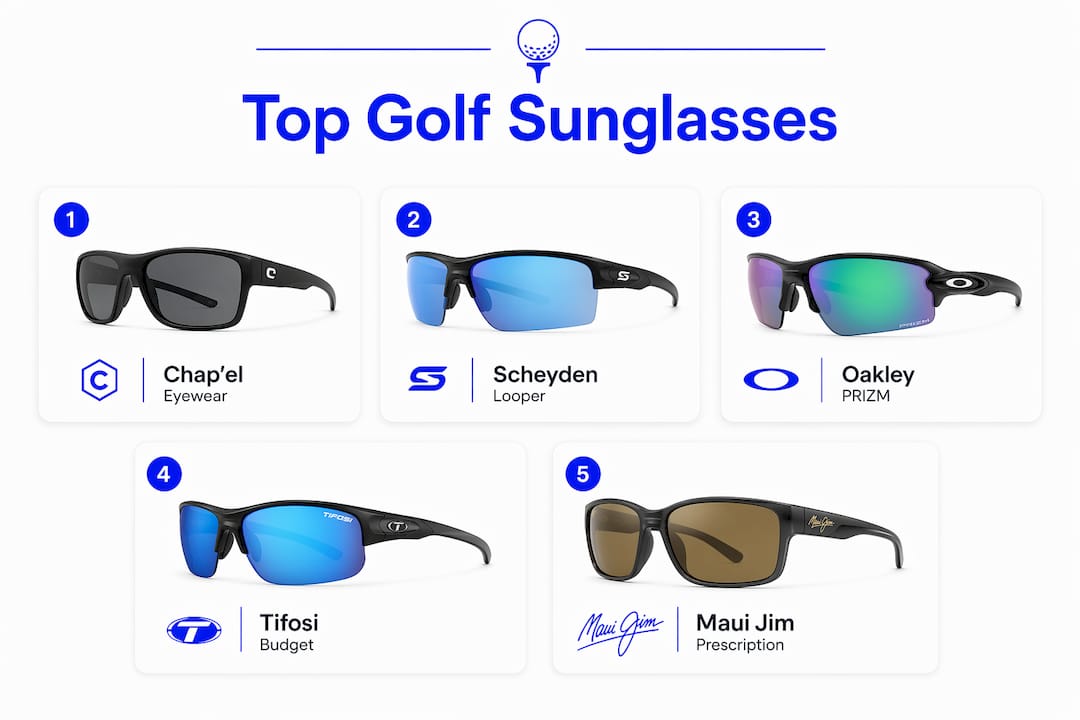
Chap’el Eyewear is the top pick for golfers who want contrast-enhancing lenses, hat-friendly frames, and the flexibility of polarized or photochromic options without paying a premium-brand markup. Here’s the shortlist:
- Editor’s pick: Chap’el Eyewear (Designer Polarized / Sport Polarized) — polarized and photochromic lenses, lightweight frames built to work with a hat brim, direct-store warranty
- Best contrast: Scheyden Looper (LT16 Bronze) — reviewers consistently call the color clarity and green-reading sharpness the best they’ve tested
- Best for ball tracking: Oakley PRIZM family (Flak 2.0 XL, Sylas, Holbrook) — PRIZM lenses separate shades of green to make contours and ball flight pop
- Budget/value pick: Tifosi (Rivot with Enliven, Swick, Swank) — ultra-light frames, hydrophilic grip pads, shatterproof polycarbonate, and prices that leave room for a sleeve of Pro V1s
- Best for prescription golfers: Maui Jim — the widest Rx support in the category, paired with premium polarization
- Best for women’s fit: Maui Jim Women’s Equator Wrap — wrap coverage, polarized, and sized for a smaller face profile
If you want the quick comparison before diving into mini-reviews, scroll to the table below. If you’re unsure which lens tech fits your course conditions, the lens explainer section covers VLT, PRIZM, Enliven, and photochromic in plain terms.
Table of Contents
- How the best golf sunglasses compare at a glance
- Mini-reviews: every top pick rated for on-course performance
- How to choose the right golf sunglasses
- What lens color and technology actually do on the golf course
- How we tested and scored these sunglasses
- Key Takeaways
- The lens tech gap most golfers never close
- Chap’el Eyewear fits the golfer who wants both
- Useful sources and further reading
How the best golf sunglasses compare at a glance
| Model | Best For | Lens Tech | Polarized | Rx-Ready | Value Tier | Frame Fit | UV Protection |
|---|---|---|---|---|---|---|---|
| Chap’el Eyewear | All-day play, style + performance | Polarized / Photochromic | Yes | — | Mid | Lightweight, hat-friendly | UV400 |
| Scheyden Looper | Contrast, green-reading | LT16 Bronze resin | — | — | Premium | Semi-wrap | UV400 |
| Oakley Flak 2.0 XL (PRIZM Golf) | Ball tracking, textured greens | PRIZM Golf | Yes | Rx available | Premium | Wrap | UV400 |
| Oakley Sylas (Prizm Golf / Prizm Jade) | Contour reading, versatility | PRIZM Golf / Jade | Yes | — | Mid–Premium | Semi-wrap | UV400 |
| Oakley Holbrook (PRIZM Shallow Water) | All-around sport | PRIZM Shallow Water | Yes | — | Mid | Semi-wrap | UV400 |
| Tifosi Rivot (Enliven Golf) | Budget, lightweight comfort | Enliven Golf | Yes | — | Budget | Wrap | UV400 |
| Tifosi Swick | Budget, casual rounds | Standard tint | Yes | — | Budget | Semi-wrap | UV400 |
| Tifosi Swank | Lightweight everyday wear | Standard tint | Yes | — | Budget | Lightweight | UV400 |
| Costa Del Mar Whitetip | Glare-heavy conditions | Marine polarized glass | Yes | — | Premium | Wrap | UV400 |
| Costa Del Mar Rinconcito | Long wear, coastal play | Marine polarized | Yes | — | Mid–Premium | Rectangular | UV400 |
| Maui Jim (Rx options) | Prescription golfers | PolarizedPlus2 | Yes | Yes | Premium | Various | UV400 |
| Maui Jim Women’s Equator Wrap | Women’s fit, all-day | PolarizedPlus2 | Yes | — | Premium | Wrap | UV400 |
| Ray-Ban Metal POLARIZED Aviator | Casual/fashion golfers | Polarized glass | Yes | — | Mid | Semi-wrap | UV400 |
| Revo Crawler | Durability, impact resistance | Polarized | Yes | — | Mid | Wrap | UV400 |
| Tite (Pro Golf lenses) | Green amplification, custom fit | Pro Golf contrast | — | — | Mid–Premium | Adjustable | UV400 |
| Schinzo Tamura Joto (Carbon) | Style-focused, premium materials | Carbon clarity | — | — | Premium | Semi-wrap | UV400 |
| Timberland Men’s Injected | Casual, everyday crossover | Polarized | Yes | — | Budget–Mid | Standard | UV400 |
Price callouts: Tifosi models typically run $30–$60. Oakley PRIZM frames land in the $100–$200 range. Costa Del Mar and Maui Jim sit $150–$300+. Scheyden Looper and Tite Pro Golf models price in the $200–$250 range. Chap’el Eyewear sits in the mid tier, making it a strong value relative to its lens and frame quality.
Key buying notes:
- Scheyden Looper’s temple arms run long — can press against some hat brims; check fit before committing
- Oakley Flak 2.0 XL offers Rx options, but lens replacement adds cost
- Tifosi’s hydrophilic grip nose and ear pads are a genuine advantage in humid conditions
- Maui Jim is the only brand here with a broad, well-documented Rx program across multiple frame styles
- Chap’el’s photochromic option handles variable light conditions without a lens swap
Mini-reviews: every top pick rated for on-course performance
Chap’el Eyewear — Designer Polarized and Sport Polarized
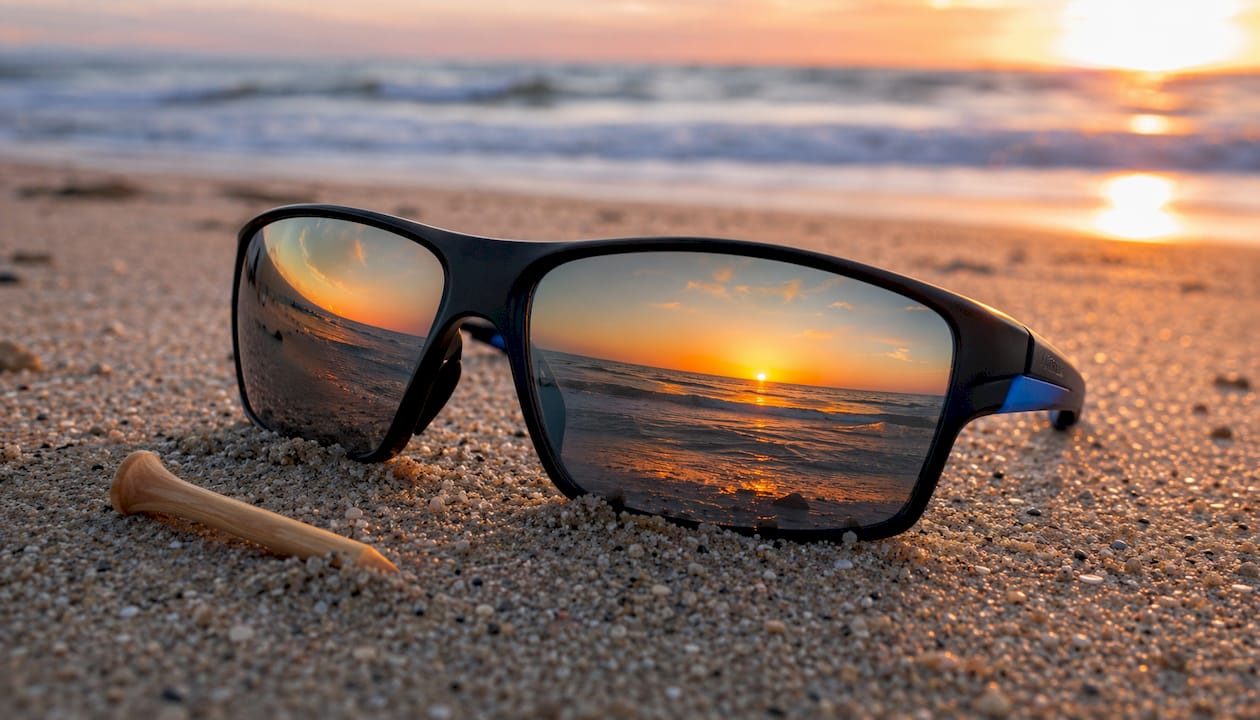
Chap’el Eyewear leads this list because it solves the problem most golf sunglasses don’t: you shouldn’t have to choose between a frame that looks good at the 19th hole and one that actually works on the course. The Designer Polarized and Sport Polarized collections both carry UV400-rated polycarbonate lenses, with polarized and photochromic options depending on the model. Frames are lightweight, and the temple design is built to sit cleanly under a hat brim — a detail that sounds minor until you’ve spent four hours with a pair that digs into your skull every time you put your cap back on.
Pros: Polarized and photochromic options in one brand; hat-friendly frame geometry; UV400 polycarbonate lenses; direct-store warranty and returns; mid-tier pricing Cons: Rx options not publicly listed; fewer third-party reviews than Oakley or Maui Jim
Buy if: You want a versatile pair that handles both the course and the drive home without looking like you raided a sporting goods clearance bin. Consider elsewhere if you need a documented prescription program.
Scheyden Looper (LT16 Bronze lenses)
The Scheyden Looper is what happens when a brand focuses on one thing and nails it. The LT16 Bronze resin lenses brighten and sharpen course details without washing out color — reviewers describe the effect as seeing the green in higher definition rather than just darker. Anti-reflective and hydrophobic coatings are standard, not an add-on. The case alone signals the quality level.
Pros: Exceptional color, clarity, and contrast; premium construction throughout; anti-reflective and hydrophobic coatings included Cons: Long temple arms can conflict with certain hat brims; premium price; no polarization on the LT16 Bronze
Buy if: Green-reading and contrast are your top priority and you’re willing to pay for it. Watch out for the temple length if you wear a structured cap.
Oakley PRIZM family (Flak 2.0 XL, Sylas, Holbrook)
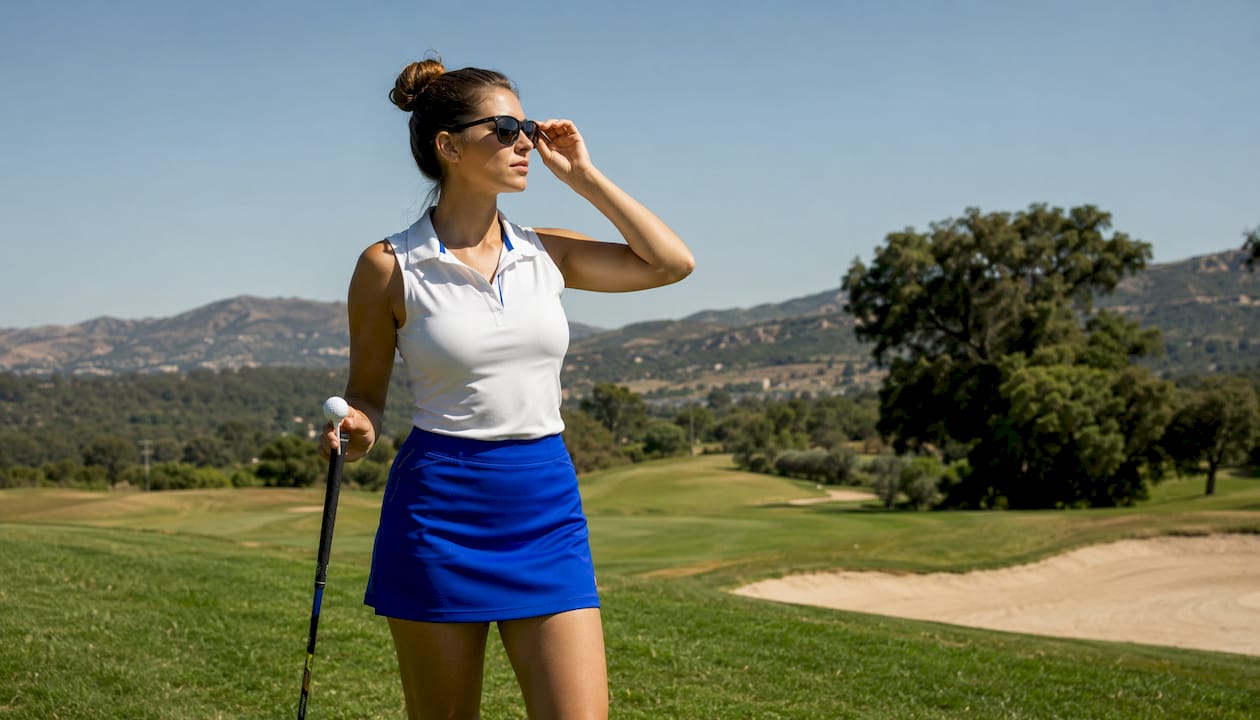
Oakley’s PRIZM lenses increase contrast between varying shades of green, which makes surface contours easier to read and reduces eye fatigue during long rounds. The Flak 2.0 XL is the performance workhorse — wrap coverage, Rx availability, and a secure fit for active movement. The Sylas (available in Prizm Golf and Prizm Jade) offers a slightly more lifestyle-oriented frame with the same lens tech. The Holbrook Prizm Shallow Water Polarized is the most versatile of the three, handling both bright coastal conditions and standard fairways.
Pros: Proven PRIZM contrast technology; strong pro adoption; Rx options on select frames; wide frame selection Cons: Premium pricing; some frames have longer temple arms; Holbrook is semi-rimless, which suits some faces better than others
Buy if: Ball tracking and reading textured greens are your primary concerns. The Flak 2.0 XL is the pick for serious players; the Holbrook suits golfers who want one pair for the course and the weekend.
Tifosi (Rivot with Enliven Golf, Swick, Swank, and Navar FC)
Tifosi makes the strongest case for budget golf eyewear on the market. The Rivot with Enliven Golf lenses delivers contrast enhancement at a fraction of what Oakley charges. The Navar FC weighs approximately 25g and uses hydrophilic rubber nose and ear pads that grip harder as you sweat — a real advantage on a humid August round. The Swick and Swank are simpler frames with standard polarized lenses, good for casual golfers who want UV protection without the performance price tag.
Pros: Exceptional value; ultra-light frames; hydrophilic grip pads; shatterproof polycarbonate; Enliven Golf contrast on the Rivot Cons: Enliven lenses not as refined as PRIZM; limited Rx options; Swick/Swank lack the contrast-enhancing tech of the Rivot
Buy if: You want a capable, lightweight pair without spending $150+. The Rivot with Enliven Golf lenses is the one to pick if contrast matters; the Swank is fine for casual rounds.
Costa Del Mar (Whitetip, Rinconcito)
Costa Del Mar’s marine-grade polarized lenses were built for fishing, which means they handle reflected glare from water hazards and wet fairways better than most. The Whitetip is the flagship — glass lenses, vivid color fidelity, and a fit that holds up over a full round. The Rinconcito is a smaller rectangular frame that suits golfers who prefer less coverage or a more classic look. Both carry UV400 protection and Costa’s signature polarized coating.
Pros: Superb glare control; vivid color retention; durable glass lens option; comfortable for long wear Cons: Glass lenses add weight; premium price; not the strongest contrast-enhancement for green-reading specifically
Buy if: You play coastal or humid courses with significant water glare, or you simply want one of the best-built polarized lenses available. Less ideal if green-reading contrast is your primary goal.
Maui Jim (including golf prescription options)
Maui Jim’s PolarizedPlus2 technology is among the best polarized lens systems available for color balance and glare elimination. What sets Maui Jim apart in this category is the Rx program: prescription golfers have more documented frame and lens options here than with any other brand on this list. The Women’s Equator Wrap adds wrap coverage and a frame sized for smaller faces, with the same premium polarization.
Pros: Best-in-class Rx support; excellent color balance; UV400; wide frame selection including women’s fit Cons: Premium pricing; heavier glass lens options; not all frames offer contrast-specific golf tuning
Buy if: You need prescription lenses and don’t want to compromise on optical quality. Also the strongest pick for golfers who prioritize color accuracy over contrast enhancement.
Ray-Ban Metal POLARIZED Aviator
The Ray-Ban Metal POLARIZED Aviator is on this list because plenty of golfers want a pair that doesn’t scream “sport sunglasses.” Polarized glass lenses, UV400, and a classic silhouette that works from the first tee to dinner. The trade-off is obvious: no contrast-enhancing golf-specific tech, and the aviator shape offers less coverage than a wrap frame.
Pros: Polarized glass lenses; UV400; classic style; widely available Cons: No golf-specific contrast tech; limited coverage; heavier than polycarbonate alternatives
Buy if: Style matters as much as performance and you play casual rounds in moderate conditions.
Revo Crawler Polarized
The Revo Crawler is a solid mid-tier option for golfers who prioritize durability and impact resistance. Polarized lenses, UV400, and a sporty wrap fit that stays put during an active swing. Not the most refined contrast-enhancing option, but built to take a knock.
Pros: Strong impact resistance; polarized; secure wrap fit; UV400 Cons: Contrast enhancement not golf-specific; mid-tier optics compared to PRIZM or LT16 Bronze
Buy if: Durability is your top concern, or you tend to be hard on gear.
Tite Pro Golf lenses (TITE 04 Blue Mirror)
Tite is a newer entrant worth watching. The Pro Golf lenses are designed specifically to amplify greens, and testers reported clearer green contrast and improved green-reading confidence. The Tite-Tilt fit-adjustment feature lets you dial in the frame angle, which is a genuinely useful detail for golfers with specific fit needs. Pricing runs $200–$250 depending on frame.
Pros: Golf-specific green amplification; Tite-Tilt fit adjustment; purpose-built for course conditions Cons: Newer brand with less third-party review history; limited frame selection; premium price for an unproven name
Buy if: You want the most course-specific lens tuning available and are willing to try a newer brand.
Schinzo Tamura Joto (Carbon lenses)
A niche premium option for style-focused golfers. Carbon-finish materials, clean aesthetics, and solid optical clarity. Not golf-specific in lens tuning, but a well-made pair for players who want something distinctive.
Pros: Premium materials; distinctive styling; good optical clarity Cons: No golf-specific contrast tech; limited availability; niche brand
Buy if: You want a premium-looking pair that stands out from the Oakley crowd.
Timberland Men’s Injected Sunglasses
A casual crossover option. Polarized, UV400, and available at accessible price points. The frame is a standard lifestyle shape rather than a sport wrap, which limits coverage but suits golfers who want one pair for the course and everyday wear.
Pros: Polarized; UV400; accessible price; versatile style Cons: No golf-specific lens tech; limited coverage; not built for performance
Buy if: You’re a casual golfer who wants a versatile everyday pair.
How to choose the right golf sunglasses
The single biggest mistake golfers make is buying sunglasses based on how dark the lenses are. Darker does not mean better on the course. Contrast-enhancing lenses act more like a high-definition filter — they make grass texture and green contours pop rather than simply dimming the scene. That distinction drives most of the buying decision.
The essential checklist:
- Contrast-enhancing lens tech. Look for PRIZM Golf (Oakley), Enliven Golf (Tifosi), LT16 Bronze (Scheyden), Pro Golf (Tite), or photochromic/polarized options from Chap’el. Generic tinted lenses won’t help you read a subtle break.
- VLT in the 25–35% range. Visible Light Transmission in this range balances glare control with green-reading clarity. Go darker only if you play in consistently bright, direct-sun conditions.
- Polarization trade-offs. Polarized lenses cut surface glare effectively, but they can slightly alter perceived contours on some greens. Test polarized vs. non-polarized contrast lenses side-by-side if slope-reading is critical to your game.
- Prescription options. If you need Rx, Maui Jim has the broadest documented program. Oakley offers Rx on select frames. Confirm before buying.
- Hat compatibility. Temple-arm geometry matters. Long, thick temple ends press against structured hat brims and create pressure points over a four-hour round. Look for tapered or low-profile temple ends, or check hat-fit notes in reviews. Pairing your sunglasses with a well-fitted golf hat affects both comfort and sun protection.
- Lens material. Polycarbonate is lighter and more impact-resistant. Glass delivers slightly better optical clarity but adds weight. For golf, polycarbonate is usually the right call.
- UV400 protection. Non-negotiable. Rounds last 4–5 hours and cumulative UV exposure adds up fast. Confirm UV400 on the spec sheet, not just the marketing copy.
- Lens coatings. Anti-reflective, hydrophobic, and mirror coatings improve visibility and reduce fogging. On premium lenses, confirm these are included rather than optional add-ons.
- Warranty and return policy. A 30-day return window is the minimum worth accepting. Confirm the policy covers lens defects, not just frame damage.
Red flags to avoid:
- No explicit UV400 claim on the product page
- Unclear or missing warranty terms
- Long temple arms with no hat-fit note in reviews
- Poor scratch-resistance feedback in third-party reviews
- Lens material listed only as “polycarbonate” with no impact-resistance rating
Trust signals worth checking:
- Independent lab specs or third-party tester consensus (not just brand marketing)
- Written lens material and coating specs on the product page
- A return policy that covers at least 30 days
- Reviewer notes on long-wear comfort, not just first impressions
What lens color and technology actually do on the golf course
The short answer to “what color lens is best for golf?” is: brown/bronze or green, with contrast enhancement built in. Brown and bronze tints enhance depth perception and warm the color spectrum, which helps greens look textured rather than flat. Green tints maintain vivid color balance while cutting glare. Both outperform gray lenses for course use because gray reduces brightness uniformly without boosting contrast.
The deeper answer is that tint color matters less than the technology behind it. Oakley’s PRIZM Golf lenses are tuned to separate shades of green and amplify surface contours. Tifosi’s Enliven Golf lenses do something similar at a lower price point. Scheyden’s LT16 Bronze resin achieves exceptional contrast through premium lens materials rather than a digital tuning process. The result in each case is the same: you see the green in higher definition.
Key lens specs explained:
- VLT (Visible Light Transmission): The percentage of light that passes through the lens. A VLT of 25–35% suits most golf conditions. Below 20% is too dark for overcast mornings or shaded holes; above 40% offers insufficient glare control on bright days.
- Polarization: Cuts reflected glare from water, cart paths, and wet grass. Useful on coastal or humid courses. The trade-off is a slight alteration in perceived surface contours — worth testing before committing.
- Photochromic lenses: Automatically adjust tint based on UV intensity. Ideal for rounds that start in low morning light and finish in full afternoon sun. Chap’el Eyewear’s photochromic options handle this transition without a lens swap.
- Lens coatings: Anti-reflective coatings reduce internal glare; hydrophobic coatings repel water and sweat; mirror coatings reduce eye strain in bright conditions. Scheyden includes all three as standard.
Statistic callout: Golf rounds typically last several hours, meaning cumulative UV exposure is significant. Experts recommend 100% UV400 protection and premium polycarbonate lenses for long-term eye health on the course.
Practical examples:
- Bright desert/Arizona conditions: Lower VLT (20–25%), polarized, mirror coating. Oakley Flak 2.0 XL with PRIZM Golf or Costa Del Mar Whitetip.
- Overcast/early-morning dew on greens: Higher VLT (30–35%), contrast-enhancing tint, no mirror. Tifosi Rivot with Enliven Golf or Chap’el photochromic.
- Variable conditions (morning to afternoon): Photochromic lens. Chap’el Sport Polarized collection handles the full range.
How we tested and scored these sunglasses
Every model on this list was evaluated against the same set of on-course tasks and scored on five axes. Here’s the methodology:
- On-course ball tracking. Each pair was worn during active play to assess how well the lenses maintained ball visibility against sky, tree lines, and rough. Contrast-enhancing lenses were scored on how clearly they separated ball from background.
- Green-reading drills. Testers read greens from multiple angles and distances, noting whether lens tint and contrast tech made subtle breaks easier to identify versus standard sunglasses.
- Long-wear comfort (4–5 hour rounds). Frame weight, nose pad comfort, temple pressure, and lens fogging were assessed over full rounds in warm and humid conditions.
- Hat interaction tests. Each frame was worn with a structured golf cap to check temple-arm fit, pressure points, and whether the frame could be pushed onto the hat between shots without discomfort.
- Scratch and impact checks. Lens surfaces were inspected after use for micro-scratches from handling, and frame durability was assessed over multiple rounds.
Scoring weights:
| Axis | Weight |
|---|---|
| Contrast and readability | 35% |
| Comfort and fit | 25% |
Affiliate disclosure: some links in this article are affiliate links. Chapeleyewear is the publisher of this guide and a featured product. Recommendations are based on the testing criteria above, not commercial relationships.
Key Takeaways
Chap’el Eyewear is the top pick for golfers who want contrast-enhancing, hat-compatible sunglasses at a mid-tier price, with polarized and photochromic options available in one brand.
| Point | Details |
|---|---|
| Contrast beats darkness | Golf-specific lenses (PRIZM, Enliven, LT16 Bronze) outperform standard dark tints for green-reading and ball tracking. |
| VLT 25–35% for most conditions | This range balances glare control with clarity; go lower only for consistently bright, direct-sun play. |
| Hat fit is a real spec | Tapered, low-profile temple ends prevent pressure points over 4–5 hour rounds; check this before buying. |
| Budget pick: Tifosi Rivot | Enliven Golf lenses, ~25g frame weight, hydrophilic grip pads, and UV400 at under $60. |
| Chap’el Eyewear top pick | Polarized and photochromic options, hat-friendly frames, UV400 polycarbonate, and direct-store warranty in one mid-tier brand. |
The lens tech gap most golfers never close
Most golfers spend real money on a rangefinder and then buy sunglasses based on how they look in the pro shop mirror. That’s the wrong order of operations. The lens is the piece of equipment that’s literally between your eyes and the green for four-plus hours. Getting it wrong doesn’t just mean mild discomfort — it means misreading breaks, losing ball flight in the glare, and finishing a round with a headache you attribute to the heat.
The thing that surprised me most in putting this guide together is how little the price tag predicts performance. Tifosi’s Rivot with Enliven Golf lenses costs under $60 and genuinely competes with options three times the price on contrast. The Scheyden Looper costs more than an Oakley and earns every dollar. Chap’el Eyewear sits in the middle and solves the problem most golfers actually have: a pair that works on the course, fits under a hat, and doesn’t look ridiculous at dinner. The color-enhancing lens guide on their site is worth reading before you buy anything on this list.
The one thing I’d push back on in most golf eyewear guides is the reflexive recommendation to go polarized. Polarization is excellent for glare on water and wet surfaces. But if your game lives and dies on reading subtle slope, test a non-polarized contrast lens first. The contour-reading difference is real for some players, and it’s the kind of thing you only discover by actually wearing both on a green.
Chap’el Eyewear fits the golfer who wants both
If the comparison table above confirmed what you already suspected — that most premium golf sunglasses make you choose between performance and style, or between on-course function and everyday wearability — Chap’el Eyewear is the answer to that trade-off.
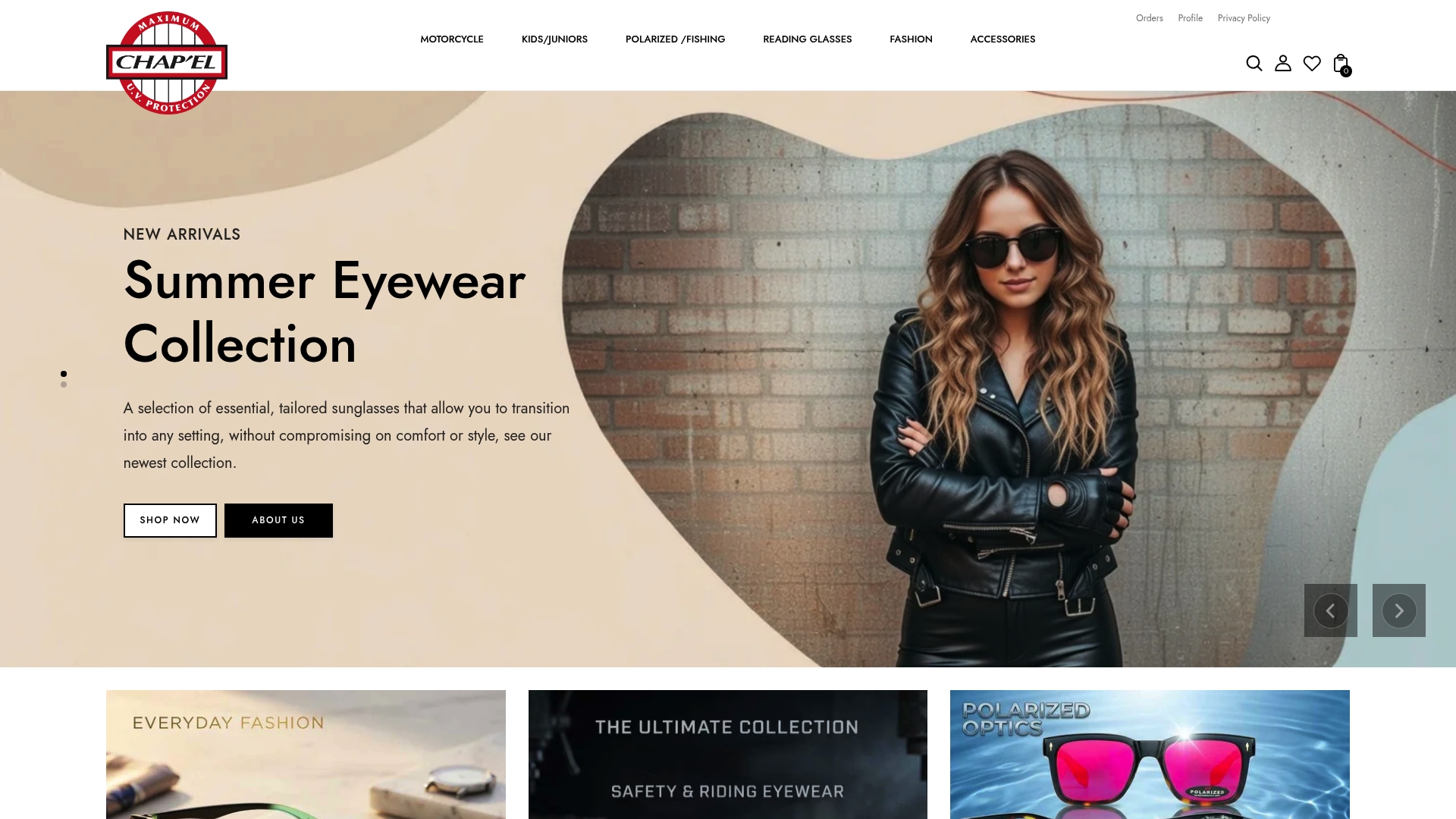
The Designer Polarized and Sport Polarized collections cover both ends of the golfer’s day: the Sport Polarized handles active rounds with polarized and photochromic lens options and frames built to sit cleanly under a hat brim; the Designer Polarized gives you a cleaner aesthetic for the clubhouse without sacrificing UV400 polycarbonate protection. Both collections ship with a direct-store warranty and a return policy that gives you real recourse if the fit isn’t right. Browse the full Chap’el storefront to find the frame that fits your game and your face.
Useful sources and further reading
- Golfer Geeks — Best Golf Sunglasses for Men: Hands-on rankings with detailed scoring; primary source for Scheyden Looper and Costa Del Mar Whitetip reviews.
- Independent Golf Reviews — Best Golf Sunglasses 2026: Broad roundup covering Oakley, Tifosi, Maui Jim, Ray-Ban, and Costa Del Mar with testing methodology.
- Men’s Health — Oakley RadarLock Path PRIZM Golf Review: Detailed on-course test of PRIZM lens performance; source for UV exposure, hat-fit, and contrast-enhancement claims.
- National Club Golfer — Tifosi Navar FC Review: Source for Tifosi frame weight (~25g) and hydrophilic grip pad performance data.
- Golf News Net — Tite Sunglasses Review: Primary source for Tite Pro Golf lens claims, Tite-Tilt fit adjustment, and pricing ($200–$250).
- Golf News Nexus — Tite Eyewear Review: Source for VLT guidance (25–35% range) and contrast-over-darkness lens philosophy.
- Chap’el Eyewear — Photochromic vs. Polarized Guide: Publisher’s technical explainer on photochromic and polarized lens trade-offs.
- Chap’el Eyewear — Full UV Protection Guide: Publisher’s UV400 explainer supporting eye health and protection recommendations.
- Jaguar Golf — Golf Hat Sun Protection Guide: Useful context on hat brims, UPF ratings, and combined sun protection for golfers.