

Top Oakley Alternatives for Sports and Outdoor Use
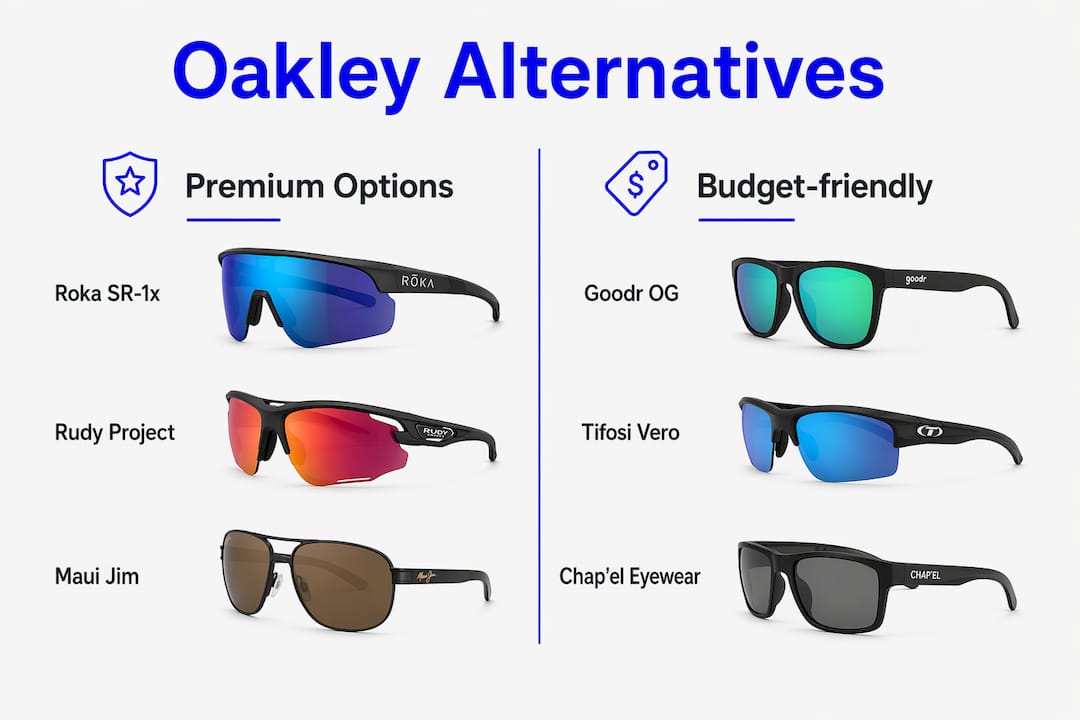
You can get Oakley-level performance without the logo by prioritizing lens tech, fit, and UV protection — and several brands deliver exactly that at 30–50% less. The fastest shortlist: Chap’el Eyewear for direct-to-consumer sport performance, Roka SR-1x for shield-style cycling and running, Rudy Project Rydon for adjustable double-lens sport use, Goodr OG for budget-conscious runners, and Maui Jim for premium polarized clarity.
Fast decision guide: if you cycle or run roads, go with a shield-style frame with photochromic or interchangeable lenses. For trail running or mixed terrain, a secure two-lens frame with adjustable nose pads and contrast-enhancing tints often outperforms a wide shield in low, dappled light. If you want a direct-to-consumer option with UV400 lenses, impact-resistant polycarbonate, and adjustable fit, Chap’el Eyewear is the pick to start with.
Table of Contents
- How do the best Oakley alternatives compare at a glance?
- What does each alternative actually offer in practice?
- How do you choose the right Oakley alternative for your sport and face?
- How were these picks selected?
- Key Takeaways
- Why the logo is the most expensive part of your sunglasses
- Chap’el Eyewear delivers performance specs without the premium markup
- Useful sources and further reading
How do the best Oakley alternatives compare at a glance?
The table below maps each category to the specs that actually drive buying decisions on the trail, road, or water.
| Category | Best for | Lens technology | Fit & adjustability | Durability & coatings | Price band | Warranty norm |
|---|---|---|---|---|---|---|
| Shield-style performance (e.g., Roka SR-1x) | Road cycling, triathlon, commuting | Photochromic, interchangeable | Wraparound shield, adjustable nose pads, temple grip | Anti-scratch, impact-resistant polycarbonate | in the $150 to $220 range | 1-year manufacturer |
| Double-lens sport (e.g., Rudy Project Rydon) | Cycling, running, multi-sport | Photochromic, interchangeable, polarized | Two-lens, highly adjustable nose bridge, temple arms | Anti-scratch, impact-resistant | in the $130 to $200 range | 2-year manufacturer |
| Budget performance (e.g., Goodr OG, Tifosi Vero) | Running, casual sport | Polarized, basic tints | Fixed or minimal adjustability, lightweight | Basic anti-scratch | in the $25 to $50 range | Limited/30-day return |
| Premium polarized (e.g., Maui Jim, Serengeti) | Water, driving, casual outdoor | Polarized glass or polycarbonate | Classic fit, limited sport adjustability | Premium coatings, scratch-resistant | in the $150 to $350 range | 2-year manufacturer |
| DTC sport performance (e.g., Chap’el Eyewear, Blenders, Ombraz) | Running, cycling, outdoor lifestyle | Polarized, photochromic, UV400 | Adjustable nose pads, lightweight frames | Impact-resistant polycarbonate, anti-scratch | in the $50 to $180 range | Varies by brand |
| Lifestyle-sport crossover (e.g., Bolle) | Casual sport, skiing, outdoor | Photochromic, polarized | Semi-adjustable, wide fit options | Anti-scratch, impact-resistant | in the $80 to $160 range | 1-year manufacturer |
The sport eyewear market has a clear tiered structure: heritage brands like Oakley carry sponsorship and brand equity costs in their retail price, while modern direct-to-consumer lines focus that same budget on technical specs. Independent reviews consistently group top performers by lens tech and adjustable fit rather than brand name alone — which means the logo is often the most expensive component you’re buying.
What does each alternative actually offer in practice?
Shield-style performance: Roka SR-1x
Roka built the SR-1x specifically for athletes who need a wide field of view without frame intrusion. The shield wraps far enough to block peripheral wind and debris, and the GEKO grip material on the nose and temples holds position through sweat in a way that rivals Oakley’s Unobtanium. Adjustable nose pads and temple grips are the features that most improve comfort during athletic movement, and the SR-1x has both.
Pros: Wide peripheral coverage, secure grip under sweat, interchangeable lens system. Cons: Shield style doesn’t suit all face shapes; premium pricing narrows the value gap versus Oakley. Key specs: Polycarbonate lens, adjustable nose pads, ~in the $150 to $220 range.
Buying tip: Best for road cyclists and triathletes. Avoid if you need a frame that works under a helmet with tight retention — test the fit with your helmet before committing.
Double-lens sport: Rudy Project Rydon
The Rydon’s party trick is its adjustable nose bridge and interchangeable lens system, which together let you dial in fit for a narrow or wide face and swap lenses in under 30 seconds. It’s a genuine multi-sport frame. The caveat: some users find the adjustment system fiddly at first, and the frame’s complexity adds a few grams compared to simpler designs.
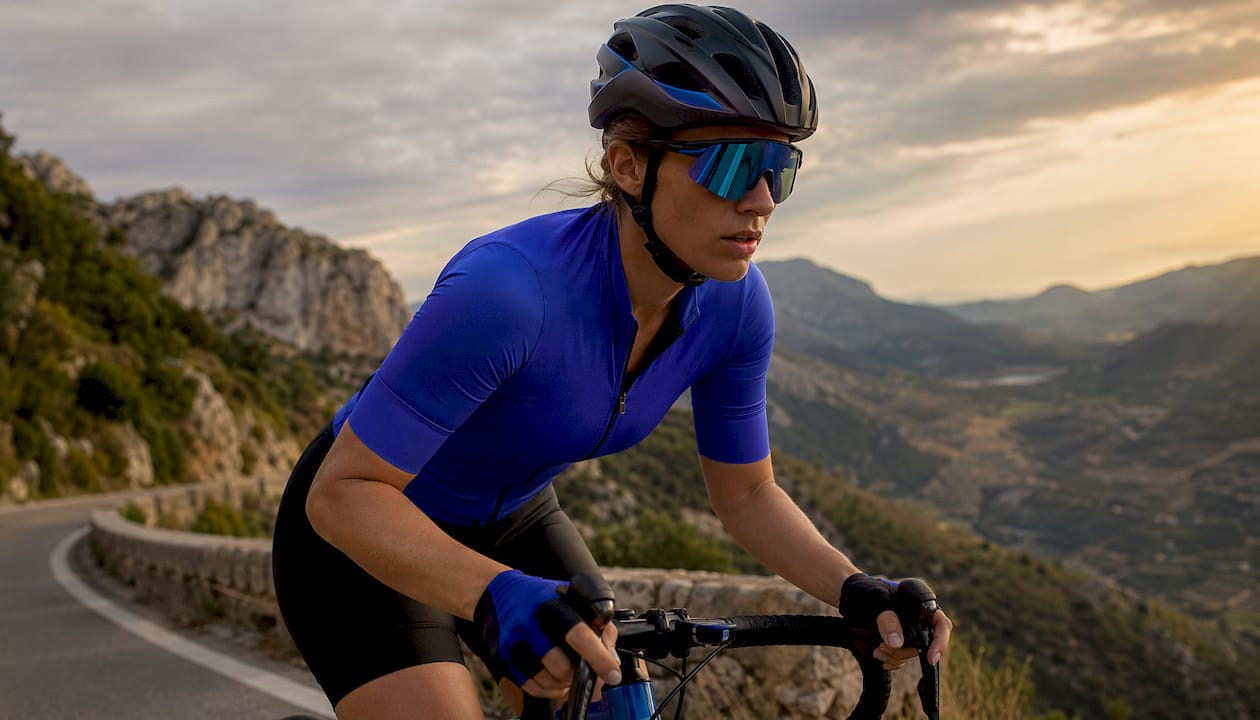
Pros: Highly adjustable fit, fast lens swap, photochromic options available. Cons: More moving parts means more to break; adjustment learning curve. Key specs: Polycarbonate or photochromic lens, adjustable bridge and temples, ~in the $130 to $200 range.
Buying tip: Ideal for cyclists who ride in variable light and need one frame to cover dawn-to-noon. Skip the polarized option if you ride trails — polarization can reduce contrast in low, dappled light.
Budget performance: Goodr OG and Tifosi Vero
Goodr’s OG is a $25 running frame that has no business being as stable as it is. The silicone nose and temple grips hold through a 10K without slipping, and the polarized lenses are genuinely clear. Tifosi’s Vero adds interchangeable lenses at around $40, which is a rare feature at that price. The honest trade-off: cheaper frames frequently skip premium anti-scratch and anti-glare coatings, so expect the lenses to show wear faster than a $150 pair.
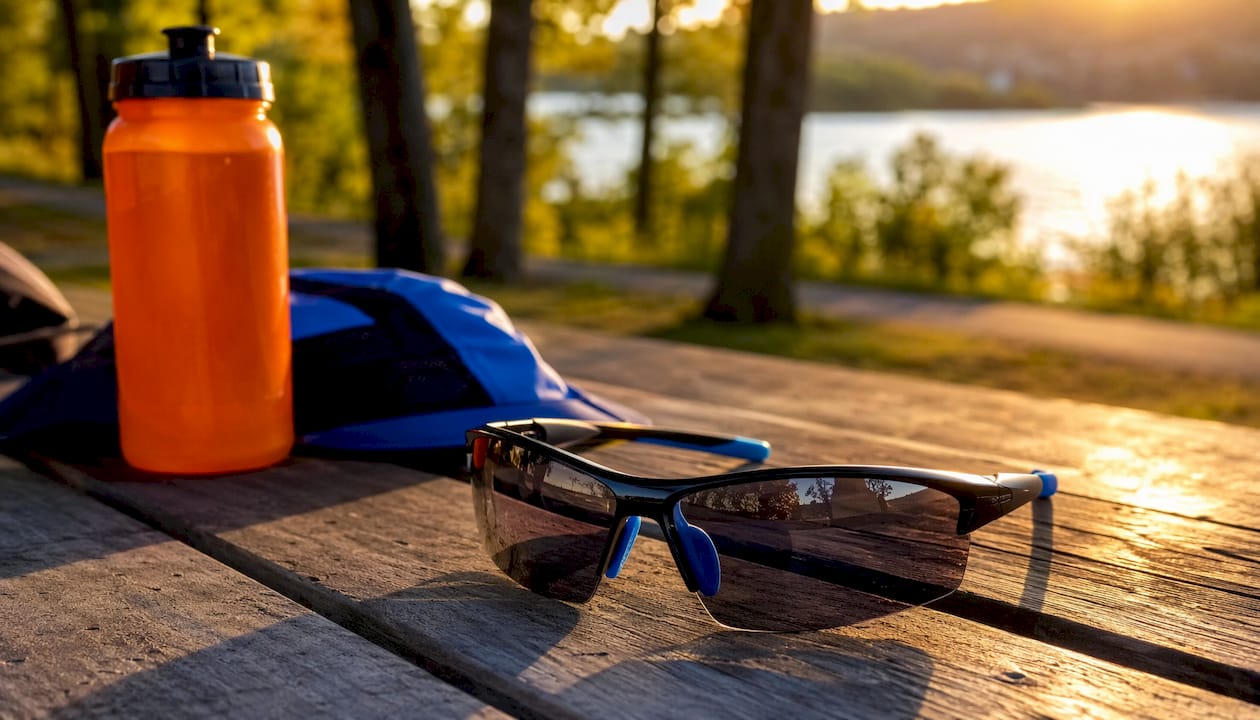
Pros: Extremely affordable, polarized options, surprisingly stable grip. Cons: No premium coatings, limited durability, minimal adjustability. Key specs: Polycarbonate lens, fixed fit, in the $25 to $50 range.
Buying tip: Perfect for new runners or anyone who loses or breaks frames regularly. Look for spring hinges and adjustable nose pads even at this price point — they predict longevity better than brand name.
Premium polarized: Maui Jim and Serengeti
Maui Jim’s PolarizedPlus2 lens technology is genuinely differentiated — the color enhancement and glare reduction on water or wet roads is noticeable compared to standard polarized lenses. Serengeti’s photochromic-polarized hybrid lenses cover a wider range of light conditions than most single-tech options. Both brands target a different buyer than Oakley’s sport line: more casual outdoor use, driving, and water activities than high-intensity athletics.
Pros: Exceptional optical clarity, premium coatings, strong brand reputation for lens quality. Cons: Less adjustability for sport use, heavier frames, high price. Key specs: Glass or polycarbonate lens, polarized, in the $150 to $350 range.
Buying tip: Choose Maui Jim for water and driving; choose Serengeti if you need photochromic performance in variable mountain or coastal light. Neither is the right call for a hard trail run.
DTC sport performance: Chap’el Eyewear, Blenders, and Ombraz
This is the category where the value argument is strongest. Chap’el Eyewear offers UV400-certified lenses, impact-resistant polycarbonate, adjustable nose pads, and both polarized and photochromic options — the same functional checklist as a $200 heritage frame, at a price that reflects direct-to-consumer economics rather than sponsorship overhead. Blenders brings bold styling and solid polarized lenses at mid-range prices. Ombraz takes a different approach entirely with its armless, cord-retention design, which eliminates temple pressure for long-wear comfort.
Pros: Strong value-to-spec ratio, UV400 protection, modern styling. Cons: Fewer retail touchpoints for in-person try-on; brand recognition is lower than heritage names. Key specs: Polycarbonate lens, polarized or photochromic, adjustable fit, in the $50 to $180 range.
Buying tip: Chap’el’s sport polarized collection is the right starting point for active buyers who want performance specs without the heritage markup. Check the return policy before ordering — most DTC brands offer 30-day trials.
Lifestyle-sport crossover: Bolle
Bolle sits in an interesting middle ground: wide fit options, photochromic and polarized lenses, and impact-resistant construction, but with a styling sensibility that works off the bike as well as on it. The brand has deep roots in ski and cycling eyewear, so the sport credentials are real. Pricing lands in the $80 to $160 range, which makes it a reasonable step up from budget frames without reaching heritage-brand territory.
Pros: Versatile styling, proven sport heritage, photochromic options. Cons: Less adjustability than dedicated sport frames; not as widely reviewed as top-tier alternatives. Key specs: Polycarbonate or NXT lens, photochromic or polarized, in the $80 to $160 range.
How do you choose the right Oakley alternative for your sport and face?
Prioritize lens performance, secure fit, and adjustability ahead of brand prestige. That order matters. A frame that slips on mile three of a run or fogs on a climb costs you more in performance than a marginal difference in lens tint ever would.
Fit factors. Wraparound shields offer maximum peripheral coverage and wind protection for road cycling and triathlon, but they can feel claustrophobic on smaller faces and don’t always pair well with helmet retention systems. Two-lens frames give you more face-shape flexibility and tend to sit better under a helmet. Adjustable nose pads and temple grip are the two features that most affect real-world stability during movement — serious athletes consistently rate these above optical differences when ranking comfort. If you have a smaller face, the lightweight sunglasses for small faces guide covers fit-specific options in more detail.
Lens tech. Polarized lenses cut glare on water and wet pavement, but they’re not universally better for sport. Polarization can reduce contrast in low, dappled light — a real problem on wooded trails where reading terrain quickly matters. For trail running, a contrast-enhancing amber or rose tint often outperforms polarized. For road cycling, driving, or water sports, polarized is the right call. Photochromic lenses handle variable light automatically, which makes them ideal for long rides or hikes where conditions shift. The photochromic vs. polarized comparison breaks down the trade-offs by activity if you’re deciding between the two. UV400 certification is non-negotiable regardless of lens type — it means the lens blocks 100% of UVA and UVB radiation.
Pro Tip: When trying frames in-store or during a home trial, shake your head firmly side to side and nod up and down. If the frame shifts more than a millimeter, it will slip during a run. Also breathe heavily through your mouth while wearing the frame — if the lens fogs within 30 seconds, the ventilation won’t hold up on a hard effort.
Red flags to avoid: no UV rating listed, non-adjustable fit on a frame marketed for sport, missing anti-scratch coating, and no return or trial policy. Budget frames that skip premium coatings show lens wear faster and rarely last through a full season of hard use.
How were these picks selected?
The category picks here draw on published buyer tests, long-form product testing from independent review outlets, product spec pages, and community feedback from active sport users. No single test decided a pick; the goal was to identify which features consistently separated good-performing frames from disappointing ones across multiple sources.
The primary selection criteria applied throughout:
- UV400 certification — a hard requirement, not a nice-to-have
- Adjustable fit components (nose pads, temple arms, spring hinges) — these predict fit and longevity better than brand name at every price point
- Lens interchangeability or photochromic capability — for buyers who ride or run in variable light
- Durability and coating quality — long-term testing shows premium coatings are where budget frames most often fall short
- Warranty and return policy — a 30-day trial or manufacturer warranty signals brand confidence in the product
Source types used: Wirecutter’s sport sunglasses testing, OutdoorGearLab’s durability and value rankings, Runner’s World gear reviews, and community discussions from active sport users. No competitor storefronts were used as sources.
Key Takeaways
The most effective approach to choosing Oakley alternatives is to match lens technology and adjustable fit to your specific sport before considering brand or price.
| Point | Details |
|---|---|
| Lens tech by activity | Use polarized for water and road; choose contrast-enhancing or photochromic for trails and variable light. |
| Fit beats brand prestige | Adjustable nose pads and temple grip improve on-sport stability more than marginal lens tint differences. |
| Budget trade-offs are real | Affordable frames can perform well short-term but typically skip premium anti-scratch and anti-fog coatings. |
| UV400 is non-negotiable | Any frame without UV400 certification should be removed from your shortlist immediately, regardless of price. |
| Chap’el Eyewear as a DTC option | Chap’el offers UV400 lenses, impact-resistant polycarbonate, adjustable nose pads, and polarized or photochromic options at direct-to-consumer pricing. |
Why the logo is the most expensive part of your sunglasses
The conventional wisdom says you get what you pay for with sunglasses. That’s true up to a point — and the point is UV400 certification, impact-resistant lenses, and a fit that holds under movement. Past that threshold, a meaningful portion of what you’re paying for at a heritage brand is sponsorship overhead, retail distribution, and brand equity. The optical specs that actually affect your performance are achievable well below the $200 mark.
What I find most underrated in this conversation is fit. Buyers spend hours comparing lens tints and coatings, then buy a frame that slips after two miles because it has no adjustable nose pad. The adjustable fit components — nose pads, temple grip, spring hinges — are the features that separate a frame you wear every training session from one that lives in a drawer.
Chap’el Eyewear sits in the direct-to-consumer tier that makes the most sense for most active buyers: UV400 lenses, impact-resistant polycarbonate, adjustable nose pads, and both polarized and photochromic options. The brand’s performance eyewear covers the functional checklist without the heritage markup. That’s the value proposition worth paying attention to.
Chap’el Eyewear delivers performance specs without the premium markup
If you’ve read this far, you know the features that actually matter: UV400 protection, impact-resistant polycarbonate lenses, adjustable nose pads, and a lens type matched to your activity. Chap’el Eyewear was built around exactly that list.
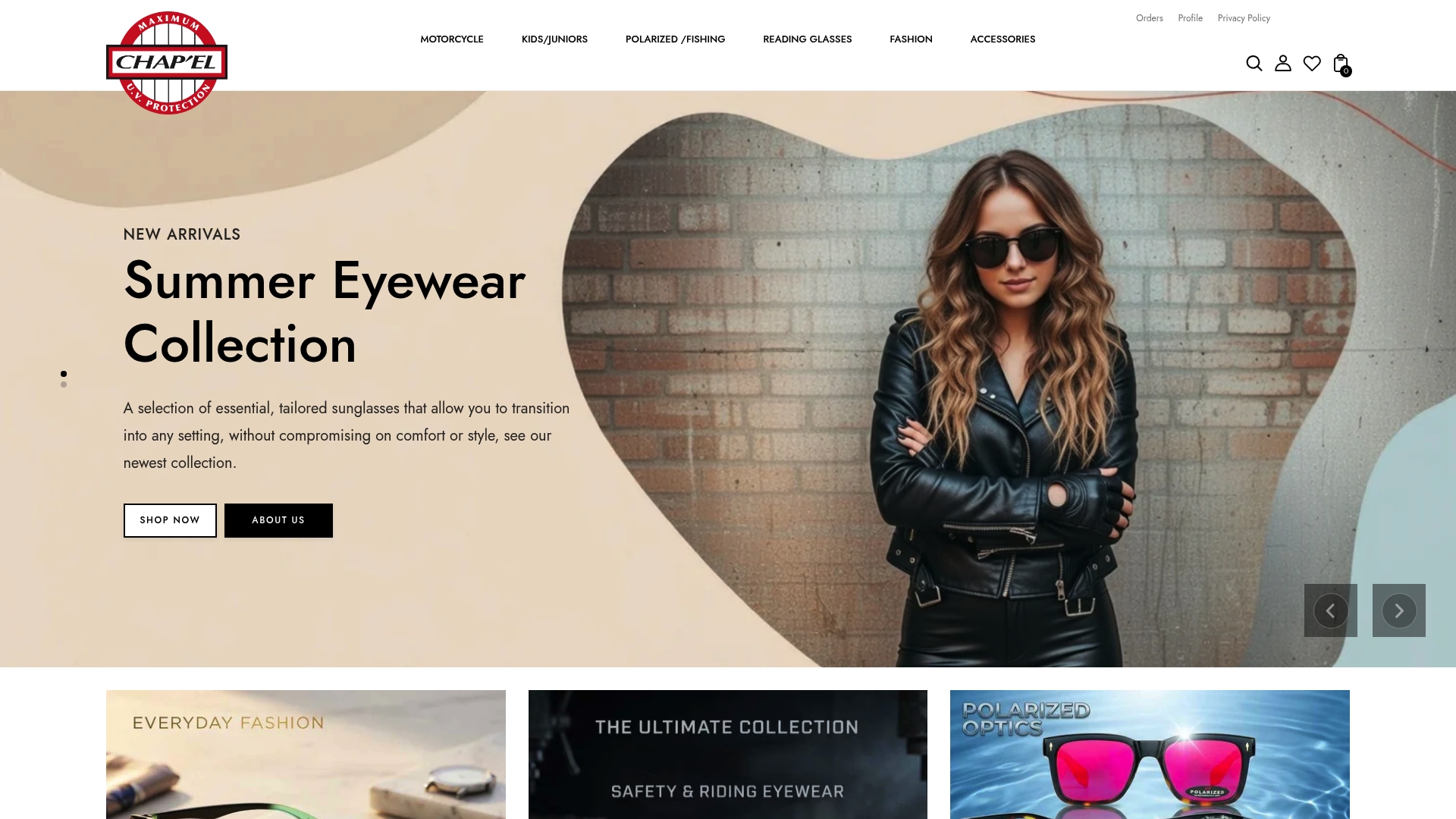
The sport polarized collection covers road cycling, running, and outdoor lifestyle use with frames that are lightweight, durable, and designed to stay put under movement. Polarized and photochromic options are both available, and every frame ships with UV400-certified lenses. The designer polarized line adds style-forward options for buyers who want performance specs in a frame they’ll wear off the trail too. Browse the full collection at Chap’el Eyewear and find the frame that fits your sport and your face.
Useful sources and further reading
The picks and criteria in this article draw on independent testing and published reviews. The sources below are worth bookmarking if you want to dig deeper into specific categories.
| Source | What it covers | Why it matters |
|---|---|---|
| Wirecutter: Best Sport Sunglasses | Hands-on testing of sport frames across fit, lens tech, and grip | Primary source for adjustable fit and polarization trade-off guidance |
| OutdoorGearLab: Best Sunglasses | Long-form durability and coating testing | Best source for understanding where budget frames fall short over time |
| OutdoorGearLab: Best Cheap Sunglasses | Value-focused testing with coating and longevity notes | Useful for budget buyers evaluating short-term vs. long-term value |
| Runner’s World: Best Running Sunglasses | Activity-specific testing for running frames | Covers grip, stability, and lens clarity for runners specifically |
| Chap’el Eyewear: Polarized vs. Non-Polarized | Trade-off guide for polarized and non-polarized lenses | Helps buyers match lens type to their primary activity |
| Chap’el Eyewear: Photochromic Options | Overview of photochromic lens options for active use | Useful for buyers considering adaptive lenses for variable-light sports |
Key testing signals used across these sources:
- UV transmission — does the lens block 100% of UVA and UVB (UV400 standard)?
- Impact resistance — polycarbonate vs. glass vs. NXT, and whether impact ratings are listed
- Anti-fog performance — ventilation design and coating quality under exertion
- Anti-scratch coatings — surface durability over a full season of use
- Fit under movement — nose pad and temple grip stability during running and cycling
For sport gear sourcing beyond eyewear, the DMG Motorsports alternatives guide covers a similar value-vs-performance framework for active sport equipment buyers.