

Mirrored Sunglasses Benefits: When to Choose Reflective Lenses
Mirrored sunglasses are genuinely worth it for bright, high-glare environments. The reflective coating cuts visible light transmission by 10–60%, reduces squinting, and adds a privacy layer that standard tinted lenses cannot match. For skiing, boating, or desert hiking, that difference is felt immediately. The trade-off is real, though: the coating is more fragile than the lens beneath it, and the darker view becomes a liability once the sun drops.
Quick snapshot:
Pros:
- Significant glare and brightness reduction in sand, snow, and water environments
- One-way mirror effect keeps your eyes hidden from others
- Compatible with polarized bases for maximum glare control
Cons:
- Noticeably darker view makes them poor for low-light or indoor use
- Mirror coatings scratch and show fingerprints faster than plain tints
- UV protection comes from the lens material, not the coating — a vague UV claim on a mirrored pair is a red flag
Chapeleyewear carries polarized and mirrored options with confirmed UV400 ratings and impact-resistant polycarbonate lenses, which checks the most important boxes on the buying checklist below.
Key takeaways
Mirrored sunglasses deliver real performance gains in high-glare environments, but UV protection comes from the lens material, not the coating — always confirm UV400 before buying.
| Point | Details |
|---|---|
| Mirror coatings reduce visible light | Reflectance ranges from 10–60%, making them most effective in snow, sand, and open water. |
| UV protection is separate | The metallic coating does not block UV — confirm UV400 or 100% UVA/UVB on the base lens. |
| Polarized + mirrored is the best combo | A polarized base with a mirror coating handles both surface glare and total brightness. |
| Coating fragility is the main trade-off | Scratch-resistant overcoats and fresh-water rinsing after salt exposure extend coating life significantly. |
| Avoid for low-light use | Dense mirror coatings reduce visibility dangerously at dusk, dawn, or indoors. |
| Chapeleyewear | Offers UV400 polycarbonate lenses with polarized and mirror options across sport and fashion frames. |
Table of Contents
- How mirrored sunglasses actually work
- The practical benefits of mirrored sunglasses
- Common drawbacks and trade-offs
- Mirrored vs. polarized lenses: how they differ and when to choose each
- When mirrored lenses are the right call (and when they’re not)
- How to buy and care for mirrored sunglasses
- The case for being selective about mirror coatings
- Chapeleyewear’s mirrored and polarized options
- Sources
How mirrored sunglasses actually work
The reflective surface on a mirrored lens is not paint. It is an ultrathin metallic film — typically aluminum, silver, or chromium — applied to the outer lens surface through a process called vacuum deposition. In that process, the metal is vaporized inside a vacuum chamber and condenses onto the lens in a layer thin enough to be partially transparent. The result: incoming light hits the coating first, and a portion bounces back before it ever reaches your eye.
Statistic: Mirror coatings reduce visible light transmission by 10–60% depending on coating density. A 10% reduction is barely perceptible; a 60% reduction makes the lens look nearly opaque from the outside and noticeably dark from the inside.
Three things worth understanding about how the coating interacts with the rest of the lens:
- Mirror coating + base tint work together. The coating reflects a share of incoming light; the tinted lens beneath absorbs another share. A dark gray base tint combined with a dense mirror coating produces the darkest possible view — useful for glacier skiing, less so for a cloudy afternoon.
- Mirror coatings are not polarization. Polarization is a filter built into the lens material that blocks horizontally oriented light waves. A mirror coating simply reflects light regardless of its orientation. You can have both on the same lens, but they do different jobs.
- UV blocking is a lens-material function, not a coating function. The metallic film does not screen ultraviolet radiation. UV400 protection must come from the polycarbonate, glass, or Trivex base.
Pro Tip: When shopping, look for lenses that state both UV400 and a scratch-resistant overcoat. The UV400 rating protects your eyes; the overcoat protects the mirror film. Without the overcoat, even careful handling leaves visible marks within months.
The practical benefits of mirrored sunglasses
Mirror coatings deliver five concrete advantages, each tied to a specific situation where they outperform a plain tinted lens.
-
Glare and brightness reduction. Reflected light from water, snow, and sand hits your eyes from multiple angles simultaneously. A mirror coating cuts that incoming load before it reaches the tint, reducing the overall intensity. On a bright ski slope or open ocean, this translates to less squinting and less eye fatigue over a long day. For the most demanding conditions, pairing a mirror coating with a polarized base adds a second layer of protection by eliminating the horizontal glare component entirely.
-
Reduced eye strain. Sustained exposure to intense light forces your pupils to constrict and your facial muscles to tighten. Cutting visible light by even 20–30% noticeably reduces that muscular effort over a four-hour hike or a full day on the water.
-
Privacy. Mirrored lenses act as one-way mirrors from the outside: someone looking at you sees a reflection rather than your eyes. This is a genuine functional benefit for athletes who prefer not to telegraph their gaze, and for anyone who simply values that visual boundary in public.
-
Driving comfort without windshield interference. Mirrored lenses reduce glare and brightness without the polarization-windshield interaction that some polarized lenses produce. Certain windshields have a polarized coating that, when combined with polarized sunglasses, creates a distracting rainbow pattern or dark patches. A non-polarized mirrored lens sidesteps that entirely.
-
Style and aesthetic range. Denser mirror coatings suit intense overhead light; lighter coatings offer style with moderate darkening. A light gold or rose mirror on a clear or lightly tinted base reads as a fashion choice more than a performance one, which is why mirrored lenses appear across both sport and lifestyle eyewear. For style-focused options, blue reflective finishes are among the most popular.
One point worth repeating: the mirror coating handles visible light, not UV. UV400 protection is a lens-material specification, and it must be confirmed separately regardless of how reflective the outer surface looks.
Common drawbacks and trade-offs
The main trade-off is straightforward: a coating that makes lenses darker and more reflective also makes them more fragile and less versatile across lighting conditions.
-
Poor low-light performance. A dense mirror coating on a dark base tint is genuinely dangerous for driving at dusk or dawn. The combined light reduction can drop visibility to uncomfortable levels. If you frequently move between bright outdoor settings and shaded or indoor spaces, mirrored lenses require constant removal.
-
Scratch and fingerprint visibility. The metallic film sits on the outer surface, which is exactly where contact happens. Mirror coatings show scratches and fingerprints sooner than plain tinted lenses, and once the coating is scratched, it cannot be repaired — only replaced.
-
Color and contrast shifts. Depending on the coating color (blue, silver, gold, red), the mirror film can shift how you perceive colors beneath it. A blue mirror on a gray base tends to be neutral; a red or orange mirror can warm the entire visual field, which affects color-critical tasks like reading trail markers or judging water depth.
-
Saltwater degradation. Entry-level mirror coatings are particularly vulnerable to corrosive environments. Salt spray accelerates coating breakdown, causing the reflective layer to flake or cloud over time.
-
Higher cost for quality. A well-made mirrored lens with a scratch-resistant overcoat and a UV400-rated base costs more than a plain tinted lens. Budget mirrored options often skip the overcoat entirely, which means the coating degrades within a season of regular use.
Mirrored vs. polarized lenses: how they differ and when to choose each
The one-line answer: mirror coatings reduce the total amount of light reaching your eye by reflection; polarization filters out horizontally oriented glare specifically. They solve related but distinct problems.
| Dimension | Mirrored lenses | Polarized lenses |
|---|---|---|
| Primary benefit | Reduces overall brightness and visible light | Eliminates horizontal glare from reflective surfaces |
| UV protection | Depends on base lens material (not the coating) | Depends on base lens material (not the filter) |
| Best for | Snow, sand, desert, overhead sun, fashion | Water, road driving, fishing, wet pavement |
| Glare handling | Reflects light before it enters the lens | Blocks horizontally polarized light waves |
| Durability | Coating is fragile; scratch-resistant overcoat needed | Filter is embedded in lens; generally more durable |
| Visibility/privacy | One-way mirror effect; others see reflection | No privacy effect; eyes visible |
| Color accuracy | Can shift depending on coating color | Minimal color shift with quality lenses |
| Polarization compatibility | Can be combined with a polarized base | N/A — polarization is the feature |
When to choose each:
- Choose polarized when surface glare is the primary problem: open-water fishing, wet road driving, or any activity where reflected light bounces off a flat horizontal surface. For a deeper look at polarized vs. non-polarized performance, the difference in glare elimination is substantial.
- Choose mirrored when the issue is total light volume from multiple angles: high-altitude skiing, snowboarding on a bright day, desert hiking where light reflects off every surface simultaneously.
- Combine both for the most demanding conditions. A polarized base with a mirror coating gives you glare elimination plus overall brightness reduction. This pairing is the standard choice for competitive sailing and glacier mountaineering.
Driver’s note: Polarized lenses can interact with certain windshield coatings to produce dark patches or rainbow patterns. Mirrored lenses without polarization avoid this entirely, making them a practical choice for drivers who find polarized lenses distracting behind the wheel.
When mirrored lenses are the right call (and when they’re not)
Strongly recommended:
- Skiing and snowboarding on bright days — snow reflects light from below and above simultaneously
- Open-water boating and sailing — especially with a polarized base added
- Desert hiking and beach days — sand amplifies ambient light from every direction
- High-altitude trekking — UV intensity increases roughly 10% per 1,000 meters of elevation
Optional but beneficial:
- Everyday city wear in summer — lighter mirror coatings work well here without over-darkening
- Driving in intense midday sun — effective, though a polarized lens handles road glare more precisely
- Cycling and running — full-coverage frames with mirror coatings reduce wind-driven eye strain alongside brightness
Avoid mirrored lenses for:
- Night driving — any additional light reduction is unsafe
- Indoor-to-outdoor transitions throughout the day — the constant removal becomes impractical; photochromic lenses handle variable light far better
- Low-overcast days — a dense mirror coating on a gray base makes the world look dim without meaningful glare to reduce
Can people see your eyes? Generally no. The one-way mirror effect means observers typically see a reflection of their surroundings rather than your eyes, particularly in bright outdoor light. In dim conditions, the effect diminishes.
How to buy and care for mirrored sunglasses
Buying checklist
- Confirm UV400 or 100% UVA/UVB on the lens spec — not just “UV protection.” The coating does not provide this; the base lens must.
- Check for a scratch-resistant overcoat — ask explicitly. Many budget pairs omit it.
- Decide on polarization — if surface glare is your main concern, a polarized base with a mirror coating is worth the added cost.
- Assess base lens material — polycarbonate is impact-resistant and lightweight; glass offers better optical clarity but adds weight and breaks on impact.
- Match mirror density to your use case — denser coatings for snow and open water; lighter coatings for everyday and fashion use.
- Verify return and warranty terms — coating defects (flaking, clouding) should be covered. A brand that won’t back its coating is telling you something about its quality.
Care rules
- Rinse with fresh water after salt exposure — saltwater accelerates coating breakdown faster than almost anything else.
- Use a microfiber cloth only — paper towels, shirt fabric, and tissue all leave micro-abrasions on the coating.
- Never use abrasive or alcohol-based cleaners — they strip the metallic film.
- Store in a hard case — the outer coating has no protection against contact with keys, coins, or other lenses.
The case for being selective about mirror coatings
Mirror coatings get oversold as an all-purpose upgrade. They’re not. The coating earns its place in genuinely high-glare, high-brightness conditions: a ski slope at noon, a boat deck on open water, a desert trail in July.
Outside those conditions, a quality polarized lens on a UV400-rated polycarbonate base often does more useful work. Polarization targets the specific type of glare that causes the most visual discomfort — the horizontal reflection off roads and water — while leaving color accuracy and contrast largely intact. A mirror coating reduces everything indiscriminately, which is exactly what you want when the sun is hammering you from every angle, and exactly what you don’t want when the light is already manageable.
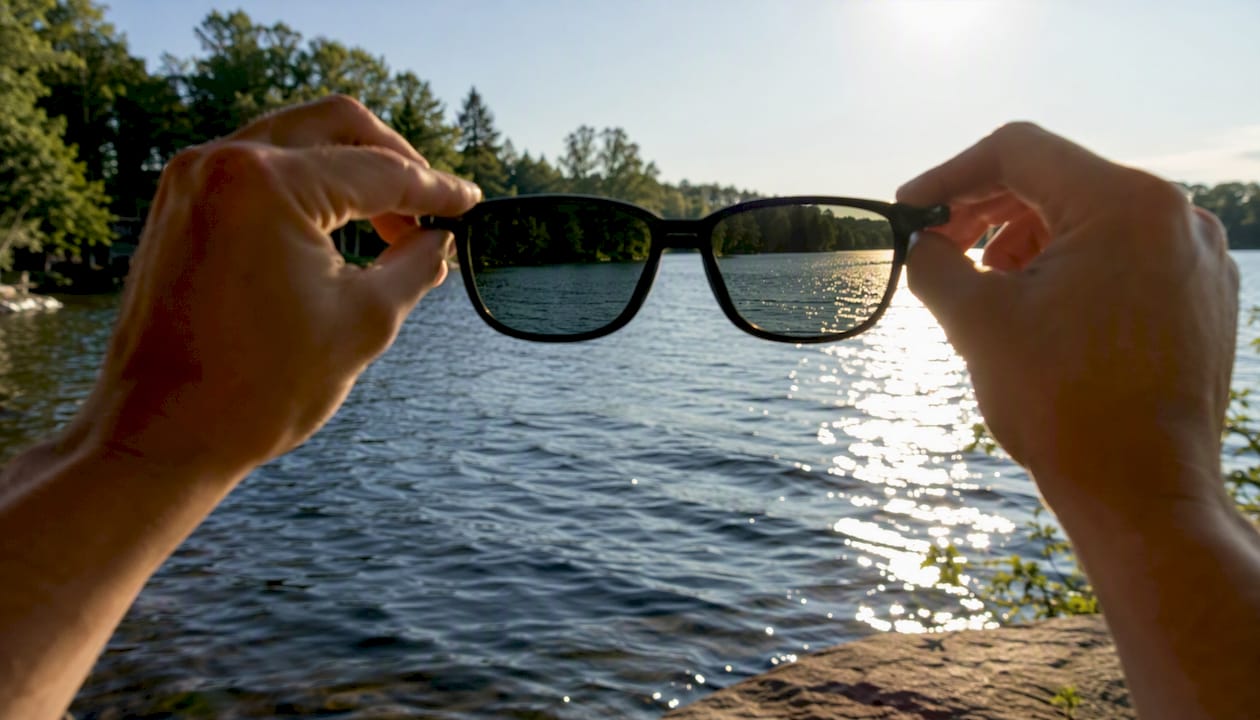
The best mirrored sunglasses combine both: a polarized base with a mirror overcoat and a confirmed UV400 rating. That combination covers the full spectrum of outdoor glare scenarios without compromise. Chapeleyewear’s polarized collections include options built to that spec — worth checking before settling for a mirror-only pair that leaves the glare problem half-solved.
Chapeleyewear’s mirrored and polarized options

Chapeleyewear builds its sunglasses around the specs that matter most for mirrored-lens buyers: UV400-rated polycarbonate lenses, impact resistance, scratch-resistant overcoats, and optional polarization. Every frame in the collection is designed to handle the transition from sport to everyday use without sacrificing protection. If you want the mirror-plus-polarization combination that works best for water, snow, and high-glare driving, the designer polarized collection is the right starting point. Browse the full range at Chapeleyewear and filter by lens type to find the mirror density and tint that fits your primary activity.
Sources
- Mirrored sunglasses
- Mirror Coatings for Sunglasses: Style & Function – Specialty Vision
- What are mirrored sunglasses?
- What Are The Benefits of Mirror Coated Sunglasses? — iCare Family Vision