

Clean Sunglasses Lenses the Safe, Coating-Friendly Way
The safest way to clean sunglasses lenses is also the simplest: rinse with lukewarm water, add a drop of mild, pH-neutral dish soap, rinse again, then dry with a clean microfiber cloth. No paper towels, no shirttails, no glass cleaner from under the sink.
That last part matters more than people think. Household sprays like Windex, along with rubbing alcohol and ammonia-based cleaners, break down the coatings on modern lenses over time. Chapeleyewear builds its polarized and photochromic lines with layered coatings that need gentler treatment than a kitchen counter.
Rinse, soap, rinse, dry with microfiber. That’s the whole method. Everything else is just avoiding the things that undo it.
Key Takeaways
The safest way to clean sunglasses lenses is rinse, mild soap, rinse, and dry with a clean microfiber cloth, avoiding household chemicals entirely.
| Point | Details |
|---|---|
| Rinse before wiping | Flush off grit with lukewarm water first to prevent micro-scratches from dry contact. |
| Use mild, pH-neutral soap | A small drop applied with clean fingertips removes oils without harming coatings. |
| Skip household cleaners | Ammonia, alcohol, acetone, and bleach all strip anti-reflective and mirrored coatings. |
| Wash your microfiber cloth | A dirty cloth grinds grime back into lenses instead of lifting it away. |
| Shop coating-safe accessories | Chapeleyewear’s polarized collections pair well with alcohol-free sprays and hard cases for long-term clarity. |
Table of Contents
- How to Clean Sunglasses Lenses Step by Step
- What Supplies Belong in Your Cleaning Kit
- What Not to Do When Cleaning Sunglasses
- Cleaning Coated, Polarized, and Photochromic Lenses
- How Often Should You Clean Your Sunglasses?
- When Lens Damage Needs a Professional
- Chap’el Eyewear’s Approach to Lens Longevity
- Why Gentle Cleaning Habits Actually Pay Off
- Keep Your Chap’el Sunglasses Looking New
- Sources
How to Clean Sunglasses Lenses Step by Step
Grit is the real enemy of clear lenses, not smudges. A single grain of sand dragged across a lens by a dry cloth can leave a scratch you’ll notice every time you look through it. That’s why the order of operations below isn’t arbitrary.
- Rinse first. Run lukewarm water over both sides of the lenses to flush away dust, sand, and grit before anything touches the surface. Rinsing before wiping removes abrasive particles that would otherwise grind into the coating.
- Add soap. Put a small drop of mild, pH-neutral dish soap on clean fingertips and rub the lenses gently in small circles, front and back.
- Rinse thoroughly. Wash away every trace of soap under lukewarm water. Avoid hot water, which can stress lens coatings and frame adhesives.
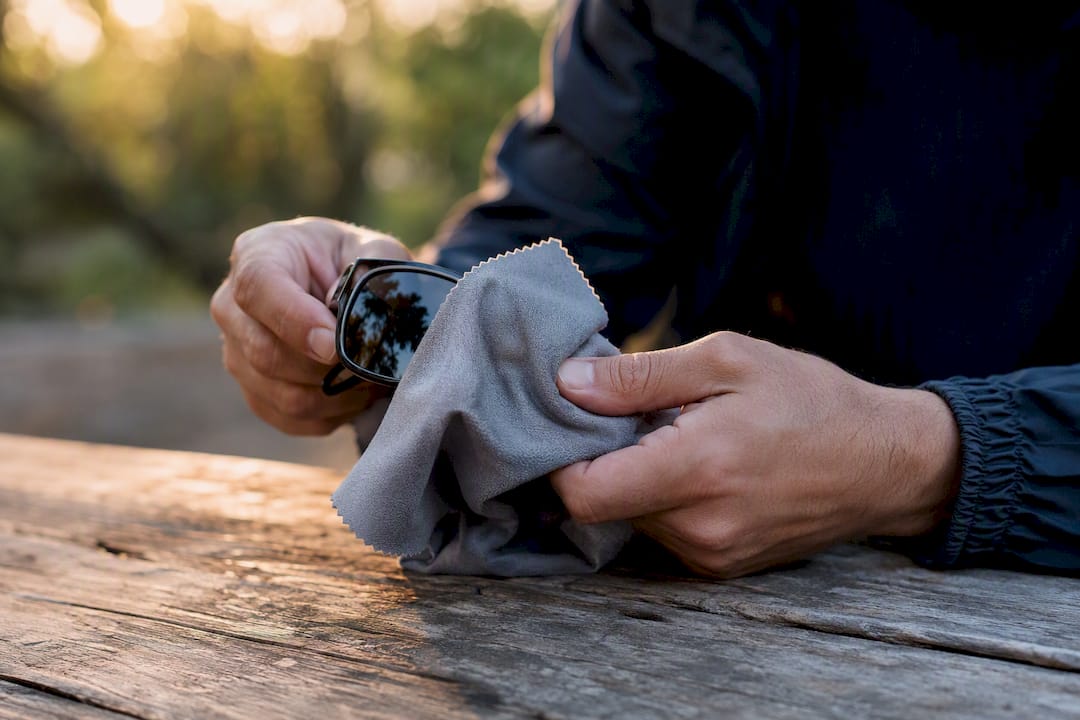
- Dry with microfiber. Shake off excess water, then dry with a clean microfiber cloth using light, even pressure in polishing strokes rather than hard rubbing.
Wash your hands before you start. Avoid using fingernails and rings as tools during cleaning to prevent damage. If dirt has worked into the nose pads or hinge joints, a soft-bristle brush (an old, clean toothbrush works fine) handles those spots without touching the lens itself.
Pro Tip: Skipping the rinse step and going straight to wiping is how most scratches happen. Water does the heavy lifting; the cloth just finishes the job.
What Supplies Belong in Your Cleaning Kit
You don’t need much, but what you use matters. A clean microfiber cloth, a small bottle of mild dish soap, and access to lukewarm running water covers 90% of situations.
For days when you’re nowhere near a sink, keep these on hand:
- An alcohol-free, pH-neutral lens spray for quick touch-ups
- Single-use, alcohol-free lens wipes for travel or your car’s glove box
- A dedicated microfiber pouch to store the cloth so it stays lint-free between uses
Skip paper towels, tissues, and cotton T-shirts entirely. They feel soft but carry wood fibers and rough weaves that scratch coatings and trap grit instead of lifting it away. A $5 microfiber cloth outlasts a whole box of tissues and does the job better.
What Not to Do When Cleaning Sunglasses
Some habits feel harmless but quietly ruin expensive lenses. Here’s what to strike from your routine entirely.
- Household glass cleaners. Ammonia and alcohol in products like Windex break down anti-reflective and mirrored coatings over repeated use.
- Acetone and bleach. Both strip protective layers fast, sometimes after a single application.
- Wiping dry lenses. If there’s grit on the surface, wiping without rinsing first is a direct path to micro-scratches.
- Saliva. It feels like a quick fix, but saliva is mildly acidic and can react with coatings over time.
- Aggressive scrubbing or hot water. Both stress lens coatings and, in some cases, the frame’s adhesive bonds.
So, can you use Dawn dish soap? Yes, as long as it’s a plain formula without added moisturizers or degreasers, applied sparingly and rinsed well.
Cleaning Coated, Polarized, and Photochromic Lenses
Premium lenses aren’t a single piece of plastic. They’re a stack: an anti-scratch base, a polarized film or mirrored finish, an anti-reflective (AR) layer, sometimes a hydrophobic top coat to shed water and oils. Each layer is thin, and harsh chemicals can migrate between them or erode the top coat, which is why the same gentle method applies across the board.
- Use only alcohol-free, pH-neutral cleaners on polarized and AR-coated lenses.
- Apply very light pressure on mirrored finishes. They scratch and thin out faster than standard tints.
- Photochromic lenses follow the same surface-care rules as AR-coated lenses. Cleaning doesn’t interfere with the light-reactive chemistry, but the coatings layered on top of it can still get damaged by the wrong cleaner.
Chapeleyewear’s polarized sunglasses hold up well against everyday wear, but no coating is scrub-proof.
Pro Tip: If a lens spray leaves a hazy film after drying, it’s not pH-neutral. Switch products rather than compensating with extra rubbing.
How Often Should You Clean Your Sunglasses?
A quick microfiber wipe for fingerprints and light smudges works every time you wear them. That takes ten seconds and prevents buildup.
- Full sink cleans (soap and rinse) are recommended regularly, especially after exposure to salt water, sunscreen, or heavy sweat.
- Wash your microfiber cloth regularly in cold water with mild soap and no fabric softener, since a dirty cloth just grinds oils back into the lens instead of lifting them off.
When Lens Damage Needs a Professional
Some problems can’t be cleaned away. Watch for these signs:
- A scratch you can feel with a fingernail, not just see
- Delamination, where coating layers visibly peel or bubble
- Internal fogging or haze that doesn’t wipe off from either surface
Professional cleaning can sometimes fix chemical residue or light buildup, but deep scratches almost always mean replacement is the only real option. If your sunglasses are still under warranty, photograph the damage and contact the retailer before attempting any repair yourself.
Chap’el Eyewear’s Approach to Lens Longevity
Store sunglasses in a hard case when you’re not wearing them. Leaving them lens-down on a counter invites scratches, and tossing them in a bag lets dust bake onto the surface in the sun.
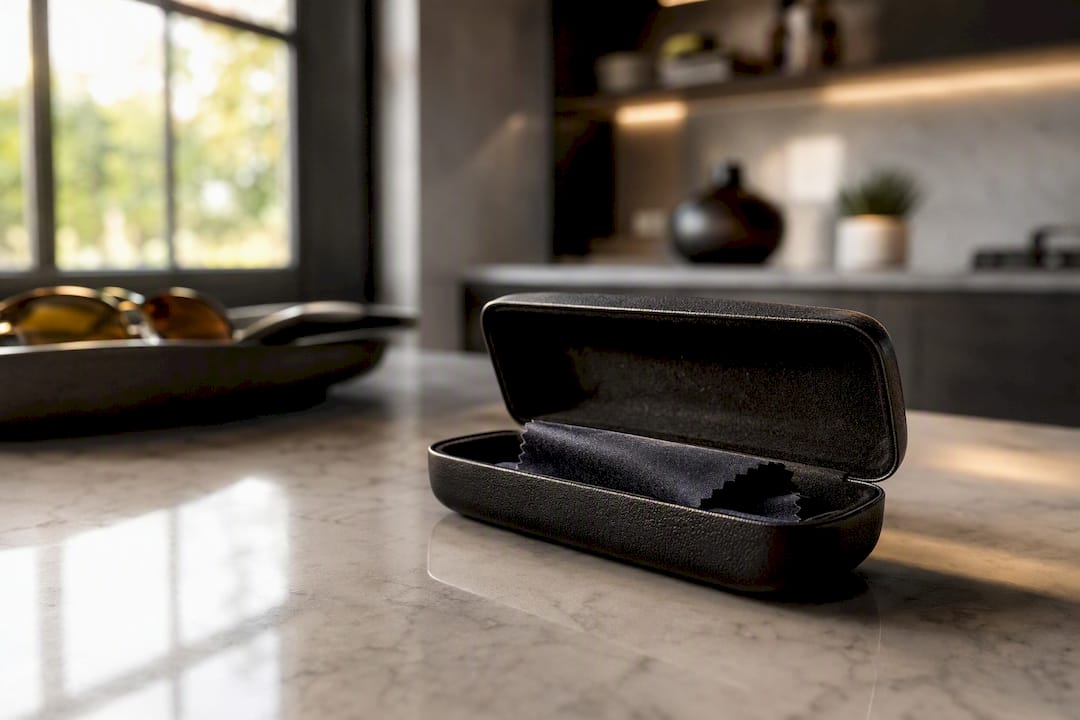
Chapeleyewear recommends microfiber cloths and alcohol-free sprays for polarized and designer lines especially, since these carry the most coating layers and the least room for error.
Why Gentle Cleaning Habits Actually Pay Off
I’ve watched a pair of good sunglasses go hazy in a single summer because someone kept wiping them dry with a shirt. Gentle habits aren’t fussy. They’re what keeps polarization crisp and mirror coatings intact for years instead of months, and that’s real money saved on replacements.
Keep Your Chap’el Sunglasses Looking New
Chapeleyewear’s polarized and photochromic lines are built to handle real use, from beach days to long drives, but even the best coatings need the right care to stay clear.

If you need a proper cleaning kit, Chapeleyewear’s accessories collection carries microfiber cloths, alcohol-free sprays, and hard cases sized for daily carry. Riders and anglers who put their sport polarized sunglasses through rougher conditions will want a case that travels well, while anyone shopping for a new pair can browse the designer polarized collection for frames with coatings built to last. Pick up a cloth and spray now, and your next pair stays scratch-free far longer than the last one did.
Sources
- How to Clean Sunglasses Without Ruining the Coatings | Z Clear
- How to clean glasses (All About Vision)