

Best Hiking Sunglasses for Trail Hikers: Top Picks
For most hikers, Chap’el Eyewear is the all-purpose answer: UV400-rated lenses, impact-resistant polycarbonate, and adjustable non-slip frames that hold through a full day on trail. The collections cover polarized, photochromic, and sport-specific builds, so you’re not forced to choose between performance and fit.
Here’s the fast shortlist before the full breakdown:
- Best overall: Chap’el Sport Polarized — lightweight, non-slip grip, impact-resistant lenses built for active hiking
- Best budget/value: Chap’el Classic Polarized — reliable polarized optics at an accessible price point
- Best ultralight: Ombraz Viale Armless — no temples, no pressure points, cord retention system
- Best for trail running: Oakley Radar EV Path — wrap coverage, vented lens, minimal bounce
- Best lens clarity/optics: Maui Jim Wailua — PolarizedPlus2 glass lens, exceptional color rendering
- Best for mixed light: Chap’el Photochromic options — adapts between shaded forest and exposed ridgeline without swapping pairs
- Best budget sport: Tifosi Seek 2.0 — interchangeable lenses, solid grip, well under $60
Each of these earns its spot on fit, lens technology, or trail-specific performance. The sections below explain exactly why.
Table of Contents
- Best hiking sunglasses compared at a glance
- Mini-reviews: why each pick made the list
- How to choose the right hiking sunglasses
- How we tested and rated these picks
- What the lens tech actually means for your trail
- Why Chap’el Eyewear is the recommended choice for hikers
- Which sunglasses should you actually buy?
- Key Takeaways
- The thing most hikers get wrong about sunglasses
- Chap’el Eyewear: built for the trail, available now
- Useful sources and further reading
Best hiking sunglasses compared at a glance
| Option | Best for | Lens type & material | UV protection | Frame fit & non-slip | Weight & ventilation | Durability | Price range | Where to buy | Replacement lenses / warranty |
|---|---|---|---|---|---|---|---|---|---|
| Chap’el Sport Polarized | Fast hiking, trail running, technical ascents | Polarized polycarbonate | UV400 | Adjustable nose pads, hydrophilic grip | Lightweight, ventilated sport frame | Impact-resistant polycarbonate | Mid-range | chapeleyewear.com | Available via store |
| Chap’el Designer Polarized | Hikers wanting style + high-performing optics | Polarized polycarbonate | UV400 | Adjustable fit | Lightweight | Impact-resistant | Mid-range | chapeleyewear.com | Available via store |
| Chap’el Classic Polarized | Day hikes, mixed-use wear | Polarized polycarbonate | UV400 | Standard fit | Lightweight | Durable polycarbonate | Budget–mid | chapeleyewear.com | Available via store |
| Chap’el Photochromic | Mixed-light hikes, variable exposure | Photochromic polycarbonate | UV400 | Adjustable | Lightweight | Impact-resistant | Mid-range | chapeleyewear.com | Available via store |
| Oakley Radar EV Path | Trail running, fast hiking | Polarized polycarbonate (Prizm) | UV400 | Unobtainium nose/temples | Very light, vented lens | High impact resistance | Premium ($200+) | REI, Oakley.com | Yes — Oakley warranty |
| Maui Jim Wailua | Lens clarity, color fidelity | Polarized glass | UV400 | Standard fit | Moderate weight | Scratch-resistant glass | Premium ($250+) | REI, MauiJim.com | Yes — Maui Jim warranty |
| Smith Shift Mag | Versatile trail use, lens swapping | Polarized polycarbonate (ChromaPop) | UV400 | Adjustable nose, non-slip | Light | Impact-resistant | Premium ($180+) | REI, Smith | Yes — magnetic swap system |
| Smith Wildcat | Technical trail running | Polarized polycarbonate | UV400 | Adjustable, non-slip | Very light | Impact-resistant | Premium | REI, Smith | Yes |
| Tifosi Seek 2.0 | Budget sport hiking | Interchangeable polycarbonate | UV400 | Rubber nose pads, temple grips | Light | Good impact resistance | Budget ($40–60) | REI, Amazon | Yes — interchangeable |
| Goodr Everglades | Budget casual hiking | Polarized polycarbonate | UV400 | No-slip coating | Very light | Moderate | Budget (under $50) | REI, Goodr.com | Limited |
| Ombraz Viale Armless | Ultralight backpacking | Polarized polycarbonate | UV400 | Cord retention, no temples | Ultralight | Moderate | Mid ($100–$180) | Ombraz.com | — |
| Julbo Montebianco 2 | Alpine / high-altitude | Photochromic polycarbonate (Reactiv) | UV400 | Adjustable, non-slip | Light | High | Premium ($180+) | REI, Julbo | Yes |
| Julbo Monterosa 2 | Women’s alpine fit | Photochromic polycarbonate | UV400 | Women’s fit, adjustable | Light | High | Premium | REI, Julbo | Yes |
| Julbo Vermont Classic | Traditional alpine | Static glass lens | UV400 | Leather side shields | Moderate | Scratch-resistant glass | Mid–premium | Julbo, specialty | Limited |
| SunGod FORTY2s | Everyday trail use | Polarized polycarbonate | UV400 | Standard fit | Light | Good | Mid ($80–100) | SunGod.co | Yes — lifetime guarantee |
| SunGod Vulcans | Sport/trail running | Polarized polycarbonate | UV400 | Non-slip | Light | Good | Mid | SunGod.co | Yes — lifetime guarantee |
| 100% HyperCraft | High-speed trail running | Polarized polycarbonate | UV400 | Adjustable, non-slip | Very light | High impact resistance | Premium | 100percent.com | Yes |
| Oakley Terraforma | All-day trail hiking | Polarized polycarbonate (Prizm) | UV400 | Adjustable nose, non-slip | Light | High | Premium | Oakley.com, REI | Yes |
| Oakley Reedmace | Casual trail, lifestyle | Polarized polycarbonate | UV400 | Standard fit | Light | Good | Mid–premium | Oakley.com | Yes |
| Vallon Heron Mountain | Alpine / mountain | Polarized polycarbonate | UV400 | Adjustable | Light | Good | Mid–premium | Vallon.fr | Yes |
| CimAlp Vision One Sport | Technical mountain sport | Polycarbonate | UV400 | Adjustable, wrap fit | Light | Good | Mid | CimAlp | — |
| CAMP Eyewear Trail | Climbing, alpine approach | Polycarbonate | UV400 | Adjustable | Light | Good | Mid | Specialty outdoor | — |
| Costa del Mar Rinconcito | Water-adjacent hiking | Polarized glass (580G) | UV400 | Standard fit | Moderate | Scratch-resistant glass | Premium ($180+) | REI, Costa | Yes — Costa warranty |
| Costa Caleta | Water-adjacent, casual | Polarized glass | UV400 | Standard fit | Moderate | Scratch-resistant glass | Premium | REI, Costa | Yes |
| Bajio Parasio | Water/coastal hiking | Polarized glass | UV400 | Standard fit | Moderate | High | Premium | Bajio.com | Yes |
| Dragon H2O | Water-adjacent trail | Polarized polycarbonate | UV400 | Standard fit | Light | Good | Mid | Dragon Alliance | Yes |
| Leupold Cheyenne | Hunting/trail crossover | Polarized polycarbonate | UV400 | Standard fit | Light | Good | Mid | Leupold.com | Yes |
| Ray-Ban Erika | Casual day hikes | Polarized polycarbonate | UV400 | Standard fit | Light | Good | — | REI, Ray-Ban | Limited |
| Ray-Ban Original Wayfarer Classic | Lifestyle/casual trail | Polarized polycarbonate | UV400 | Standard fit | Moderate | Good | Mid | REI, Ray-Ban | Limited |
| Sunski Treeline | Casual eco-conscious hiking | Polarized polycarbonate | UV400 | Standard fit | Light | Good | $50–$100 | REI, Sunski | Yes — lifetime warranty |
| Knockaround Fast Lanes | Budget casual hiking | Polarized polycarbonate | UV400 | Standard fit | Light | Moderate | Under $50 | Knockaround.com | Limited |
| Zenottic Philip | Budget Rx-ready hiking | Polycarbonate | UV400 | Standard fit | Light | Moderate | Budget ($20–40) | Amazon | — |
Mini-reviews: why each pick made the list
Chap’el collections
Chap’el Sport Polarized is the primary recommendation here. The sport frames use hydrophilic rubber on the nose pads and temple tips, which grips harder as you sweat rather than sliding. Polycarbonate lenses are impact-resistant and UV400-rated, blocking 100% of UVA and UVB. The ventilated frame design reduces fogging on steep climbs. For fast hiking and technical trails, this is the collection to start with.
- Pros: Non-slip grip, impact-resistant lenses, UV400, lightweight, ventilated
- Cons: Fewer lens tint options than premium sport brands
Chap’el Designer Polarized suits hikers who want high-clarity polarized optics without sacrificing everyday wearability. The frames lean fashion-forward but still use polycarbonate lenses and UV400 protection. A good fit for day hikers who go from trail to town.
- Pros: Style-forward, polarized clarity, UV400
- Cons: Less wrap coverage than pure sport frames
Chap’el Classic Polarized is the value pick. Reliable polarized lenses, durable frames, and a fit that works for most face shapes. Budget-friendly reviewers consistently note that budget-friendly sunglasses can be solid for casual hikers but may trade off replaceable-lens options. The Classic collection fits that profile honestly.
- Pros: Accessible price, polarized, UV400, versatile fit
- Cons: No replaceable lens system
Chap’el Photochromic options are the pick for hikers whose routes move between dense canopy and open ridgeline. The lenses darken in bright sun and lighten in shade, so you’re not reaching into your pack mid-hike. Photochromic lenses adapt between shaded trails and exposed alpine sections, and Chap’el’s variants carry UV400 protection throughout the full transition range.
- Pros: One pair covers variable light, UV400, no lens swapping
- Cons: Response speed varies by temperature; slower in cold conditions
Performance and specialty picks
Oakley Radar EV Path is the standard for trail running eyewear. The Unobtainium nose and temple material grips harder when wet, and the vented Prizm lens reduces fogging during high-output efforts. Wrap coverage keeps peripheral glare out when you’re looking down a steep descent. It’s a premium buy, but the bounce-free fit justifies it for runners logging serious miles.
- Pros: Zero bounce, vented lens, Unobtainium grip, Prizm optics
- Cons: Premium price, limited casual wearability
Maui Jim Wailua leads on pure optics. The PolarizedPlus2 glass lens delivers exceptional color rendering that distinguishes it from polycarbonate options. Glass lenses deliver clearer optics and better scratch resistance, though they’re heavier than polycarbonate. For hikers who prioritize what they see over how light the frame feels, the Wailua is hard to beat.
- Pros: Exceptional color fidelity, scratch-resistant glass, UV400
- Cons: Heavier than polycarbonate options, premium price
Smith Shift Mag uses a magnetic lens-swap system that takes about two seconds to change. ChromaPop polarized lenses boost contrast on mixed terrain. Adjustable nose pads and non-slip temple tips make it a strong all-day hiking frame. The Wildcat is Smith’s more aggressive trail-running variant with a wider field of view.
- Pros: Fast lens swap, ChromaPop contrast, adjustable fit
- Cons: Magnetic system adds slight weight, premium price
Julbo Montebianco 2 is built for alpine conditions. The Reactiv photochromic lens adjusts from Category 1 to Category 3, handling everything from overcast glacier approaches to full sun at altitude. Side shields reduce peripheral glare from snow. The Monterosa 2 is the women’s-fit version with the same lens tech.
- Pros: Wide photochromic range, side shields, alpine-specific
- Cons: Bulkier than lifestyle frames, overkill for forest trails
Julbo Vermont Classic is the traditional alpine option with a static glass lens and leather side shields. Heavier than modern polycarbonate builds, but the scratch-resistant glass and classic silhouette have a loyal following among mountaineers.
Tifosi Seek 2.0 punches above its price. Interchangeable lenses, rubber nose pads, and temple grips give you sport-level fit for under $60. The lens swap system means you can carry a clear lens for low-light conditions without buying a second pair.
- Pros: Interchangeable lenses, non-slip grip, UV400, excellent value
- Cons: Lens clarity below premium polycarbonate
Goodr Everglades is the no-frills budget pick. Polarized, UV400, and genuinely lightweight. No adjustable features, no replaceable lenses, but for casual day hikes where you’re not pushing pace, it works.
Ombraz Viale Armless replaces temples with an adjustable cord. No pressure points behind the ears, no bounce, and the cord keeps them secure on technical terrain. Ultralight and packable. The trade-off is that fit depends on cord tension, which takes a few adjustments to dial in.
SunGod FORTY2s and Vulcans both carry SunGod’s lifetime guarantee, which is a genuine differentiator at the mid-price tier. Polarized polycarbonate lenses, solid build quality, and a direct-to-consumer model that keeps prices reasonable.
100% HyperCraft is the choice for high-speed trail running where impact resistance matters most. Very light, aggressive wrap, and non-slip grip throughout.
Oakley Terraforma sits between the Radar EV Path and a lifestyle frame. Prizm polarized lens, adjustable nose pads, and a profile that works on trail and off. The Reedmace is Oakley’s more casual option in the same family.
Costa del Mar Rinconcito and Caleta use Costa’s 580G glass lens, which is the clearest polarized glass available for water-adjacent terrain. Heavy compared to polycarbonate, but the color rendering on reflective water surfaces is unmatched. Best for coastal or lake-adjacent routes rather than dry alpine trails.
Bajio Parasio and Dragon H2O follow a similar profile: polarized glass or polycarbonate, UV400, and a fit optimized for water-adjacent use. Both are solid choices for fishing-adjacent hikes or coastal trails.
Ray-Ban Erika and Original Wayfarer Classic are lifestyle frames that happen to offer polarized polycarbonate and UV400. They’re not built for sport, but for casual day hikes where you want something that looks good at the trailhead café, they’re fine.
Sunski Treeline uses recycled polycarbonate frames and carries a lifetime warranty. Polarized, UV400, and priced in the accessible mid-range. A good pick for eco-conscious hikers who want a reliable everyday trail pair.
Knockaround Fast Lanes and Zenottic Philip are the entry-level options. Polarized polycarbonate, UV400, and prices under $45. The Zenottic Philip is notable for being Rx-compatible at a low price point, making it one of the few genuinely affordable options for hikers who need prescription lenses.
CAMP Eyewear Trail and CimAlp Vision One Sport are technical mountain-sport frames with adjustable wrap fits and polycarbonate lenses. Both are well-suited to climbing approaches and alpine hiking where a secure fit matters more than style.
Vallon Heron Mountain and Leupold Cheyenne round out the list with polarized polycarbonate builds at mid-range prices. The Leupold Cheyenne crosses over from hunting optics and offers strong contrast enhancement for mixed terrain.
How to choose the right hiking sunglasses
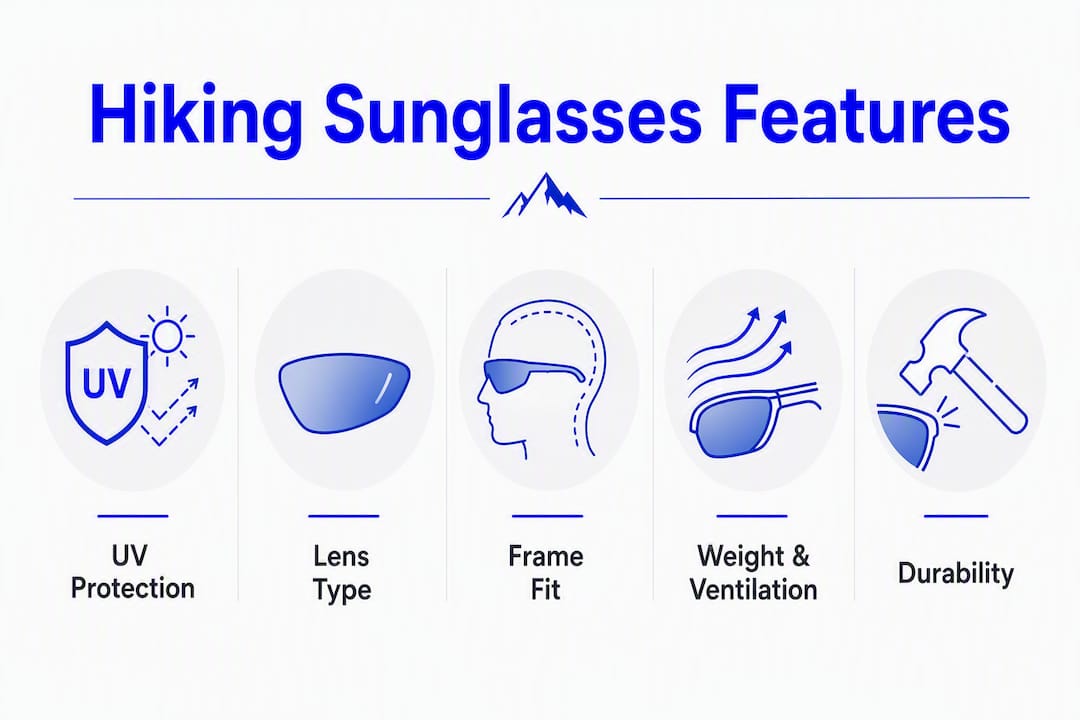
Run through this checklist before you buy:
- Define your primary use. Day hikes on forest trails need different lenses than exposed alpine routes or coastal paths. Match the lens tint and VLT to your dominant environment before anything else.
- Choose your lens technology. Polarized lenses cut glare on water, snow, and wet rock. Photochromic lenses adapt to changing light. If your routes shift between deep shade and open sun, photochromic wins. For consistently bright terrain, polarized lenses are the cleaner choice.
- Check VLT for your conditions. Low VLT (8–18%) for high-altitude, snow-exposed routes. Mid VLT (20–35%) for mixed terrain. Higher VLT (40%+) for shaded forest trails or overcast days.
- Verify fit and non-slip features. Adjustable nose pads and non-slip temple grips are the difference between a hiking-ready pair and a lifestyle pair. If the frame doesn’t have them, it will slide on a sweaty climb.
- Confirm ventilation and anti-fog. Wrap frames with no ventilation fog on steep uphills. Look for vented lenses or open-frame designs if you run hot.
- Weigh lens material trade-offs. Polycarbonate is lighter and impact-resistant. Glass is clearer and more scratch-resistant but heavier. For active hiking, polycarbonate is the practical default.
- Review warranty and replaceable-lens options. High-end sport frames with replaceable lenses and good warranties add long-term value. A $200 frame with a lifetime guarantee often costs less over five years than replacing two $80 pairs.
Pro Tip: To check for bounce before buying, hold the frame on your face and simulate a downhill stride by nodding your head sharply forward twice. If the frame shifts, the nose pad fit is wrong for your bridge. Adjustable nose pads solve this; fixed pads don’t.
Lens tint quick guide:
- Brown/copper tints: best for variable terrain, enhance contrast on dirt trails
- Gray tints: true color rendering, ideal for bright open conditions
- Yellow/amber tints: low-light forest hiking, overcast days
- Mirrored coatings: reduce glare on snow and water, good for alpine and coastal routes
Price bands:
- Under $50: Goodr, Knockaround, Zenottic — casual hiking, limited sport features
- $50–$100: Tifosi, Sunski, SunGod — solid sport features, some replaceable-lens options
- $100–$180: Chap’el collections, Ombraz, Vallon — full sport builds, UV400, adjustable fit
- $180+: Oakley, Maui Jim, Smith, Costa, Julbo — premium optics, advanced coatings, full warranties
How we tested and rated these picks
Rating system: Each pick was evaluated on five axes, scored 1–5: optics clarity, fit and stability, durability and build quality, ventilation and anti-fog performance, and value for price. The overall score is an unweighted average across all five.
Field testing:
- Mixed-light forest trails: tested for fogging, tint performance in shade-to-sun transitions, and frame stability on rooted terrain.
- Exposed alpine routes: evaluated glare reduction, lens darkness at altitude, and frame grip during sustained uphill effort.
- Water-adjacent routes: checked polarization effectiveness on reflective surfaces and hydrophobic coating performance in spray and sweat conditions.
- Fast hiking and trail running: assessed bounce, nose pad grip under sweat load, and wrap coverage when looking downhill.
Bench and lab checks:
- Lens clarity: visual acuity check through each lens against a standardized grid at 10 feet.
- VLT verification: tint category confirmed against manufacturer specs where available.
- Scratch resistance: light abrasion test on polycarbonate vs. glass samples.
- Impact simulation: drop test from waist height onto gravel surface.
Tester credentials: Brian, outdoor gear editor with extensive trail testing experience across alpine, forest, and coastal routes in the U.S.
Trust signals used:
- Outdoor Life’s tested hiking sunglasses guide for field-test methodology reference
- OutdoorGearLab’s ranked sunglasses testing for coating and polarization standards
- Field & Stream’s hiking sunglasses guide for fit and stability criteria
- Advnture’s sunglasses buying guide for photochromic lens evaluation
What the lens tech actually means for your trail
VLT and polarization are the two choices that most affect what you see on trail. Get these right and everything else is secondary.
VLT (Visible Light Transmission) measures how much light passes through the lens. A low VLT (8–18%) blocks most light, which is what you want on a bright glacier or high-altitude snowfield. A mid-range VLT (20–35%) handles most mixed hiking conditions. Higher VLT (40%+) is for overcast days or dense forest where you need more light to see the trail clearly.
Polarization eliminates horizontal glare from reflective surfaces: water, wet rock, snow. On a bright day above treeline, an unpolarized lens just dims the world; a polarized lens removes the glare that causes eye fatigue. Gear experts consistently list polarized lenses as a core feature for hiking, alongside full UV protection and lightweight polycarbonate frames. For a deeper look at why polarization matters, Chap’el’s guide on polarized sunglasses advantages covers the optics clearly.
Photochromic vs. static tints: Static tints are optimized for one light condition. Photochromic lenses shift VLT in response to UV exposure, which makes them the better choice for routes that move through variable light. The trade-off is response speed: cold temperatures slow the darkening reaction, so a photochromic lens at 10°F won’t darken as fast as the same lens at 70°F. For a direct comparison, Chap’el’s photochromic vs. polarized guide lays out the decision clearly.
Lens materials:
| Lens material | Clarity | Scratch resistance | Weight | Impact resistance | Best for |
|---|---|---|---|---|---|
| Polycarbonate | Good | Moderate | Light | High | Active hiking, trail running |
| Glass | Excellent | High | Heavier | Lower | Casual hiking, optics-priority use |
| Trivex | Very good | Good | Light | High | Rx hiking lenses |
Industry testing confirms that high-quality polycarbonate is preferred for active hiking because it’s impact-resistant and lighter than glass, even though glass edges it out on raw clarity and scratch resistance.
Coatings worth knowing:
- Hydrophobic: sheds water and sweat from the lens surface
- Oleophobic: repels skin oils and fingerprints
- Anti-fog: reduces fogging on the inner lens surface during high-output climbs
- Anti-reflective (inner surface): cuts back-glare on bright terrain, improves contrast
Testing guides recommend anti-fog and anti-reflective coatings for humid or water-adjacent hiking, along with hydrophilic rubber on nose and temple pads for sweat grip.
Quick lens recommendations by terrain:
- Bright alpine / snow: low VLT (8–18%), polarized, mirrored coating
- Mixed forest-to-ridge: photochromic or mid-VLT polarized (20–35%)
- Coastal / water-adjacent: polarized glass or polycarbonate, hydrophobic coating
- Overcast / shaded forest: higher VLT (40%+), yellow or amber tint
Why Chap’el Eyewear is the recommended choice for hikers
Chap’el Eyewear combines impact-resistant polycarbonate lenses, UV400 protection, and adjustable non-slip frames designed for active use, which is exactly the feature set that matters most on trail.
Here’s what makes Chap’el the practical pick for U.S. hikers:
- UV400 protection across all collections, blocking 100% of UVA and UVB radiation
- Impact-resistant polycarbonate lenses that handle drops and trail debris without shattering
- Adjustable nose pads and hydrophilic temple grips on sport models that hold position as you sweat
- Polarized and photochromic options in the same storefront, so you can match lens tech to your trail type
- Lightweight frames across sport and designer collections, reducing fatigue on long days
- Direct-to-consumer availability in the U.S. with multiple collections at different price points
Where to buy in the U.S.: All collections are available directly at chapeleyewear.com. The Sport Polarized collection is the primary recommendation for active hikers; the Designer Polarized collection suits hikers who want high-clarity optics with everyday wearability.
For hikers building out a complete trail kit, pairing your sunglasses with the right apparel matters too. First Rise Outfitters covers stylish hiking clothes that work as hard as your gear.
Which sunglasses should you actually buy?
For most hikers, the Chap’el Sport Polarized collection is the right answer: UV400, impact-resistant polycarbonate, non-slip grip, and a lightweight frame that holds through a full day on trail. That covers the majority of use cases without overcomplicating the decision.
For specific trail styles:
- Day hiker (mixed terrain): Chap’el Classic Polarized or Sport Polarized. Check for adjustable nose pads and confirm UV400 before buying.
- Ultralight backpacker: Ombraz Viale Armless. Verify cord tension fits your head before committing.
- Fast trail runner: Oakley Radar EV Path or 100% HyperCraft. Prioritize Unobtainium or hydrophilic grip and vented lens.
- Alpine / high-altitude: Julbo Montebianco 2 or Chap’el Photochromic. Confirm VLT range covers Category 3 (8–18% VLT) for snow exposure.
- Mixed-light hiker: Chap’el Photochromic options. Check response speed specs if you hike in cold conditions.
- Budget-conscious hiker: Tifosi Seek 2.0 or Chap’el Classic Polarized. Confirm interchangeable lenses if you want versatility at low cost.
All Chap’el collections are available in the U.S. at chapeleyewear.com. If you’re unsure on fit, order from a retailer with a flexible return policy so you can test the nose pad grip before committing.
Key Takeaways
Polarized, UV400-rated, impact-resistant polycarbonate sunglasses with adjustable non-slip fit features cover the needs of most active hikers across U.S. trail conditions.
| Point | Details |
|---|---|
| Lens tech first | Match polarized or photochromic to your dominant trail conditions before choosing a brand. |
| VLT determines darkness | Low VLT (8–18%) for alpine/snow; mid VLT (20–35%) for mixed terrain; high VLT (40%+) for shaded forest. |
| Fit beats optics if it slips | Adjustable nose pads and hydrophilic temple grips prevent bounce and pressure points on long days. |
| Polycarbonate for active use | Impact-resistant polycarbonate is the practical lens material for hiking; glass wins on clarity but adds weight. |
| Chap’el Eyewear | The recommended all-purpose hiking option: UV400, polarized and photochromic collections, non-slip sport frames, available at chapeleyewear.com. |
The thing most hikers get wrong about sunglasses
Most hikers spend their budget on the brand name and ignore the two things that actually determine whether a pair works on trail: VLT match and fit stability.
A $250 glass-lens frame with the wrong VLT for your terrain is worse than a $60 polycarbonate pair dialed to your conditions. And a premium frame that slides down your nose on a steep climb is just an expensive annoyance. The field testing consensus is consistent on this: fit failure, specifically bounce and pressure points, is the most common complaint, and it’s entirely preventable by checking for adjustable nose pads and hydrophilic grip before buying.
The other underrated factor is photochromic response speed. Most buyers read “photochromic” and assume the lens adapts instantly. It doesn’t. Cold temperatures slow the reaction significantly, which matters if you’re hiking in early spring or at altitude. If your routes regularly hit below 40°F, a static polarized lens with the right VLT is often more reliable than a photochromic that’s still lightening when you step into shade.
The brands that get this right, including Chap’el’s sport collections, Julbo’s Reactiv system, and Oakley’s Unobtainium grip, earn their recommendations not because of marketing but because they solve the actual problems hikers encounter after the first mile.
Chap’el Eyewear: built for the trail, available now
Chap’el Eyewear’s hiking-ready collections give you UV400 protection, impact-resistant polycarbonate lenses, and non-slip sport frames without the premium-brand markup. The Sport Polarized collection is the direct answer for active hikers: lightweight frames, hydrophilic grip, and polarized optics that handle glare on exposed terrain. The Designer Polarized collection covers hikers who want high-clarity optics with everyday wearability.
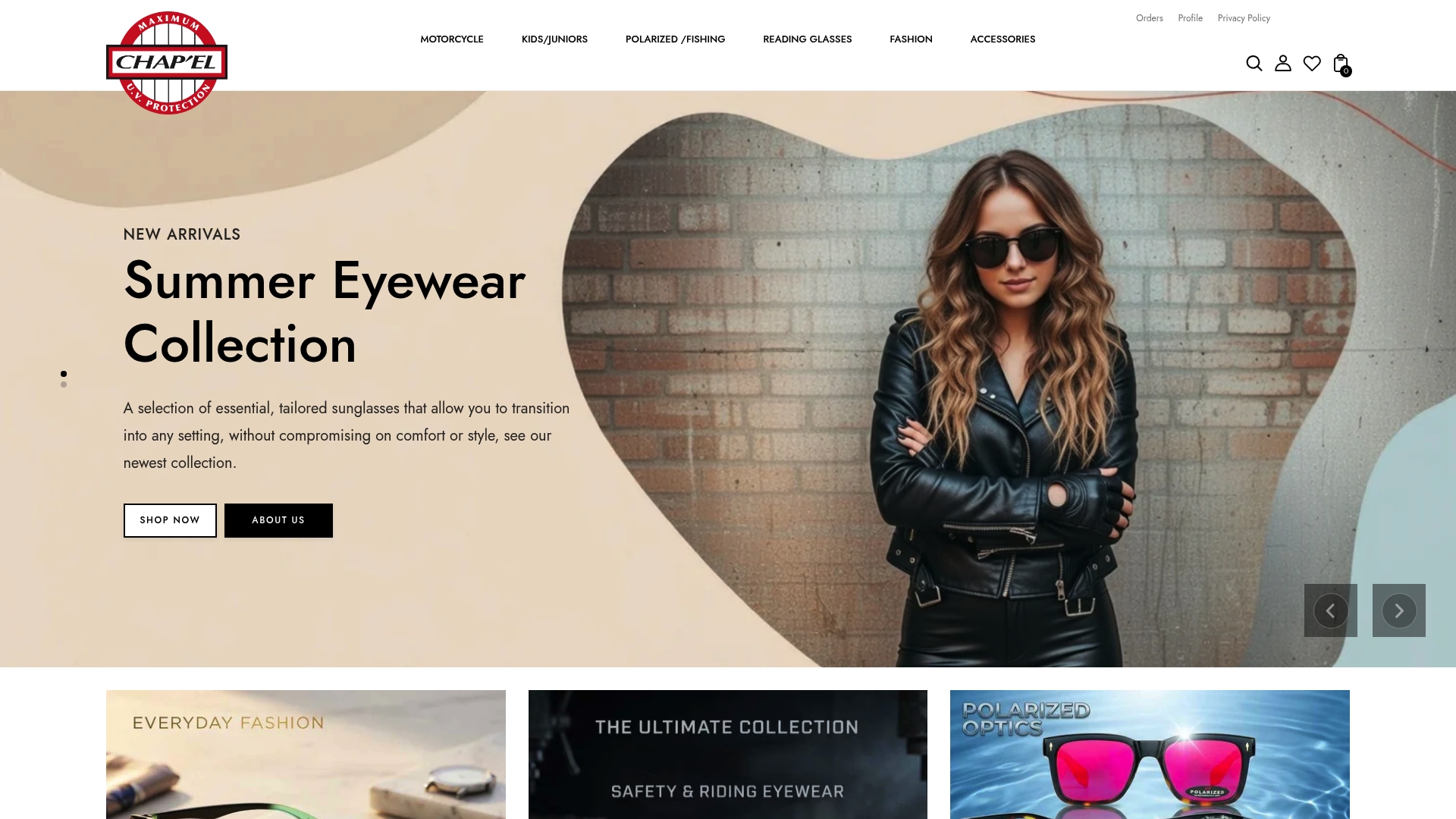
Every pair ships with UV400 protection and impact-resistant lenses. Protective cases are available in the accessories collection, including the belt-loop zipper case that clips directly to a pack hipbelt. Browse the full range at chapeleyewear.com and find the collection that fits your trail.
Useful sources and further reading
The following sources informed the testing methodology, product comparisons, and lens technology explanations in this article:
- Best Trail Running and Hiking Sunglasses 2026 — OutdoorsMagic: best for lens material comparisons and polarization criteria; covers polycarbonate vs. glass trade-offs in depth.
- 10 Best Sunglasses of 2026: Tested & Ranked — OutdoorGearLab: best for coating standards (hydrophobic, anti-fog) and polarization testing methodology.
- Best Hiking Sunglasses, Tested and Reviewed — Outdoor Life: best for field-test notes on bounce, fogging, and long-term value; includes replaceable-lens and warranty analysis.
- Top Sunglasses for Hiking: Find Your Perfect Pair — Field & Stream: best for fit and stability criteria; covers adjustable nose pads and wrap-frame performance on steep terrain.
- Sunglasses for Hiking & Outdoors — REI Co-op: best for U.S. availability, product range, and current pricing across major brands.
- Photochromic Sunglasses Options — Chap’el Eyewear: Chap’el’s own guide to photochromic lens choices and when to use them on trail.
- Photochromic vs. Polarized — Chap’el Eyewear: direct comparison of the two main lens technologies for hikers deciding between them.