

Best Driving Sunglasses in 2026: Top Picks for Safety
For most drivers, Chap’el Eyewear’s polarized collection is the clearest starting point. Polycarbonate lenses, backside anti-reflective options, and direct-to-consumer pricing make it a purpose-built choice rather than a repurposed fashion frame. If you want the short list first:
TL;DR — Three picks by priority:
- Best overall: Chap’el Eyewear (Designer Polarized) — polarized polycarbonate lenses, backside AR availability, and a warranty you can actually use
- Best value: Kaliyadi Polarized Sunglasses — a multi-tint polarized pack at a fraction of the price of premium options
- Best for dusk/dawn: Tifosi Kilo Interchangeable Lens Sunglasses — swap to an amber insert when the light drops, then back to polarized for full sun
Safety note: Every pair on this list blocks 100% UVA/UVB. That protection is non-negotiable for daytime driving, since windshields filter some but not all solar radiation. Polarization reduces reflected horizontal glare from wet roads and car hoods, but it can interact with some LCD instrument clusters. More on that trade-off below. The ANSI Z80.3-2025 standard governs optical quality for eyewear sold in the U.S.; look for lenses that meet or exceed it.
Table of Contents
- Which driving sunglasses should you actually buy?
- How do you choose the right driving sunglasses?
- What lens tints and coatings actually do while you drive
- Does frame shape affect how well you see while driving?
- How these sunglasses were evaluated
- Why Chap’el Eyewear earns a top recommendation for driving
- What’s the final verdict on driving sunglasses?
- Can polarized lenses make LCD screens harder to read?
- Polarized vs. non-polarized lenses: which is safer for driving?
- Key Takeaways
- The case for not overthinking this
- Chap’el Eyewear’s driving-ready sunglasses
Which driving sunglasses should you actually buy?
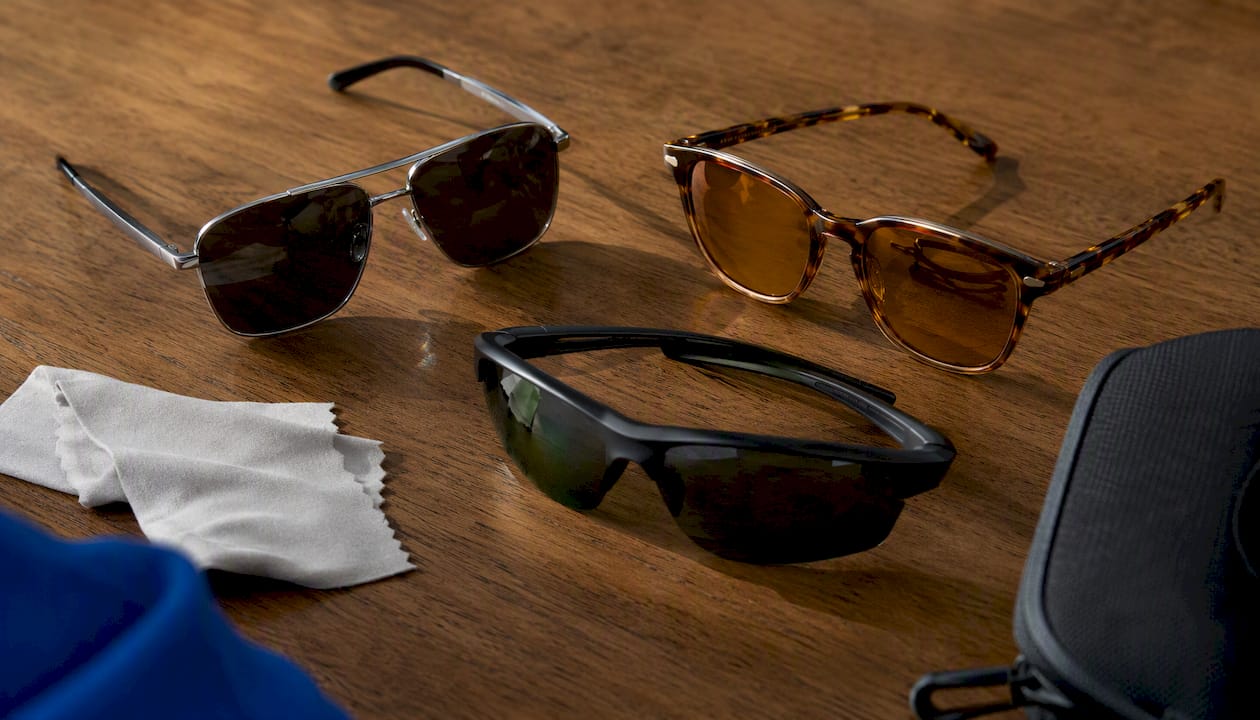
The table below covers the full shortlist. Every pair was evaluated against the same criteria: glare control, lens tint, UV rating, fit, durability, and value.
| Model | Best For | Price/Value | Lens Type | Tint | UV Protection | Frame Fit | Durability | Warranty |
|---|---|---|---|---|---|---|---|---|
| Chap’el Eyewear (Designer Polarized) | Most drivers: daily commute + road trips | $$ | Polarized | Gray/Brown | 100% UVA/UVB | Adjustable nose pads, medium wrap | Polycarbonate | Brand warranty + returns |
| Chap’el Eyewear (Sport Polarized) | Active/open-top driving, high coverage | $$ | Polarized | Gray/Brown | 100% UVA/UVB | High wrap, impact-resistant | Polycarbonate | Brand warranty + returns |
| Oakley Holbrook Prizm Polarized | Mixed-light, canyon/hilly routes | $$$ | Polarized (Prizm) | Prizm Road | 100% UVA/UVB | Medium wrap, secure fit | Plutonite lens | Limited warranty |
| Ray-Ban | Classic look, dependable performance | $$$ | Polarized available | Gray/Green | 100% UVA/UVB | Medium coverage | Nylon lens | 2-year |
| Ray-Ban RB8247 | Long-haul comfort, lightweight | $$$$ | Polarized available | Gray | 100% UVA/UVB | Lightweight titanium | Titanium/nylon | 2-year |
| Ray-Ban | Neutral fit, everyday driving | $$$ | Polarized available | Gray/Green | 100% UVA/UVB | Balanced medium fit | Nylon lens | 2-year |
| Ray-Ban Erika Round | Style-forward, polarized protection | $$$ | Polarized available | Gray/Brown | 100% UVA/UVB | Round, medium coverage | Nylon lens | 2-year |
| Tifosi Kilo Interchangeable | Multi-condition, lens-swap flexibility | $$ | Polarized + interchangeable | Amber/Clear/Smoke | 100% UVA/UVB | Sport wrap, secure | Shatterproof lens | Limited |
| Kaliyadi Polarized | Budget, casual daily driving | $ | Polarized | Gray/Brown/Yellow | 100% UVA/UVB | Standard fit | Polycarbonate | — |
| Maui Jim Lighthouse | Premium glare control, color fidelity | $$$$ | Polarized (PolarizedPlus2) | Neutral Gray/HCL Bronze | 100% UVA/UVB | Medium wrap | Glass/polycarbonate | 2-year |
| Maui Jim Wiki Wiki Aviators | Aviator style + premium polarization | $$$$ | Polarized | Neutral Gray | 100% UVA/UVB | Aviator, broad coverage | Polycarbonate | 2-year |
| American Optical Original Pilot | Classic pilot styling, solid optics | $$$ | Polarized available | Gray/Smoke | 100% UVA/UVB | Large coverage, pilot fit | Glass | Lifetime |
| Prada | High-end design, tested performance | $$$$ | Polarized available | Gray | 100% UVA/UVB | Sporty, medium wrap | Polycarbonate | 2-year |
| Prada | Premium fashion-forward driving | $$$$ | Polarized available | Gray/Brown | 100% UVA/UVB | Comfortable medium fit | Polycarbonate | 2-year |
| Pit Viper Grand Prix: The Dolce Vita | Maximum coverage, bold look | $$ | Non-polarized (standard) | Smoke | 100% UVA/UVB | Large bubble wrap | Polycarbonate | — |
| Persol | Premium materials, refined optics | $$$$ | Polarized available | Gray/Brown | 100% UVA/UVB | Refined medium fit | Glass | 2-year |
| Maui Jim Red Sands | Glare-heavy environments, color contrast | $$$$ | Polarized | HCL Bronze/Neutral Gray | 100% UVA/UVB | Medium wrap | Glass/polycarbonate | 2-year |
| Shinola Mackinac | Classic American styling, good optics | $$$ | Polarized available | Gray/Brown | 100% UVA/UVB | Heritage medium fit | Polycarbonate | — |
Ranking rationale: Chap’el Eyewear leads because it combines the two features that matter most for driving — polarized polycarbonate lenses and backside AR availability — at a price point that doesn’t require choosing between safety and budget. Maui Jim and Oakley Prizm rank high on optics but cost significantly more. Kaliyadi ranks as the value pick for drivers who want polarization without the investment.
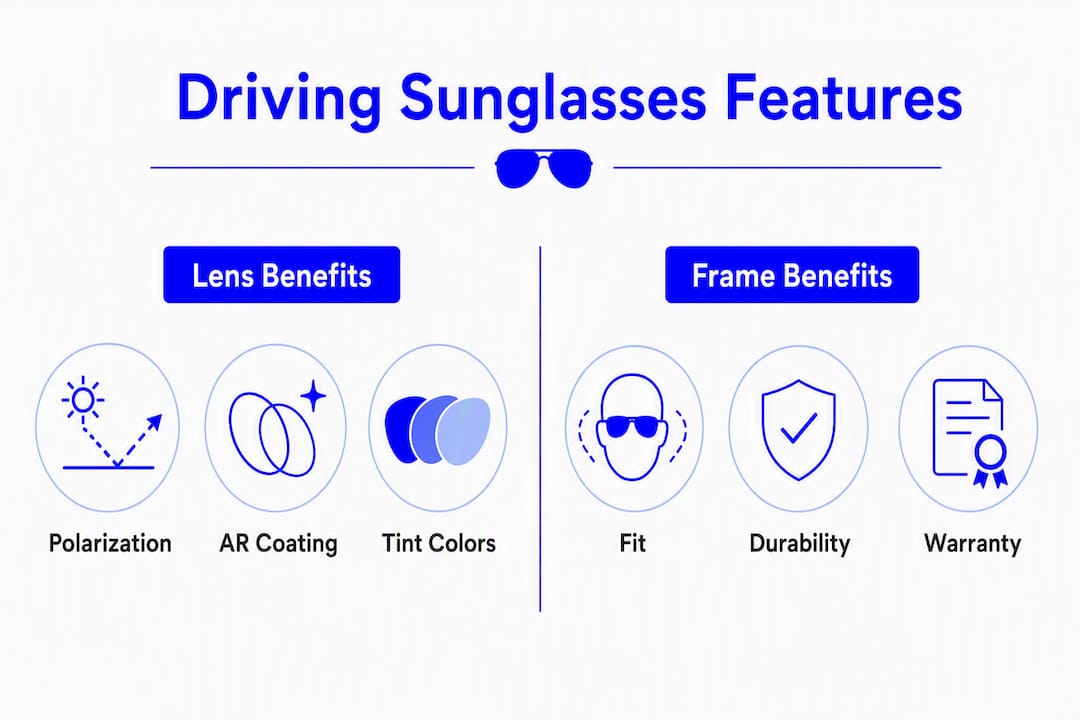
Every driving pair must have:
- Polarized lenses (or a polarized option) for reflected glare control
- Backside anti-reflective coating for low-sun interior reflections
- 100% UVA/UVB protection, full stop
How do you choose the right driving sunglasses?
The decision comes down to six questions. Work through them before you buy.
Decision checklist:
- Do these lenses block 100% UVA/UVB? (If the listing doesn’t say, assume they don’t.)
- Is polarization included, or is it an upgrade? Polarized lenses cut horizontal glare from reflective surfaces like wet pavement and car hoods.
- Does the frame offer a backside AR coating? Without it, low-angle sun bounces off the rear lens surface and creates a second glare source inside the car.
- What’s the VLT (visible light transmission) or lens category? Categories 2 and 3 are the safe range for road driving.
- Does the frame cover your peripheral vision without blocking your view of mirrors or the instrument cluster?
- Can you wear these for two hours without adjusting them? Fit matters more than most buyers realize.
Questions to ask at purchase:
- What lens category is this? (You want 2 or 3 for daytime driving.)
- Is the polarization standard or an add-on?
- Does the backside have an AR coating, or just the front?
- Are these prescription-ready, or do they accept Rx inserts?
Red flags to walk away from:
- Category 4 lenses: too dark for road use, they impair adaptation when you enter a tunnel or shaded stretch
- Fashion tints (heavy blue, rose, or mirrored without a neutral base) that shift traffic-signal colors
- No backside AR on a pair marketed for driving
- Frames so narrow they leave your upper and side vision unshielded
What lens tints and coatings actually do while you drive
Gray vs. brown: the two default choices
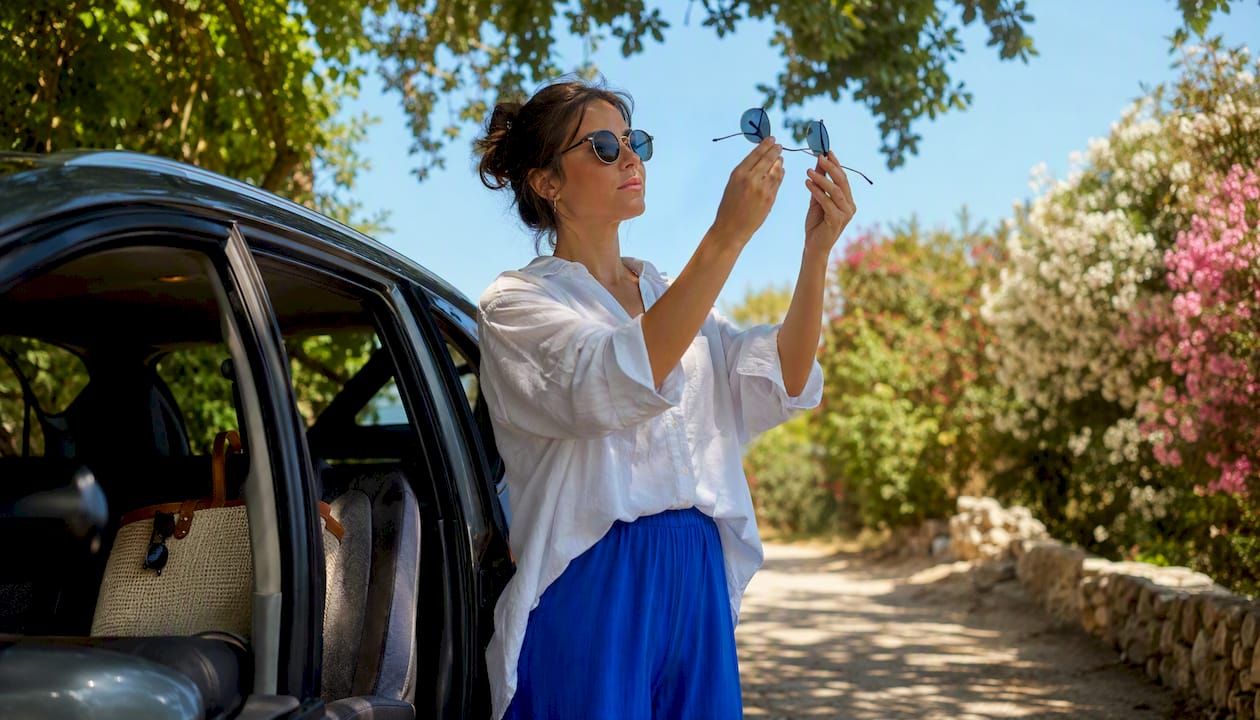
Gray lenses reduce brightness without shifting colors, so traffic lights read exactly as they should. That makes gray the reliable default for bright midday driving on open highways. Brown and amber lenses filter shorter wavelengths, which sharpens contrast and makes objects pop against backgrounds. For dawn, dusk, and tree-lined roads where light varies constantly, brown tends to outperform gray because it adds depth perception rather than just dimming the scene.
Green lenses sit between gray and brown: decent color fidelity, moderate contrast boost. Yellow is a niche choice. It can reduce perceived haze in overcast or foggy conditions, but yellow and amber lenses can distort color perception and shouldn’t be your daily driver tint.
Pro Tip: If you drive a mix of highway and wooded or hilly roads, a brown or amber polarized lens handles both better than gray alone. Gray is the safer pick if your commute is mostly open freeway.
Polarization: what it does and where it falls short
Polarized lenses filter horizontally polarized light, which is exactly the type that bounces off flat surfaces like wet roads, car hoods, and standing water. The result is a dramatic reduction in disabling glare. For most drivers, that’s the single biggest visibility upgrade available in an eyewear purchase.
The catch: polarization interacts with LCD polarization. Some instrument clusters, navigation screens, and heads-up displays become harder to read at certain viewing angles when you’re wearing polarized lenses. It doesn’t affect every car or every screen, but it’s worth checking your own dashboard before committing to a polarized pair for daily use. See the dedicated section on LCD visibility below.
Backside AR coatings
A front-surface AR coating reduces glare from outside. A backside AR coating addresses something different: the reflections of your own cabin and face that bounce off the rear lens surface when the sun is low behind you. Early morning and late afternoon drives are when this matters most. Without backside AR, you’re essentially looking through a partial mirror pointed at your dashboard.
VLT and lens categories
VLT (visible light transmission) measures how much light reaches your eye. Category 2 lenses (18–43% VLT) work well for variable conditions. Category 3 (8–18% VLT) is the standard for bright sun. Category 4 lenses block too much light for road use and are not recommended for driving.
Photochromic and interchangeable lenses
Photochromic lenses darken in UV light and lighten indoors, which sounds ideal for driving. The limitation is transition speed: most photochromic lenses react slowly inside a car because windshields block a significant portion of UV. They’re better for cyclists and pedestrians than for drivers. Interchangeable lenses, like those on the Tifosi Kilo, give you manual control: swap to amber for dusk, polarized smoke for noon, clear for overcast. For drivers who cover varied conditions, that flexibility beats a single fixed tint. For a deeper comparison, photochromic vs. polarized breaks down the trade-offs in detail.
Does frame shape affect how well you see while driving?
More than most people expect. A frame that fits well on a sidewalk can create problems at the wheel.
Why coverage and wrap matter:
- Side light leaks around narrow frames create contrast differences that fatigue your eyes on long drives
- Overhead gaps between the frame and your brow let in glare from the sun visor area
- A slightly curved lens with good peripheral coverage handles both without blocking your mirror sightlines
The trade-off is that extreme wrap can distort peripheral vision and, in some frames, interfere with the instrument cluster view. A moderate wrap, roughly 6–8 degrees of curvature, is the practical sweet spot for most drivers.
Fit checklist:
- Adjustable nose pads keep the frame stable when you look down at the dash
- Temple length should hold the frame securely without pressing on your temples during long drives
- Temples slim enough to fit comfortably under a headset or earpiece if you use hands-free calling
- No brow gap: the top of the lens should sit close to your brow line to block overhead sun
Prescription drivers: A clip-on over your regular glasses introduces a second optical surface and often creates alignment issues when you glance at mirrors. Prescription polarized lenses ground into a purpose-built driving frame give consistent optical quality across your full field of view. Specialized driving progressive designs widen the intermediate and distance corridors, reducing off-axis distortion when you scan between the road and dashboard. If you wear progressives, ask your optician specifically about driving-optimized designs rather than standard progressives.
Pro Tip: Before buying online, measure your current frame’s lens width and bridge width. A frame that’s 2mm narrower than what you’re used to will feel like it’s letting in light from everywhere, especially on bright days.
How these sunglasses were evaluated
Transparency on methodology is what separates a useful roundup from a list of sponsored picks. Here’s exactly how each pair was assessed.
Testing checklist:
- Light-meter readings (handheld lux meter) in full sun to compare light penetration across models
- Real-world driving checks at midday and during the 30-minute window before sunset
- LCD readability test: checked instrument cluster and navigation screen legibility with each polarized pair at multiple viewing angles
- Stability check on a rough road section to confirm temple grip and nose pad hold
- Comfort assessment over a minimum two-hour drive without adjustment
Tools used:
- Handheld lux meter for light-penetration readings, consistent with the field-testing approach used by Road & Track
- Polarizing test card to verify polarization axis and effectiveness
- Standardized test route including open highway, shaded tree-lined road, and a tunnel approach
- Tint comparison under controlled indoor lighting to check color fidelity
Scoring rubric:
Every model was scored against this rubric. Pairs that failed the 100% UVA/UVB check or fell into Category 4 were excluded regardless of other scores.
Why Chap’el Eyewear earns a top recommendation for driving
Run Chap’el Eyewear’s product specs against the driving checklist and the alignment is direct:
- Polarized lenses: available across the Designer Polarized and Sport Polarized collections
- Backside AR options: available, addressing the low-sun interior reflection problem most fashion frames ignore
- Polycarbonate lenses: impact-resistant, lighter than glass, and the standard material for performance driving eyewear
- Adjustable nose pads: keep the frame stable during head movements at the wheel
- Wrap options: moderate coverage without extreme curvature that would interfere with mirror checks
- Direct-to-consumer pricing: removes the retail markup that inflates the cost of comparable specs at other brands
- Brand warranty and returns: a practical backstop if a pair doesn’t fit your face shape or driving setup
Chap’el Eyewear’s combination of polarized polycarbonate lenses, backside AR availability, and accessible warranty makes it the strongest match for drivers who want purpose-built protection without paying a luxury premium. The Sport Polarized collection adds higher wrap and impact resistance for open-top or active road use, while the Designer Polarized line covers everyday commuters who want the same optical specs in a cleaner aesthetic.
The Designer Polarized collection and Sport Polarized collection are both built around the same core driving criteria. The choice between them comes down to how much coverage and frame durability your driving style demands.
What’s the final verdict on driving sunglasses?
For most drivers, the decision is straightforward: polarized lenses, backside AR coating, gray or brown tint, Category 2 or 3 VLT, polycarbonate frame. Chap’el Eyewear hits all five for daily commuters and road-trippers alike.
Edge-case rules:
- Dawn/dusk driver: choose brown or amber tint with interchangeable lens capability (Tifosi Kilo) or a dedicated amber insert
- Long-haul comfort priority: Ray-Ban RB8247’s titanium frame is the lightest option on this list for multi-hour drives
- Premium optics budget: Maui Jim Lighthouse or Red Sands for top-tier polarization and color fidelity
- Prescription wearer: prioritize prescription-ready frames or purpose-built Rx polarized lenses over clip-ons
- Maximum coverage, bold style: Pit Viper Grand Prix: The Dolce Vita covers more of your face than almost anything else here, though it lacks polarization in most configurations
One rule to remember: polarized + backside AR + brown or gray tint covers the majority of driving conditions. Avoid Category 4 lenses on the road, regardless of how good they look off it.
Can polarized lenses make LCD screens harder to read?
Yes, and it’s worth understanding exactly why. LCD screens generate polarized light as part of how they work. When the polarization axis of your lenses aligns with the polarization axis of a screen, the display can appear dimmed or, in some orientations, nearly invisible.
In practice, this affects some instrument clusters, navigation screens, and heads-up displays depending on the screen’s orientation and your viewing angle. Rotating your head slightly often restores readability, which is why many drivers don’t notice the issue until a specific glance at a specific angle triggers it. Traffic signals use LEDs rather than LCDs and are generally unaffected by polarized lenses. The concern is primarily with in-car digital displays.
The fix is simple: before committing to a polarized pair for daily driving, sit in your car and check your instrument cluster and navigation screen through the lenses at your normal driving head position. If readability is fine at that angle, you’re clear. If a screen dims significantly, a non-polarized lens with a quality AR coating may serve that particular car better.
Polarized vs. non-polarized lenses: which is safer for driving?
Polarized lenses win for most driving conditions, but the comparison isn’t absolute.
Where polarized lenses have the clear advantage:
- Wet roads: reflected glare from standing water is almost entirely horizontal, exactly what polarization filters
- Bright midday sun on open highways: the reduction in disabling glare directly improves reaction time
- Driving near water, snow, or light-colored pavement where reflected light is intense
Where non-polarized lenses are a reasonable choice:
- Vehicles with LCD instrument clusters that show significant dimming through polarized lenses
- Night driving: neither polarized nor standard tinted lenses belong on your face after dark; use clear or lightly tinted lenses only
- Drivers who frequently check digital displays at angles where polarization causes readability issues
A high-quality non-polarized lens with a front and backside AR coating still outperforms a cheap polarized lens. The coating quality and UV blocking matter as much as the polarization itself. That said, for the majority of daylight driving scenarios, polarized lenses reduce reflected glare in ways that a non-polarized lens simply cannot replicate.
For a full breakdown of the advantages, polarized sunglasses advantages covers the optics in more depth.
Key Takeaways
For most drivers, polarized polycarbonate lenses with a backside AR coating and a gray or brown tint cover the full range of daytime driving conditions safely and comfortably.
| Point | Details |
|---|---|
| Best overall pick | Chap’el Eyewear’s polarized collection combines polycarbonate lenses, backside AR, and a brand warranty at a direct-to-consumer price. |
| Default tint choices | Gray preserves color accuracy for bright midday driving; brown boosts contrast for dawn, dusk, and variable-light routes. |
| Polarization trade-off | Polarized lenses cut reflected glare effectively but can reduce readability of some in-car LCD screens at certain angles. |
| Backside AR is not optional | Without a backside AR coating, low-angle sun reflects off the rear lens surface and creates a second glare source inside the cabin. |
| UV protection is non-negotiable | Every driving pair must block 100% UVA/UVB; avoid Category 4 lenses, which are too dark for safe road use. |
The case for not overthinking this
Most driving sunglasses guides bury the lead: the single biggest upgrade most drivers can make is adding a backside AR coating to a polarized lens. Not switching brands. Not spending more. Just making sure the lens they already want has AR on both surfaces.
The second thing most guides get wrong is treating polarization as a binary good. It’s not. Polarized lenses are the right call for the vast majority of daytime driving, but the LCD interaction issue is real and specific to certain vehicles. The honest answer is to test your own car’s displays before you commit, not to assume polarized is universally correct or universally problematic.
Brown tints are also consistently underrated. Gray gets the press because it’s the “neutral” choice, but for anyone driving through changing light, brown’s contrast enhancement is a practical advantage that gray doesn’t offer. The brown vs. black lens comparison makes that case clearly if you want the detail.
The frame fit point is the one most buyers skip entirely. A pair that slides down your nose every time you check your mirrors is a safety problem, not just an annoyance. Adjustable nose pads and the right temple length matter more behind the wheel than they do anywhere else.
Chap’el Eyewear’s driving-ready sunglasses
Drivers who’ve worked through this guide know what they need: polarized lenses, backside AR, the right tint for their conditions, and a frame that stays put. Chap’el Eyewear’s Designer Polarized and Sport Polarized collections are built to those specs, with polycarbonate lenses, adjustable nose pads, and a direct-to-consumer price that cuts out the retail markup.
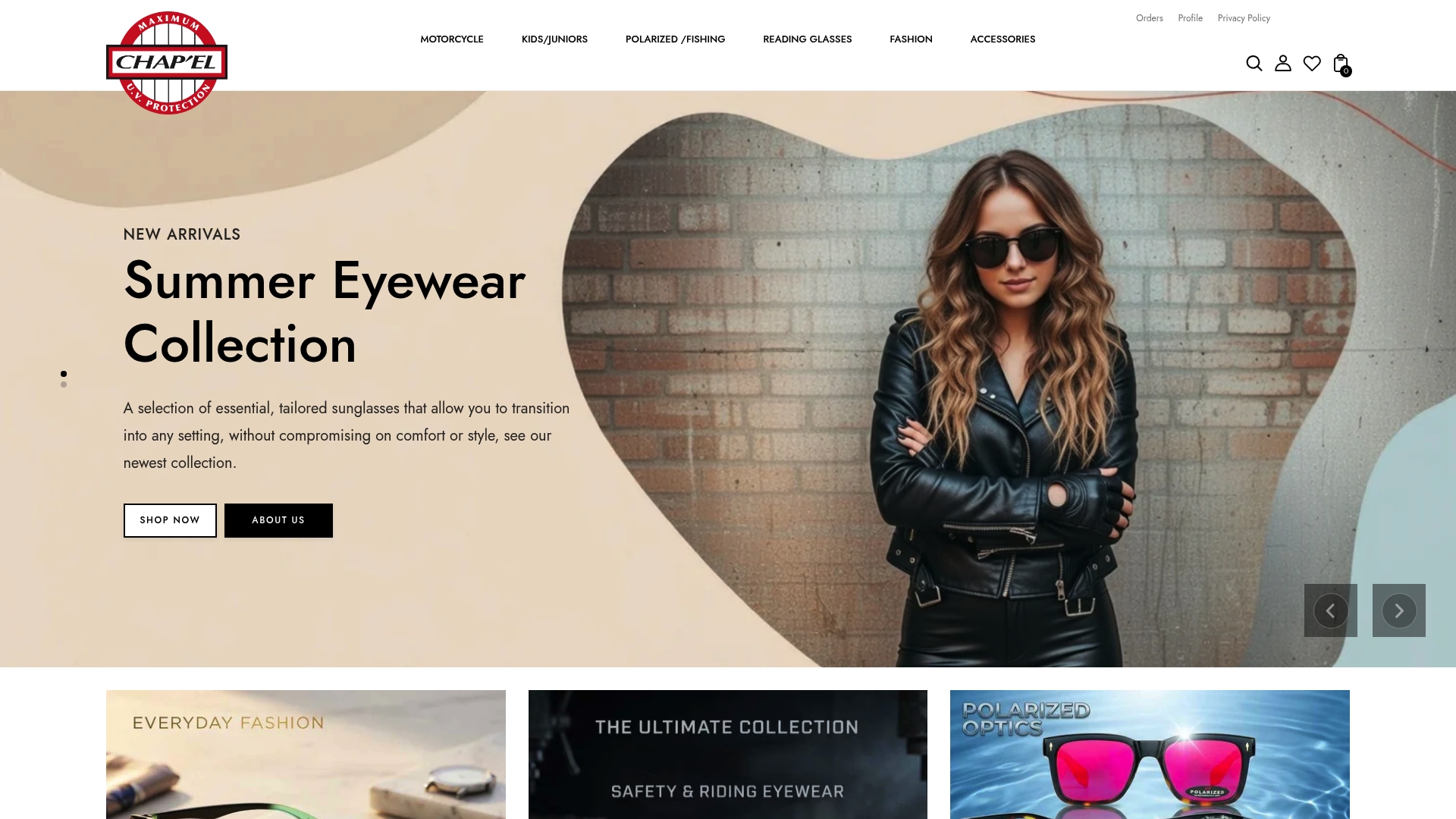
The Sport Polarized line adds higher wrap and impact resistance for open-top driving or anyone who needs more coverage. Both collections come with a brand warranty and straightforward returns. If you want to protect your lenses between drives, Chap’el’s accessories collection includes protective cases built for the road.
Browse the full Chap’el Eyewear storefront to find the right pair for your commute, road trip, or weekend drive.
Disclosure: This article contains affiliate links. Chap’el Eyewear is the publisher of this article. Product recommendations reflect editorial testing criteria and are not influenced by commercial relationships.