
Do You Need High Bridge Fit Sunglasses? Here's How to Tell
If the top of your nose sits at or above your pupils and your sunglasses slide down, pinch at the sides, or brush your cheeks and eyelashes, you need high bridge fit sunglasses, not standard frames. Check yourself in a mirror: does the bridge of a current pair rest on your nose before it reaches your eye level, leaving gaps by your temples? That’s your answer.
- Slipping down your nose within minutes of wearing them
- Cheek or eyelash contact with the lens when you smile or blink
- Red marks or pinching where the pads dig in
Shop for frames with adjustable nose pads or bridge geometry built for a higher nasal root. That single spec change fixes most of the problems above.
Key Takeaways
A comfortable, secure fit for a high nose bridge depends on adjustable nose pads, correct bridge placement, and lens height that clears your cheeks.
| Point | Details |
|---|---|
| Check your bridge first | Use the mirror test: if the bridge sits below pupil level, you need higher bridge placement. |
| Require adjustable pads | Metal or silicone pads you can bend independently fix most slipping and pinching problems. |
| Pick the right silhouette | Oversized and cat-eye frames sit closer to the browline, naturally suiting higher bridges. |
| Verify specs before buying online | Confirm bridge width, lens height, and pad hardware in photos rather than trusting the label alone. |
| Choose Chapeleyewear for adjustable-pad styles | Designer Polarized and Sport Polarized collections offer adjustable pads with polarized or photochromic lenses. |
Table of Contents
- What Is a High Nose Bridge, and How Can You Tell If You Have One?
- What Fit Features Should You Require in High Bridge Sunglasses?
- Which Frame Styles Work Best for High Nose Bridges?
- How Do You Adjust Sunglasses for a Better Bridge Fit?
- What Should You Check Before Buying High Bridge Fit Sunglasses Online?
- Why Chap’el Eyewear Works for High Bridge Fit Shoppers
- How Does a High Bridge Fit Affect Lens Position and Vision?
- Which Chap’el Styles Suit a High Bridge Best?
- What’s the Fastest Path to a Comfortable Fit?
- Where to Try Chap’el Styles Built for a Higher Bridge
- Sources
What Is a High Nose Bridge, and How Can You Tell If You Have One?
Your nasal root is the point where your nose meets your forehead, between your eyes. On most people, standard sunglasses are molded to sit low, with the bridge resting well below pupil level. A high bridge fit means the frame’s bridge sits higher, typically starting at or above where your pupils line up, so the lenses hover in front of your eyes instead of drooping.
Try this two-minute check:
- Put on a current pair of sunglasses and look straight into a mirror.
- Note where the bridge touches your nose. If it lands noticeably below your pupil line, you likely have a higher bridge than the frame was built for.
- Watch for daylight gaps between the lens and your face near your temples.
- Push the glasses up once, then talk or nod for thirty seconds. If they slide back down, that’s your confirmation.
Fit problems tend to repeat: constant pushing-up, lenses resting on cheeks, and pressure marks after even short wear. A Reddit thread from wearers with high nose bridges describes frames riding up over the eyebrows or leaving visible daylight underneath, which lines up with what manufacturers report.
What Fit Features Should You Require in High Bridge Sunglasses?
Specs matter more than marketing copy here. Before you buy, check these five things in the photos and product description.
- Adjustable nose pads. Metal or silicone pads that bend independently let the frame ride higher without pinching. This is the single most reliable fix for wide bridge sunglasses for men and women alike.
- Bridge placement and width. Look for a bridge measurement paired with a design description like “high bridge” or “raised bridge.” Wider isn’t always better if the placement is still too low.
- Lens height and tilt. Taller lenses set at a slight forward tilt keep the bottom edge off your cheeks even when you smile.
- Temple length and spread. Longer temples with a gentle outward angle help distribute weight so the frame doesn’t rely on your nose alone to stay put.
- Frame depth. Deeper frames give the bridge more room to sit higher without crowding your eyebrows.
Material changes the equation too. Acetate can be sculpted to a higher bridge shape permanently, adjustable metal pads give you ongoing control, and TR90 nylon frames flex to reduce pressure points during long wear.
Pro Tip: Zoom into product photos of the bridge area before buying online. If you can’t see the nose-pad hardware clearly, message the seller and ask, since vague listings are the most common source of fit disappointment.
Which Frame Styles Work Best for High Nose Bridges?
Certain silhouettes are simply built with more room at the bridge, which is why they show up again and again in fit guides for high bridge noses.
- Oversized and cat-eye frames often sit higher at the browline by design, which naturally raises the bridge contact point and reduces cheek contact.
- Aviators can work well, especially with adjustable metal pads, since the teardrop shape leaves clearance below the eye.
- Square frames with deeper lenses pair nicely with a higher bridge, provided the bridge width matches your face rather than just looking sharp.
- Round frames need extra scrutiny. Check lens height and confirm adjustable pad hardware before buying, since round shapes vary widely in bridge design.
A quick style checklist by face shape: oval faces tend to do well in almost any of the above, round faces benefit most from square or cat-eye shapes for contrast, and heart-shaped faces often pair best with aviators or bottom-heavy frames that balance a narrower jaw.
How Do You Adjust Sunglasses for a Better Bridge Fit?
Most fit problems can be improved at home before you consider a return or exchange.
- Adjust metal nose pads gently. Use your fingers to pinch the pad arms slightly wider or narrower, moving in small increments. Never force acetate-molded bridges, since they can crack instead of bend.
- Add foam pads or anti-slip strips. Adhesive silicone pads stick directly onto existing nose pads and add height, which is often the fastest fix for a frame that sits just slightly too low.
- Bend temples carefully. Warm the temple arm briefly with a hairdryer on low heat, then reshape gradually. If you’re not confident, most opticians will do this free in under five minutes.
- Bring measurements and photos to a professional. A quick visit with your current glasses and a photo of the fit problem helps an optician recommend adjustments or new frames faster.
Pro Tip: Skip DIY heat adjustments on TR90 or thin metal frames if you’ve never done it before. A thirty-second in-store adjustment is free at most retailers and eliminates the risk of snapping a temple arm.
What Should You Check Before Buying High Bridge Fit Sunglasses Online?
Online shopping removes the chance to try before you buy, so the listing itself has to answer the questions your hands normally would.
- Confirm bridge width, lens height, temple length, and total frame width against your own measurements, not just the model shown wearing them.
- Prefer listings with close-up photos of the nose-pad hardware and a visible side profile showing frame depth.
- Not every product just labeled “high nose bridge” delivers on that promise. Marketplace listings vary widely in quality, so verify specs rather than trusting the title alone.
- Favor sellers offering virtual try-on tools or generous return windows, since fit-sensitive purchases carry real return risk.
Measurement charts usually list bridge width in millimeters. Give yourself a 1 to 2mm margin either way. Frames within that range typically still fit comfortably once nose pads are adjusted.
Why Chap’el Eyewear Works for High Bridge Fit Shoppers
Chapeleyewear builds its sunglasses with adjustable nose pads across most of its lineup, which addresses the exact pressure-point and slipping issues high-bridge wearers report most often. Frames come with polarized and photochromic lens options, so you’re not choosing between fit and lens performance.
- Adjustable nose pads on core styles, letting you fine-tune bridge height after purchase rather than guessing from a size chart.
- Polarized and photochromic lens choices across Designer Polarized styles, useful if you also want glare reduction or light-adaptive lenses.
- Impact-resistant polycarbonate lenses and lightweight frame materials, reducing the added pressure that heavier frames put on a raised bridge point.
Adjustable hardware isn’t a premium extra. For a high-bridge face, it’s the difference between glasses you wear for an afternoon and glasses you leave in a drawer after one uncomfortable outing.
Chapeleyewear’s custom fit ordering guide walks through how to confirm your measurements against a specific frame before checkout, which removes most of the guesswork buyers usually face online.
How Does a High Bridge Fit Affect Lens Position and Vision?
Fit isn’t just about comfort. Where the bridge sits changes where the lens sits relative to your pupil, and that has a direct effect on how the lens performs.
When a frame’s bridge is too low for your nasal root, the entire lens drops with it. Your line of sight ends up cutting through the upper portion of the lens rather than its optical center, which is where lenses are ground for the clearest, least distorted vision. For polarized or photochromic lenses, that misalignment can also throw off how evenly the tint or polarization filter covers your field of view, since you’re now looking through a different section of the lens than it was designed for.
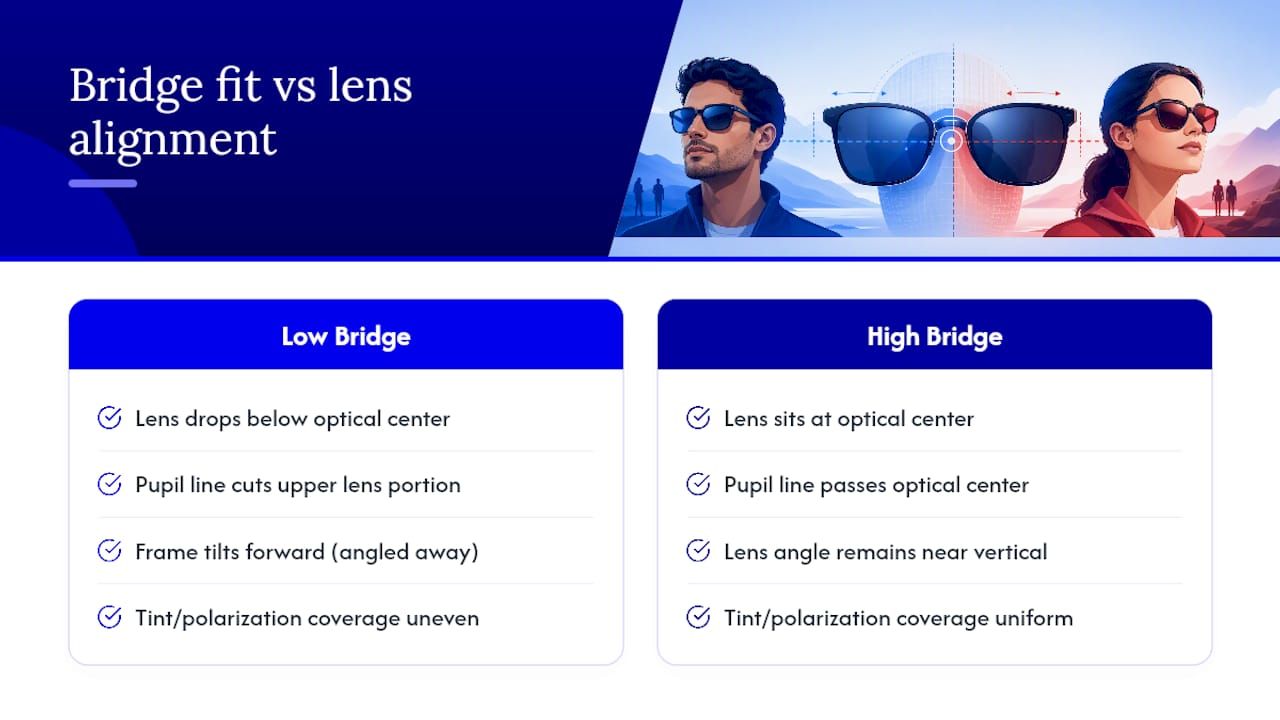
A frame sitting too low also tends to tilt forward, angling the lens away from a straight vertical plane in front of your eyes. That tilt can introduce mild distortion at the edges of your vision and, on bright days, lets more direct light sneak in from below since the lens no longer sits flush against your face.
Raising the bridge with adjustable pads or choosing a frame built for a higher nasal root corrects both problems at once. Your eyes line up with the optical center of the lens, tint and polarization perform the way they were designed to, and the lens angle stays close to vertical instead of drifting forward. It’s a small geometric fix with an outsized effect on how clearly and comfortably you actually see through the glasses.
Which Chap’el Styles Suit a High Bridge Best?
Not every silhouette in a given collection is built the same way, so it helps to know what to look for within Chapeleyewear’s own lineup specifically.
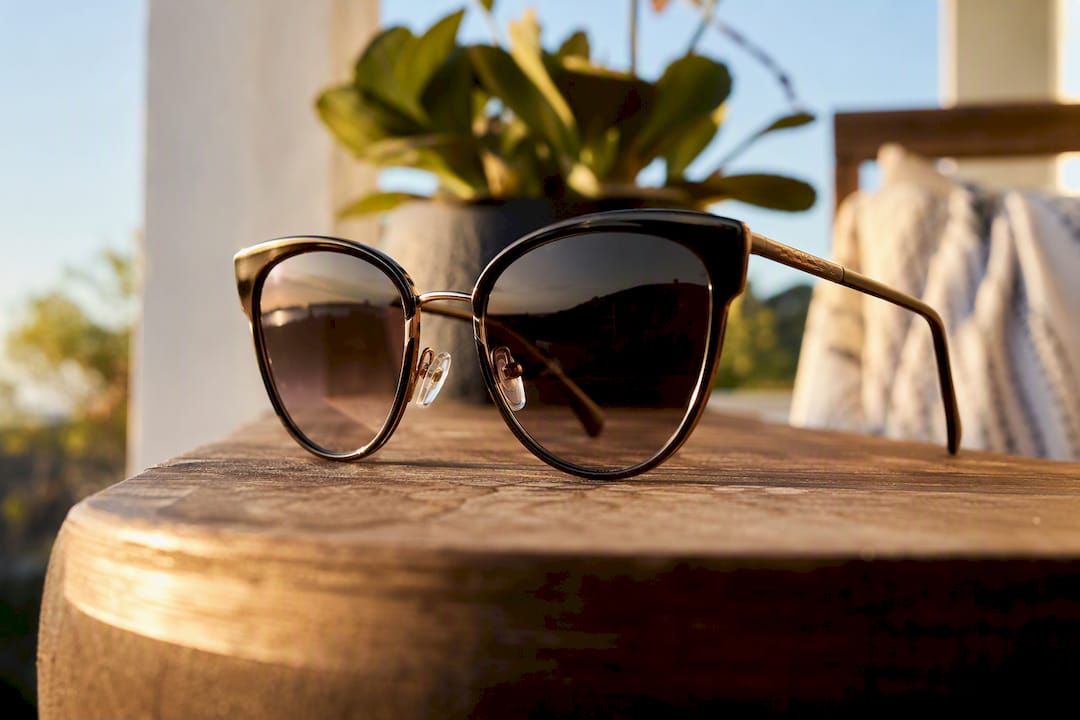
Frames from the Designer Polarized collection lean toward oversized and cat-eye shapes, the two silhouettes fit guides consistently point to for high-bridge faces because of how they sit closer to the browline. Pair that shape advantage with adjustable nose pads and you get a frame that’s already halfway to a correct fit before any adjustment.
If you’re active outdoors, the Sport Polarized line focuses on stability, with deeper frame profiles and secure temple design that matter for anyone whose glasses have historically slid during movement. A high bridge combined with sweat or motion is a common failure point for standard frames, and the added grip and depth in sport-oriented builds address that directly.
For anyone with a wider face shape on top of a high bridge, checking frame width and temple spread matters just as much as the bridge specs. Chapeleyewear’s guide on sunglasses for broader face shapes covers how to read those measurements so the frame doesn’t just fit your nose but sits comfortably across your whole face too.
What’s the Fastest Path to a Comfortable Fit?
If I had to boil this whole guide down to one move, it’s this: measure your bridge before you shop, not after you’re disappointed. Adjustable nose pads solve more fit problems than any frame shape ever will, so treat that spec as non-negotiable rather than a nice-to-have. Once you’ve narrowed your options, check lens height last. A frame can nail the bridge and still let the bottom edge brush your cheek if the lens sits too short.
— Brian
Where to Try Chap’el Styles Built for a Higher Bridge
Chapeleyewear designs its frames with adjustable nose pads standard across most collections, which means you’re not stuck hoping a fixed bridge happens to match your face. The Designer Polarized line covers the oversized and cat-eye shapes that naturally suit higher bridges, while the Sport Polarized collection adds stability for anyone who needs their glasses to stay put through movement, not just a still photo.
Every pair ships with the same UV protection and impact-resistant polycarbonate lenses across styles, so the choice comes down to shape and use case, not a tradeoff between fit and lens quality. If a frame doesn’t sit right once it arrives, Chapeleyewear’s custom fit guide walks through adjustment options before you consider a return. Start by browsing the full Chapeleyewear collection and filter by the bridge and lens features this guide covered, then order the pair that matches your measurements.