

Category 3 Sunglasses: What They Are and When to Wear Them
Category 3 sunglasses block 82%–92% of visible light, letting through just 8%–18% VLT (visible light transmission), and they are the right choice for bright daytime conditions: beach days, driving in sunlight, hiking, boating, and everyday outdoor use. If you are shopping for a pair that handles most sunny-day situations without going overboard, Cat 3 is the standard you want.
Three things to confirm before you buy:
- VLT 8%–18% or a “Category 3” label on the spec sheet
- UV400 or 100% UVA/UVB protection claim (separate from the tint category)
- A recognized standard marking such as ISO 12312-1 or an EN reference on the frame or lens
Chapeleyewear carries verified Cat 3 options across its polarized and sport collections, with UV400 polycarbonate lenses built for daily wear.
Key Takeaways
| Point | Details |
|---|---|
| Cat 3 VLT range | Lenses transmit 8%–18% of visible light, making them suitable for bright sun and daytime driving. |
| UV400 is separate | The category label covers tint only; always confirm a UV400 or 100% UVA/UVB claim independently. |
| Cat 4 is for extremes | Category 4 (3%–8% VLT) is for glaciers and high altitude, and is not recommended for driving. |
| Three pre-purchase checks | Confirm VLT 8%–18%, UV400 label, and adequate frame coverage before buying any Cat 3 pair. |
| Chapeleyewear Cat 3 options | Chapeleyewear’s polarized designer and sport collections offer verified UV400, polycarbonate Cat 3 lenses for daily and active wear. |
Table of Contents
- What does “Category 3” actually mean for your lenses?
- When should you wear Category 3 sunglasses?
- How does Category 3 compare to Category 4 and the rest of the scale?
- Which lens features matter most in a Cat 3 pair?
- How can you verify a pair is genuinely Category 3?
- What should you check before buying a Cat 3 pair?
- A perspective on Category 3 sunglasses worth considering
- Chapeleyewear’s Cat 3 sunglasses: what’s available
- Sources
What does “Category 3” actually mean for your lenses?
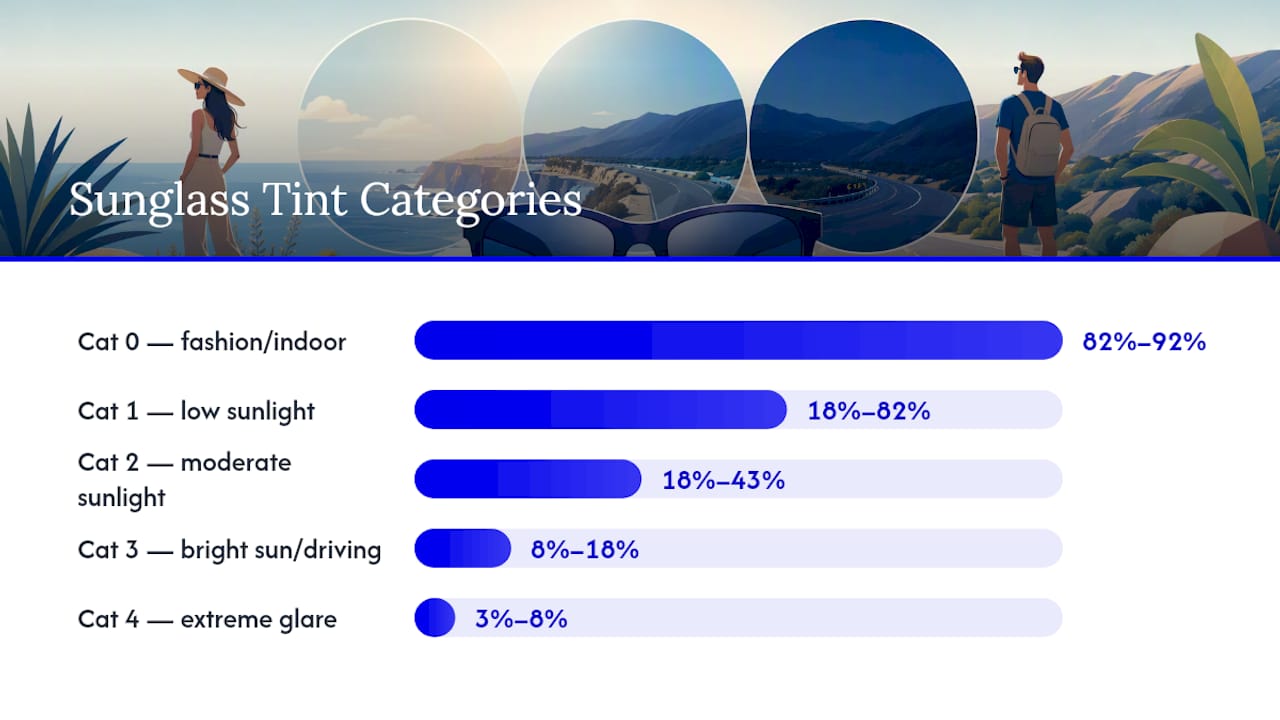
The category number describes how dark the lens tint is, measured as the percentage of visible light that passes through. A lower VLT means a darker lens. The scale runs from Category 0 (nearly clear) to Category 4 (nearly opaque), and Category 3 sits at 8%–18% VLT, making it the most common choice for everyday bright-sun use.
One point that trips up a lot of buyers: the category number tells you nothing about UV protection. A lens can be very dark (low VLT) and still transmit harmful UV radiation. UV400 is a separate claim that means the lens blocks wavelengths up to 400 nanometers, covering both UVA and UVB. You need both: the right tint category for comfort, and a verified UV400 claim for eye safety. Optometrists consistently recommend checking both labels before purchasing.
The full category scale, with VLT ranges and typical uses:
| Category | VLT Range | Typical Use |
|---|---|---|
| 0 | 82%–92% | Fashion, indoor, overcast light |
| 1 | 18%–82% | Low sunlight, variable conditions |
| 2 | 18%–43% | Moderate sunlight, everyday casual |
| 3 | 8%–18% | Bright sunlight, beach, driving, outdoor sports |
| 4 | 3%–8% | Extreme glare, glacier, high altitude |
The ISO 12312-1 standard (and its EN equivalents used on European-labeled products) governs how these categories are tested and labeled. When a product page lists one of these references alongside a VLT percentage, that is a meaningful signal that the claim has been verified against a defined test method, not just printed on the box.
When should you wear Category 3 sunglasses?
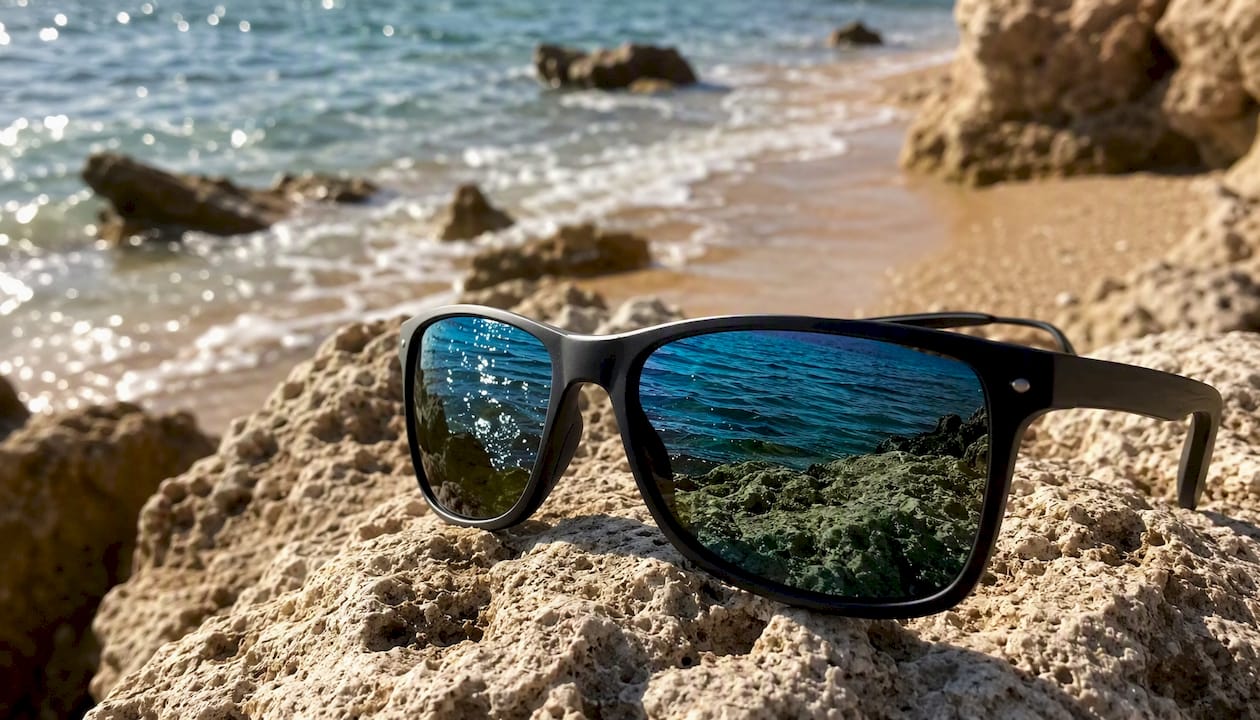
Cat 3 covers the widest range of everyday outdoor situations. Think of it as the default setting for anything you do under a clear sky.
Good fits for Cat 3:
- Beach and poolside use, where sand and water reflect additional light
- Daytime driving on sunny roads (Cat 3 is generally safe for daytime driving when paired with UV400 protection)
- Hiking, trail running, and cycling in open terrain
- Boating and fishing, especially on reflective water
- City walking on bright days
Where Cat 3 falls short:
- Night driving or any low-light driving situation — the lens is too dark and reduces visibility to a dangerous level
- Overcast or cloudy days where Cat 1 or Cat 2 gives better contrast
- Indoor use, where even Cat 0 may be unnecessary
Snow and glacier conditions are a gray area. Cat 3 handles moderate snow glare reasonably well, but extended time on highly reflective snowfields or at altitude calls for Cat 4 or a specialist glacier lens. For variable mountain conditions where light shifts quickly, photochromic lenses that adjust VLT automatically are worth considering.
Pro Tip: For water and snow activities, pair your Cat 3 lenses with polarization. Polarized lenses cut reflected glare from horizontal surfaces, which is the specific type of glare that causes eye strain on the water or road. Polarization does not replace UV400 protection; you need both.
How does Category 3 compare to Category 4 and the rest of the scale?
The difference between Cat 3 and Cat 4 is degree of darkness, but that degree matters practically.
Cat 4 is a specialist lens. It belongs on a glacier or at high altitude where the combination of UV intensity and reflective snow creates conditions that Cat 3 cannot fully handle. For most people, most of the time, Cat 4 is more lens than the situation requires and can actually create safety problems in anything other than extreme glare.
Cat 2 is the right call when conditions are variable or partly cloudy. It lets through enough light to maintain good contrast without leaving your eyes exposed in bright patches. If you spend time in environments where the sun ducks in and out, Cat 2 or a photochromic lens often serves better than Cat 3.
Which lens features matter most in a Cat 3 pair?
The category label gets you the right darkness level. Everything else on the spec sheet determines how well the lens actually performs.
UV protection. UV400 is non-negotiable. A dark tint without UV blocking can be worse than no sunglasses at all, because your pupils dilate behind the dark lens and allow more UV in.
Polarization. Polarized lenses filter horizontally reflected light, which is the glare bouncing off water, wet roads, and snow. For driving, fishing, and boating, polarization makes a real difference in comfort and visibility. It does not affect VLT or UV protection; it is an additional filter layer. Chapeleyewear’s UV protection buying guide covers how UV400 and polarization work together.
Lens color. Gray lenses reduce brightness without shifting colors, which makes them good for driving and general use. Brown and amber lenses boost contrast and warm the color palette, which helps in variable light and on the water. For a deeper look at amber specifically, Chapeleyewear’s amber lens guide walks through the tradeoffs.
Lens material. Polycarbonate is lighter and more impact-resistant than standard plastic or glass, which matters for sports and active use. Glass offers slightly better optical clarity but is heavier and shatters on impact. For most buyers, polycarbonate is the practical choice.
Coatings. Anti-scratch coatings extend lens life noticeably. Mirror coatings reduce glare in very bright conditions and add a layer of style. Anti-reflective coatings on the back surface of the lens reduce light bouncing off the inside of the lens toward your eye, which is worth paying for in high-glare environments.
How can you verify a pair is genuinely Category 3?
A lot of cheap sunglasses carry a dark tint with no real UV protection behind it. Here is how to check before you commit.
On a product page or in-store label, look for:
- An explicit “Category 3” label or a VLT percentage in the 8%–18% range
- “UV400” or “100% UVA/UVB protection” stated separately from the tint category
- An ISO 12312-1 or EN standard reference, which signals the product has been tested against a defined method
- A spec sheet or lab-test PDF linked from the product page
Steps to take when buying online:
- Find the VLT percentage or category number in the product specs, not just in marketing copy.
- Confirm the UV400 claim is present and specific, not vague (“UV protection” without a wavelength figure means little).
- Check the returns policy. A retailer confident in their specs will offer a reasonable return window.
- Look for a warranty. It signals the brand stands behind the product’s construction.
- If the price is very low and no spec sheet exists, treat it as a red flag. Cheap tinted lenses frequently fail UV-blocking tests even when they look dark.
When buying in person, ask the retailer if they can provide a frame-meter VLT reading or lab documentation. A reputable optical retailer can usually produce this. Retailers who supply lab-test PDFs or ISO/EN references on a product page give you the strongest verification available, and a clear return policy further reduces your risk on an online purchase.
Pro Tip: *A VLT percentage on the spec sheet lets you compare lens darkness precisely when the category wording is missing or unclear.
What should you check before buying a Cat 3 pair?
Run through this before you click “add to cart” or hand over your card in-store.
- Fit and coverage. The frame should sit close to your face with minimal gap at the sides. Wraparound or larger frames block more peripheral light and reflected glare. For guidance on frame shapes and coverage, Chapeleyewear’s full coverage sunglasses guide is a useful reference.
- Activity match. Polarized lenses for water, snow, or driving. Mirrored coatings for intense sun. Polycarbonate for impact-prone sports. Match the feature to what you actually do.
- Confirmed specs. VLT 8%–18% or a Category 3 label, plus UV400, plus lens material listed.
- Returns and warranty. A 30-day return window and at least a one-year warranty are reasonable minimums.
- Price vs. value. A mid-price pair with verified specs and a warranty consistently outperforms a very cheap pair that lists no VLT or UV data. The spec sheet is the product.
For active users who move between bright sun and shade, high-performance eyewear options that combine Cat 3 tinting with sport-specific features are worth a look.
A perspective on Category 3 sunglasses worth considering
Most buyers focus on lens darkness and style, which is understandable. But the single most overlooked risk in sunglass shopping is buying a dark lens with inadequate UV protection. A very dark lens without UV400 is actively harmful: your pupils open wider behind the tint, and unblocked UV radiation reaches your eye in greater volume than it would without any sunglasses at all. The category number only tells you about tint. The UV400 label is the safety claim.
Cat 3 is the right default for most people in most bright conditions. The cases where you genuinely need Cat 4 are narrower than the marketing around “extreme” lenses suggests. Unless you are spending extended time on a glacier or at high altitude, Cat 3 with polarization handles the vast majority of outdoor activities without the visibility trade-off that Cat 4 introduces.
The other thing worth saying plainly: fit matters as much as lens spec. A technically perfect lens in a frame that gaps at the sides lets reflected UV in around the edges. Coverage is part of the protection equation, not just a style consideration.
Chapeleyewear’s Cat 3 sunglasses: what’s available
Chapeleyewear builds its Cat 3 lineup around three things that actually matter for daily wear: UV400 polycarbonate lenses, polarized options for glare-prone conditions, and frame designs that work for both sport and everyday use.
The designer polarized collection covers the everyday bright-sun use case with frames built for all-day comfort, while the sport polarized line adds the coverage and grip that active use demands. Both include Cat 3 options with verified UV400 claims and impact-resistant polycarbonate construction. Protective cases and accessories are available to complete your kit. Browse the full range at Chapeleyewear and check the spec sheet on any product page for VLT, UV400, and material details before you buy.
Sources
The following references support the claims in this article and are worth bookmarking if you want to verify a product’s specs or read the underlying standards guidance.
- What Is a Category 3 Sun Tint? Definition, Purpose, Use ❰ SHORT READS ❱
- What do the numbers on your sunglasses mean? - Lynne Fernandes Optometrists
When reviewing any product page, check for a listed VLT percentage, a UV400 claim, an ISO 12312-1 or EN standard reference, and a returns policy. If a retailer cannot supply lab-test documentation on request, that is a signal worth taking seriously.