

Sports Goggles vs Sunglasses: How to Choose by Activity
Sunglasses are built to cut glare and block UV light. Sports goggles are built to take a hit and stay on your face. If your activity involves balls, elbows, sticks or debris, goggles with polycarbonate lenses are the protective choice. If your activity is mostly sun, water and open air, UV-blocking sunglasses do the job. Many active people end up owning both, and this guide shows how to decide which pair belongs on your face for which day.
TL;DR
- Sunglasses handle sun, glare and UV. Goggles handle impact, wind, dust and fast-moving objects.
- For basketball, soccer, racquet sports and similar, eye-care groups point to sports goggles with polycarbonate lenses, not everyday sunglasses.
- For running, cycling, fishing, boating and the beach, look for lenses that block 99% to 100% of UVA and UVB.
- Fit matters as much as lens material. Padding at the brow and nose, a snug seal and the right size keep protection intact.
- Check the sport-specific ASTM designation on the package for impact sports.
Table of Contents
- The real difference between goggles and sunglasses
- How they protect against impact
- How they protect against UV and glare
- Which activities call for goggles, and which for sunglasses
- Features to check before you buy
- Reading the ASTM label
- Prescription wearers and kids
- Perspective
- Build your set with Chap’el
- A simple way to decide
- FAQ
- Sources
The real difference between goggles and sunglasses
The two products solve different problems. A pair of sunglasses is a tinted lens in a frame, made to reduce brightness and block ultraviolet light. A sports goggle is protective equipment shaped for a specific activity.
Eye-health writers at All About Vision say that regular prescription glasses, sunglasses and industrial safety glasses typically do not provide adequate protection for sports use. Sports goggles come in shapes and sizes designed for specific sports, often with polycarbonate lenses.
That does not make sunglasses a lesser product. It means they are the right tool for a different hazard. Here is the quick comparison.
| Sports goggles | Sunglasses | |
|---|---|---|
| Main job | Impact, wind, dust and debris protection | Glare reduction and UV protection |
| Typical lens | Polycarbonate, impact resistant | Plastic, polycarbonate or glass, often tinted or polarized |
| Frame | Sport-specific, often padded at brow and nose | Fashion or sport wrap styles |
| Best for | Basketball, racquet sports, soccer, motorcycle riding, skiing, windy conditions | Driving, beach, fishing, running, cycling, everyday outdoors |
| What to check | Sport-specific ASTM designation, fit, padding | UV400 or 100% UVA/UVB, tint, fit |
How they protect against impact
Impact is where the gap is widest. The International Sports Vision Association reports that regular eyeglasses have only 4 to 5 percent of the impact resistance of polycarbonate of comparable thickness. The same page says protective sports eyewear must use polycarbonate lenses, which withstand impact and also block ultraviolet rays.
The stakes are real. Prevent Blindness reports that more than 25,000 people each year in the US are treated for sports-related eye injuries. The National Eye Institute adds that the right protective eyewear can prevent 9 out of 10 sports-related eye injuries.
There is a baseline for sunglasses too. The American Academy of Ophthalmology notes that all sunglasses must meet impact standards set by the FDA. Those are minimal standards for everyday wear, though. Prevent Blindness explains that since 1970 the FDA has required minimal impact standards for prescription, sun and fashion lenses, while sports use calls for polycarbonate lenses in protectors that meet ASTM International requirements.
In plain terms: everyday sunglasses are fine for a sunny walk, and a ball or elbow coming at your face is a job for sport protective eyewear.

How they protect against UV and glare
UV is the sunglasses’ home turf, and good sports goggles often handle it as well. Polycarbonate has built-in UV protection, according to All About Vision.
Why it matters outdoors: overexposure to UV during outdoor sports can cause photokeratitis, a painful sunburn on the surface of the eye. UV rays have also been linked to cataracts and ocular tumors.
What to look for on the label:
- UV400 or 100% UVA/UVB. The AAO says a label reading “UV absorption up to 400nm” means the same thing as 100 percent UV absorption. The NEI recommends sunglasses that block 99% or 100% of both UVA and UVB. Our guide on how to tell if sunglasses are UV400 walks through the checks.
- Tint for the conditions. The AAO notes that double-gradient lenses, dark on top and bottom and lighter in the middle, may suit sports where light reflects up off water or snow, such as sailing or skiing. If you are weighing color options, see blue vs green lenses.
- Polarization. Polarized lenses cut reflected glare off water and pavement, which is why anglers and boaters favor them.
Sun protection also starts above your eyes. If you spend hours on a course, a golf visor versus hat comparison shows how head coverage and sunglasses work together.
Which activities call for goggles, and which for sunglasses
The National Eye Institute recommends sports goggles with polycarbonate lenses for basketball, soccer, field hockey (non-goalies), baseball fielding and racquet sports, swim goggles for water sports and sunglasses for sun exposure. The AAO lists the same core group and adds that eye protectors should meet ASTM standards.
Goggles first
- Basketball, soccer, racquetball, squash, tennis, pickleball: fast balls and close contact. Choose sports goggles with polycarbonate lenses.
- Motorcycle riding: wind, bugs and road debris reach the eye even under a helmet. Our guide on motorcycle goggles or glasses covers helmet fit and prescriptions.
- Skiing and snowboarding: the AAO recommends protective glasses or goggles with UV protection to shield eyes from sunburn and glare. Cold air and fogging make ventilation important, and our piece on goggle ventilation and the one on dual pane goggle lenses explain how fog is managed.
- Ice hockey and lacrosse: these call for sport-approved helmets and face protection, per the AAO. Goggles alone are not the answer there.
Sunglasses first
- Running, walking and hiking on open trails
- Road cycling and casual riding, where a wraparound frame helps. All About Vision notes that contoured frames that wrap slightly around the face work well for biking, hang-gliding and sailing.
- Fishing, boating and beach days. For style and lens ideas, see our beach sunglasses style guide.
- Driving to and from the game
The overlap
Some days need both: a morning on the water in sunglasses, an afternoon pickup game in goggles. The AAO is clear that no single pair of glasses or goggles protects in all situations, so matching the pair to the activity is the whole point.
Features to check before you buy
Whichever you choose, run through this list. It draws on Prevent Blindness guidance and eye-care references.
- Lens behavior on impact. Make sure lenses either stay in place or pop outward in an accident. Prevent Blindness warns that lenses that pop in against the eyes can be very dangerous.
- Padding. Eye guards should be padded or cushioned along the brow and bridge of the nose to prevent cutting the skin. All About Vision notes that many sport frames come with rubber padding where the frame touches the head or nose.
- Anti-fog coating or vents. Fog ruins vision mid-play.
- Scratch resistance. The AAO says polycarbonate is tough but scratches easily, so look for scratch-resistant coatings. If a lens does pick up marks, see how to remove scratches from sunglasses.
- Sport-specific ASTM designation. More on this below.
- Fit. The ISVA says that if glasses or goggles are too big or too small, protection is compromised, and that sports eyewear should be fit by an eye care professional, especially for children.
For a deeper look at lens materials and ratings, read our explainer on impact resistant lenses.
Reading the ASTM label
For impact sports, the label matters. Prevent Blindness advises checking the package or protector for the ASTM designation that matches your sport and not buying a product with no ASTM code. It also warns against anything labeled “ASTM Certified,” because ASTM does not certify products. Independent certification, such as by the Safety Equipment Institute, or testing by an accredited laboratory provides verified evidence.
Some designations the AAO lists: ASTM F803 for face protectors, F910 for youth baseball face guards, F513 for ice hockey and F659 for skiing and snowboarding. The ISVA says ASTM F803 covers eye protection for most sports, including baseball, softball, basketball, football and volleyball, while ASTM F3164 is the newer racquet sports standard.
Your sport’s governing body may set its own requirements too, sometimes alongside ASTM. Check both for league play.
Prescription wearers and kids
If you wear glasses, Prevent Blindness advises asking your eye doctor to fit you for prescription eye guards. The same source says athletes who see well out of only one eye should always wear sports eye guards and ask their eye doctor which sports are safe. The NEI adds that most protective eyewear can be made to match a prescription, and that kids can wear safety goggles over regular glasses or contacts.
Contacts are not protection. Sport-tinted contacts improve contrast in sunlight, but they do not protect eyes from injury, so you may still need goggles or a shield.

For kids, sizing is the trap. Parents often buy a larger goggle so there is room to grow, but All About Vision’s Gary Heiting, OD, explains that frames that are too large can compromise protection and raise injury risk. A youth sports safety guide for parents and coaches covers the wider picture around gear and practice habits.
Perspective
We have spent decades around eyewear, and the question we hear most is whether one pair can do everything. Our honest answer is that the best pair is the one built for what you are about to do.
That is why we organize our collection by use. Our sunglasses are designed for UV protection, comfort and style, and our goggles are designed around impact-resistant polycarbonate lenses, lightweight and durable frames, padding for wind protection and adjustable nose pads. Polarized and photochromic options give you control over glare and changing light.
Our view is that protection should never cost you your style, and style should never cost you comfort. A well-fitted pair you actually enjoy wearing is the one that protects your eyes every single time.
Brian
Build your set with Chap’el
Most active people are well covered with two pairs: a sunglass for everyday sun and a goggle for the days that get rough. Here is where to start in our shop.
- Polarized sunglasses: Classic Polarized at $23.99, Sport Polarized at $29.99 and Designer Polarized at $19.99, for glare on water, road and trail.
- Everyday fashion sunglasses: Classic Looks at $13.99, Image at $16.99 and Designer at $19.99.
- Performance Series for sport-focused wear, and Kids/Juniors for younger athletes.
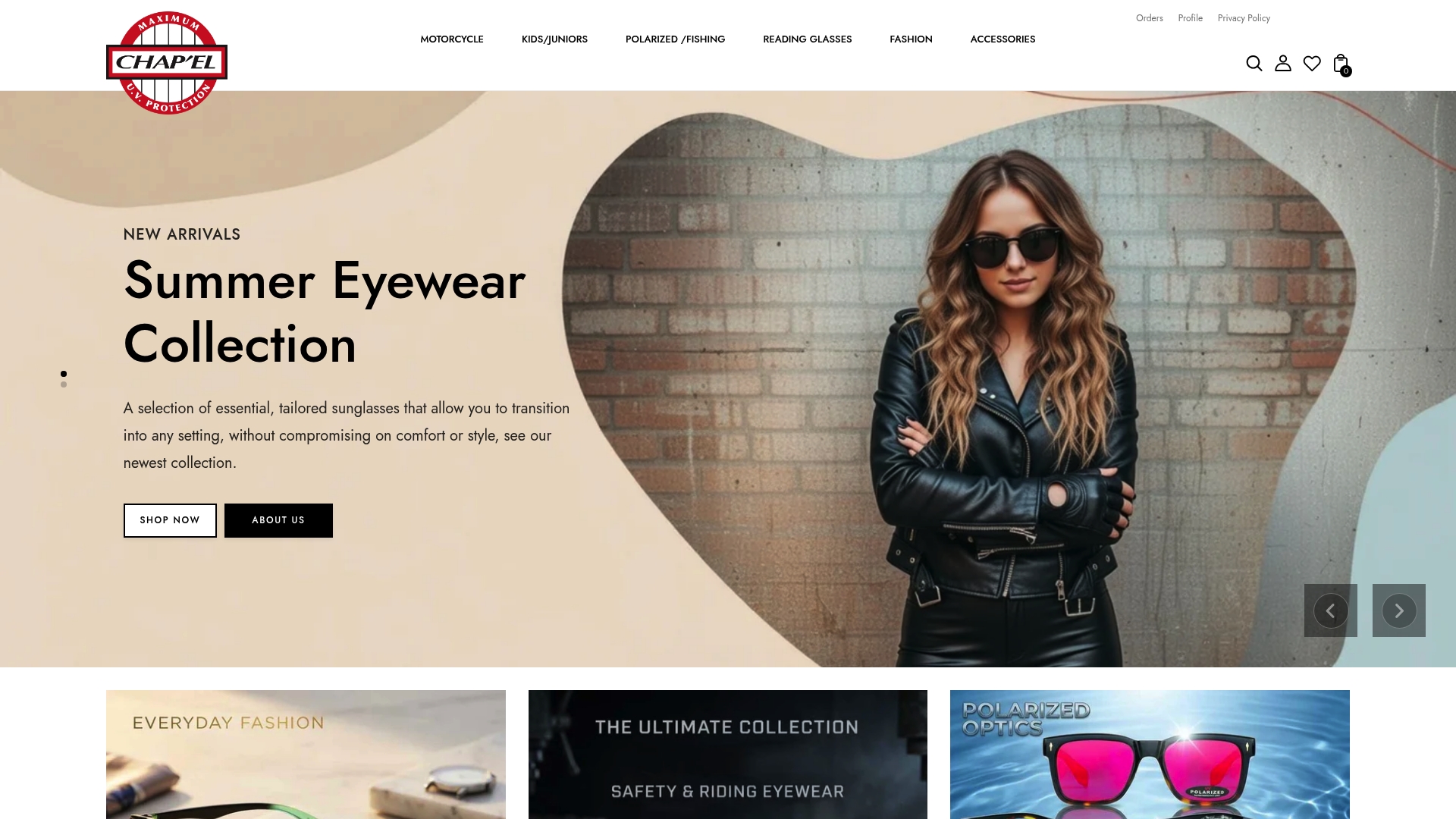
Browse the full range on the Chap’el Eyewear homepage, including motorcycle styles, reading glasses and accessories.
A simple way to decide
Ask three questions.
- Could something hit my face? If yes (a ball, racquet, elbow or flying debris), choose sports goggles with polycarbonate lenses and the right ASTM designation for your sport.
- Is the main enemy light? If yes, choose sunglasses that block 99% to 100% of UVA and UVB, with a tint or polarization to match the setting.
- Do I need a prescription? If yes, talk to your eye doctor about prescription sports eyewear before you shop.
If you answered yes to the first question and the second, you are in goggle territory with UV protection built in, which is how most skiers and riders end up.
A word on budgets. Fit and verified UV protection matter more than a luxury label, which our piece on whether expensive sunglasses are worth it explores. If sustainability matters to you, see our guide to eco-friendly sunglasses that still block 100% UV.
FAQ
What is the difference between sunglasses and goggles?
Sunglasses reduce glare and block UV light, and they suit sunny, low-impact activities. Goggles wrap and seal around the eyes and are made for impact, wind, dust or fog. Sports goggles are usually built with polycarbonate lenses and sport-specific frames.
Can sunglasses be enough for sports?
For running, cycling, fishing or the beach, UV-blocking sunglasses are the right choice. For basketball, racquet sports, soccer and similar, Prevent Blindness and the AAO say regular sunglasses do not give adequate protection, so sports goggles are needed.
Do sports goggles block UV rays?
Polycarbonate lenses have built-in UV protection, according to the NEI and All About Vision. Still, check the label of any pair for UV400 or 100% UVA/UVB before outdoor use.
Can I wear sports goggles with prescription glasses?
Yes. Your eye doctor can fit you for prescription eye guards, and the NEI notes that goggles can also be worn over regular glasses. Ask your eye doctor which option suits your sport.
How do I know goggles fit correctly?
They should sit snugly without pressure, with padding at the brow and nose and no gaps that let objects through. The ISVA recommends having sports eyewear fit by an eye care professional, especially for children.
Sources
- Eye Protection for Sports: How to Choose Sports Goggles, All About Vision
- Sports Glasses and Eyewear: Enhancing & Protecting Vision, All About Vision
- Sports and Eye Safety: Tips for Parents and Teachers, National Eye Institute
- Protective Eyewear, National Eye Institute
- Recommended Types of Sunglasses, American Academy of Ophthalmology
- Sports Eye Safety, American Academy of Ophthalmology
- Safety Glasses: How to Prevent Blinding Eye Injuries, American Academy of Ophthalmology
- About Protective Eyewear, International Sports Vision Association
- Tips for Buying Sports Eye Protectors, Prevent Blindness (PDF)
- Tips for Buying Sports Eye Protectors, Prevent Blindness
- Impact Protection and Polycarbonate Lenses, Prevent Blindness